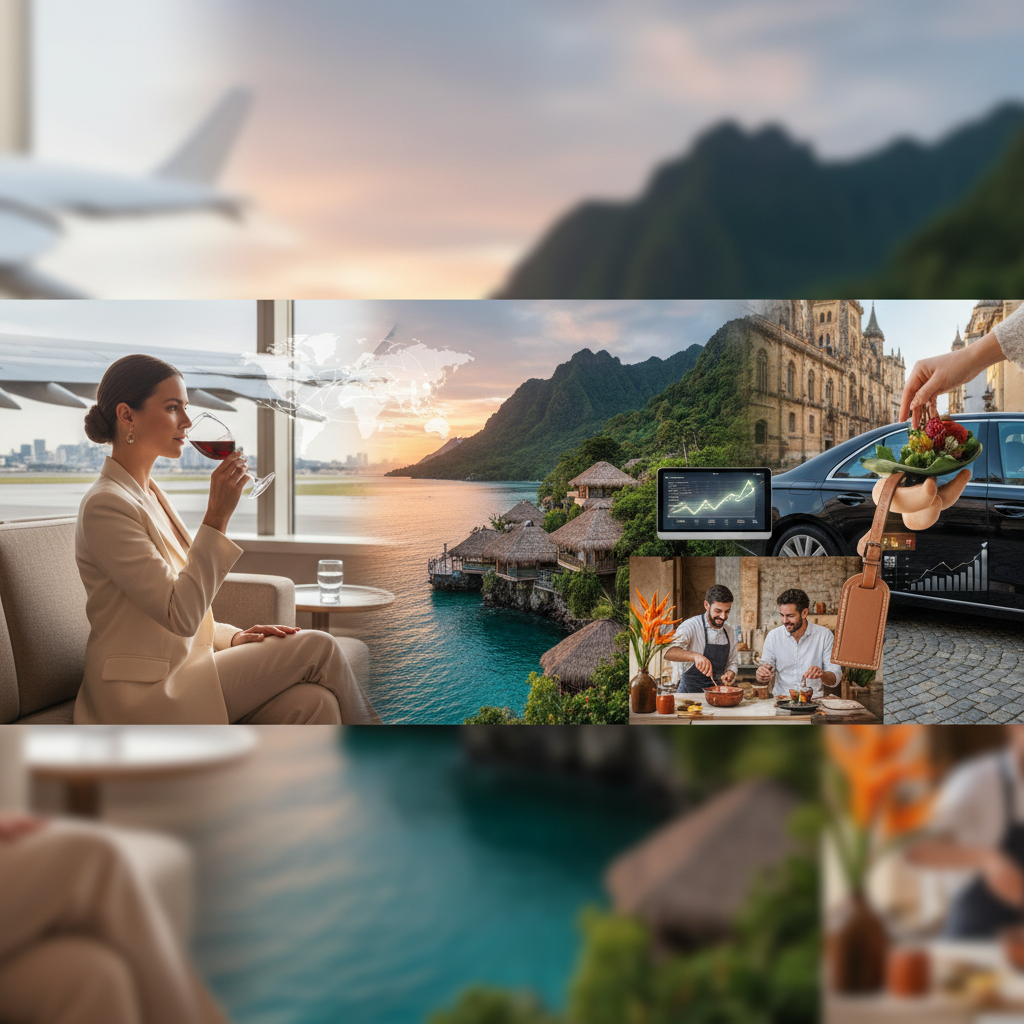
I’ve spent the last decade deep in the trenches of the tourism industry, helping operators scale from "struggling to fill vans" to generating over $10M in revenue. If there is one thing I’ve learned, it’s this: If you are looking at your competitors’ websites to figure out your marketing strategy, you’ve already lost.
Most tour operators are trapped in a feedback loop. They look at what the guy down the street is doing, copy his bullet points, undercut his price by five bucks, and wonder why they are treated like a commodity. This is "race to the bottom" thinking.
In this guide, I’m going to share my personal Cross-Industry Conversion Playbook. We are going to stop looking at tourism and start looking at high-end hospitality and boutique luxury retail. Why? Because these industries have mastered the art of persuasion and perceived value. By borrowing their psychological triggers, we can move your brand from being a "vendor" to a "premium curator."
Stop Mimicking the Mundane: Why the "Tourism Bubble" is Killing Your Growth
The biggest mistake I see is operators studying other tour operators. Here’s the problem: most tour operators are great at logistics but terrible at psychology. Their websites are checklists of features—"Air-conditioned bus," "Water included," "8:00 AM departure."
When you lead with features, you invite price comparison. When you invite price comparison, you’ve lost your power.
Luxury hotels (think the Aman or Four Seasons) and high-end retail (like Apple or Hermès) don’t sell features. They sell an identity, an emotion, and a frictionless transformation. They understand that a high price point isn’t a barrier; it’s a filter. To scale your revenue, you need to look outside the travel bubble and see how the world’s most profitable brands manipulate desire.
"Service Design": Bringing the Boutique Retail Experience to Your Booking Journey
In high-end physical retail, "Service Design" is the art of choreographing the customer’s movement. When you walk into a luxury boutique, the lighting, the scent, and the way the staff approaches you are all intentional.
Your website is your storefront. Most tour booking engines feel like a digital DMV—clunky, cold, and purely transactional. To convert like a high-end retailer, your digital journey must mirror a concierge experience.
Step 1: The "Digital Greeting"
Luxury retail doesn’t blast you with a 10% off pop-up the second you walk in. Instead, they guide you. Use your homepage to ask a question: "Are you looking for a quiet escape or an adrenaline-fueled adventure?" By getting the user to self-identify, you aren’t just selling a tour; you’re offering a curation.
Step 2: Frictionless Progression
A boutique store never makes you hunt for the dressing room. Similarly, your booking flow should never leave a guest wondering "what happens next?" Anticipate their anxiety. Right next to the "Book Now" button, borrow a cue from luxury hospitality: “Your dedicated host will contact you within 2 hours to personalize your itinerary.” This shifts the mental model from "I am buying a ticket" to "I am initiating a relationship."
Sensory Copywriting: How to Write Like a 5-Star Hotel Brochure
Most tour descriptions are dry lists. If you want to charge a premium, you must use Sensory Copywriting. This is a technique used by high-end hotel brochures to create a "mental movie" in the reader’s mind.
Instead of writing: "We take you to a private beach for lunch," you borrow from the luxury hospitality playbook:
"Feel the fine, cool sand between your toes as we anchor in a hidden cove. The scent of grilled sea bass and charred lemon wafts from the deck, while the sound of the Aegean lapping against the hull becomes your only soundtrack. This isn't just lunch; it’s a pause in time."
The Actionable Shift: Audit your top-selling tour today. For every "feature" (the lunch, the bus, the guide), add a sensory trigger (sight, sound, smell, or touch). People don't buy tours; they buy how they imagine they will feel during them.


