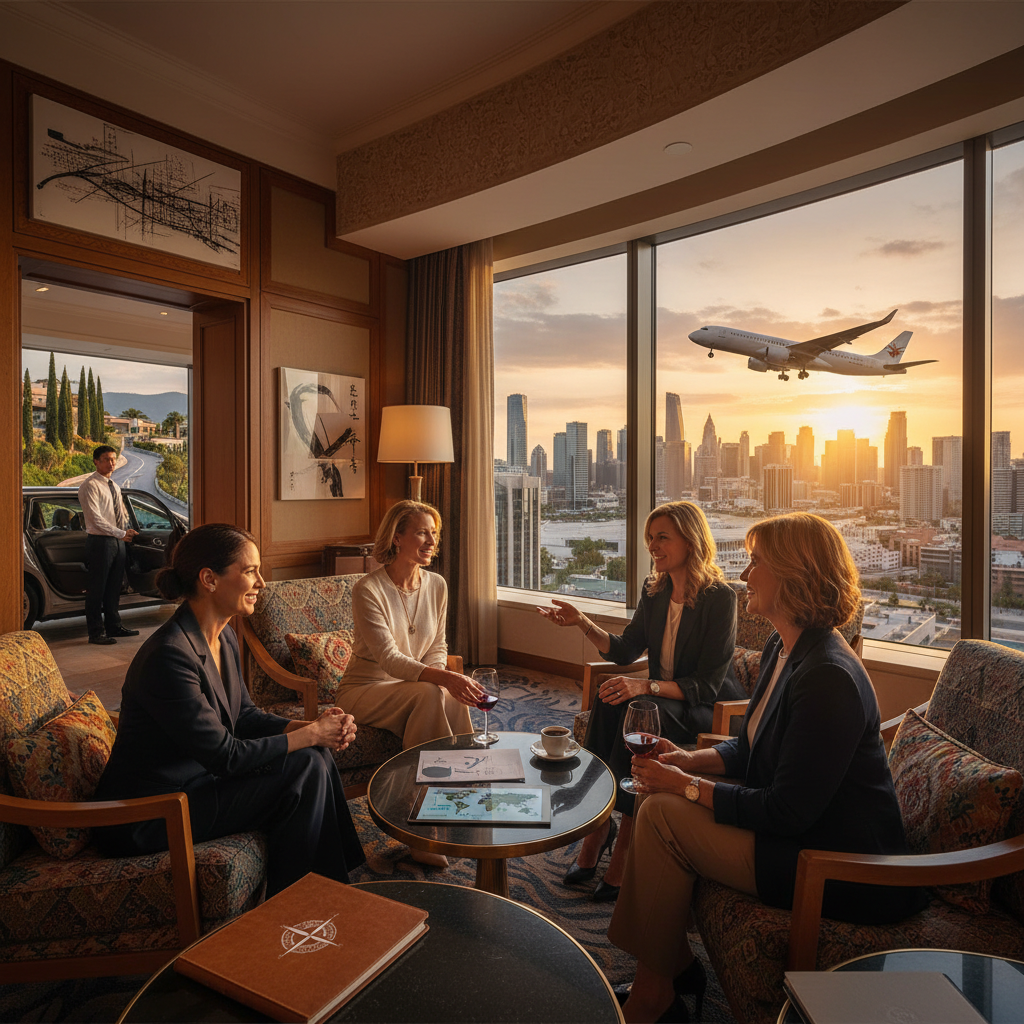
American travelers equate value with specific service rituals. Learn how to 'Americanize' your customer journey without losing local soul.
I remember sitting in a dusty cafe in Cusco back in 2014, watching a middle-aged couple from Chicago dismantle a local tour operator’s reputation over a lukewarm cup of coffee. It wasn't because the Sacred Valley wasn't beautiful. It wasn't because the guide lacked knowledge.
It was because the driver was ten minutes late, and nobody had sent a text to explain why.
In the world of high-end tourism, especially when courting the American market, the difference between a "good" tour and a $10M+ revenue engine isn't the destination. It’s the Cultural Code. After years of scaling operators across three continents, I’ve learned one hard truth: American travelers don’t just buy experiences; they buy a specific flavor of psychological security wrapped in high-energy service.
If you want to dominate the market that outspends almost every other demographic, you have to stop thinking like a local and start thinking like a premium concierge. Let's break down the playbook.
Why "Value" Means Something Different in NYC than in Naples
The biggest mistake I see European and Asian operators make is assuming "Value" equals a lower price or a longer tour. For the high-spending American, value is tied directly to Efficiency, Enthusiasm, and Control.
In Europe, a slow, "authentic" meal is value. In America, if that meal takes three hours without a clear explanation of the courses, it’s a "service failure." Americans equate value with the density of the experience. They want to feel that every minute has been curated.
This isn't about rushing; it’s about intentionality. To win this market, your service standards must shift from "passive hospitality" (waiting for the guest to ask) to "predictive hospitality" (solving the problem before they know it exists).
The Psychology of the 24-Hour Check-In
If you take nothing else from this article, implement this: The 24-Hour Happiness Call.
In my experience, 90% of a negative 1-star review is written in the first 24 hours of a trip. Americans are high-momentum travelers. If their luggage was slightly delayed or the hotel bed felt firm on night one, that frustration compounds silently.
By having a dedicated "Success Manager" (not the guide) reach out via WhatsApp or a quick 2-minute phone call exactly 24 hours in, you disrupt the negative narrative.
The Script:
"Hi Sarah, it’s Gonzalo from the office. I see you enjoyed the walking tour this morning. I’m just calling to make sure the hotel’s AC is to your liking and to see if you need me to adjust tomorrow’s start time by 30 minutes for a bit more rest."
This isn't just service; it’s a psychological "reset button." It shows the guest they are being watched over by a system, not just an individual.
Speed vs. Perfection: The Resolution Paradox
Here is a secret that most operators miss: The speed of your response is more important than the solution itself.
If a guest complains about a noisy room, and you fix it in four hours, they are annoyed. If you acknowledge the complaint within five minutes—even if it takes six hours to move them—they feel valued.
For the American traveler, silence is the ultimate trust-killer. In their domestic market (think Amazon or Amex), help is instant. When you hyper-localize your service standards, you must build a "Fast-Response Protocol." Even a "We are working on this and will update you in 20 minutes" message is worth more than a perfect solution delivered too late.
Tipping Education: From "Awkward Request" to "Expert Guidance"
Tipping is the #1 source of anxiety for American travelers. They want to tip, but they are terrified of doing it wrong or being "ripped off."
The "Old Way" is to wait for them to ask or leave a shy note in the itinerary. The "Revenue-Driving Way" is to treat tipping education as a service.
Provide a beautifully designed PDF or a section in their digital welcome pack titled: "Navigating Local Gratitude: A Guide to Tipping Like a Local." Frame it as helping them move through the culture with grace. Explain the "why" behind the amounts. When you remove the friction of the unknown, the guest feels empowered, the staff gets paid better, and your reviews skyrocket because the guest wasn't stressed at the end of the day.
Training Guides for "High-Energy" Storytelling
American travelers generally respond better to guides who are "performative" rather than just "informative." A guide can have a PhD in history, but if they deliver the facts in a monotone voice while looking at the ground, the American guest will check their phone.
To capture the 5-star review, guides need to be trained in Proactive Logistics.
The Guide Checklist for the American Market:
- The 15-Minute Rule: Give a "heads up" 15 minutes before any transition. "In 15 minutes, we’ll be heading to the van; there is a restroom here if you need it."
- The Energy Match: Start the day at a level 8/10 energy. Americans view enthusiasm as a sign of professional competence.
- The "Human Connection" Hook: Don't just talk about the 14th century. Connect it to something they know. Compare a local historical figure to a modern-day CEO or a movie character.
- The Instagram Hero: A guide's job is now 20% photography. Proactively offering to take "the shot" for the couple is the easiest way to secure a 5-star rating.
Maintaining Authenticity While "Americanizing"
You might be thinking, "Gonzalo, am I losing my culture by doing this?"
Absolutely not. You are simply changing the container that your culture is delivered in. The content remains 100% authentic—the food is local, the stories are true, the people are real. But by "Americanizing" the logistics, the communication speed, and the energy levels, you remove the "cultural static" that prevents Americans from truly appreciating your destination.
When a guest doesn't have to worry about where the bathroom is, why the car is late, or how much to tip the boat captain, they have the mental space to actually fall in love with your country.
Conclusion: The Path to $10M+
Hyper-localizing service standards isn't about changing who you are; it’s about mastering the "Cultural Codes" of your highest-paying guests. By implementing the 24-hour check-in, prioritizing resolution speed over perfection, and training your guides to be proactive storytellers, you aren't just running a tour. You are building a world-class brand.
The American market is loyal. Once you win their trust through these specific service rituals, they don't just come back—they become your loudest brand ambassadors.
Ready to audit your service standards? Take a look at your last three 4-star reviews. I bet the "missing star" wasn't about the destination—it was about a communication gap. Fix the gap, and the revenue will follow.