The 'High-Net-Worth American' Funnel: Marketing to the $100k+ Household Income Segment Without Luxury Pricing
High-net-worth Americans value time and reliability over gold-plated luxury. Here is the framework for capturing the US market through frictionless UX and tactical SEO.
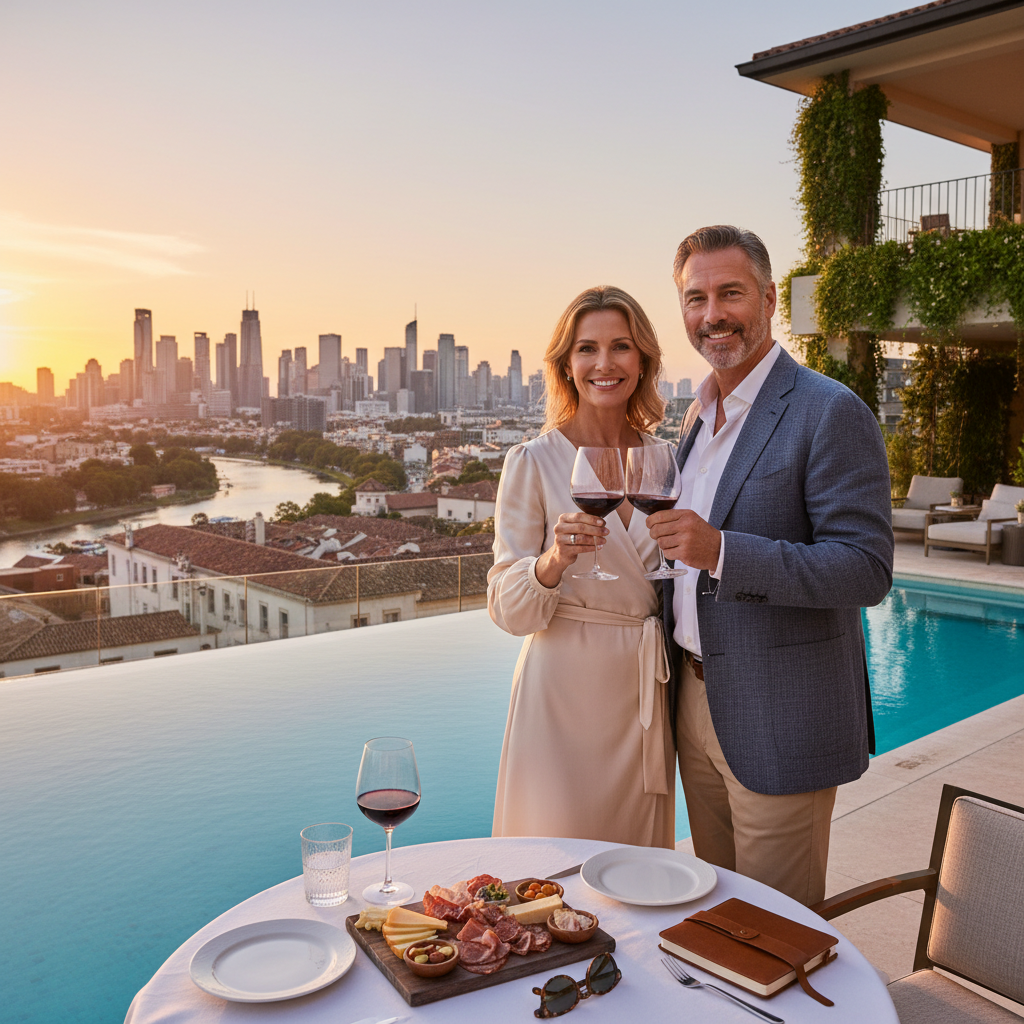
I’ve spent the last decade deep in the trenches of the global tour industry, and if there is one thing I’ve learned after managing $10M+ in bookings, it’s this: The American traveler isn't just a guest; they are the engine of the global tourism economy.
But here is the mistake most operators make. They see a household income of $150k or $200k and immediately think they need gold-plated Mercedes Sprinters and five-star Michelin picnics. They pivot to "Luxury" with a capital L.
In reality, the high-net-worth (HNW) American traveler often isn't looking for opulence—they are looking for frictionless reliability. They have more money than time, and they are terrified of wasting their precious PTO on a logistical nightmare.
If you want to capture this segment without reinventing your price point, you need a different kind of funnel. Here is how we build the "Invisible Luxury" engine.
1. The 'Invisible Luxury' Factor: Convenience is the New Gold
The average American professional works over 45 hours a week. When they land in your destination, they aren't paying for "travel"—they are paying for the removal of stress.In my experience, you don't need to double your prices to attract the $100k+ demographic. You just need to market reliability and convenience as your primary product features. This is what I call "Invisible Luxury."
Stop selling "Crystal clear water" and start selling "Door-to-door logistics." An HNW traveler will choose the $200 tour over the $150 tour every single time if the $200 option explicitly promises:
- Precise pickup times (no 30-minute windows).
- Guaranteed English fluency.
- Pre-arranged entrance tickets (no standing in line).
2. UX Lessons: The 'One-Tap' Expectation
Americans are spoiled by Amazon and Uber. If your booking site looks like it was built in 2008 or requires a "Request a Quote" form that takes 24 hours to answer, you’ve already lost the HNW American.To this demographic, a slow response time is a red flag for a disorganized tour. Your website needs to mirror the ultra-fast e-commerce experiences they use daily.
- Mobile-First is Mandatory: 70% of these bookings happen on a smartphone. If your checkout has more than three steps, your bounce rate will skyrocket.
- Apple Pay & Google Pay: Incorporating one-tap payments isn't just a "nice to have." It signals that you are a modern, secure, and legitimate business.
- Live Availability: High-earners plan late but decide fast. If they can’t see live availability, they will jump to a competitor who has it.
3. Shifting Your Content Strategy: Security Over Scenery
Everyone has high-quality photos of mountains or monuments. If you want to stand out to the high-income American, your ad copy and social content need to address their subconscious fears: safety and time-waste.They want to know: "Will I be safe? Is this legitimate? Will it be awkward?"
The Copywriting Shift:
- Old Strategy: "Beautiful views of the Amalfi Coast!"
- The HNW Strategy: "A seamless day on the coast. Private driver, vetted local guides, and a perfectly timed itinerary that avoids the cruise ship crowds."
4. Tactical SEO: The 'Pain Point' Long-Tail
Generic keywords like "Tulum Tours" are expensive and hyper-competitive. To win the HNW American, you need to target the specific logistical anxieties they search for.Americans search for solutions to problems they anticipate. They use specific adjectives. Here are the types of long-tail keywords I target to bring in high-intent leads:
"English speaking private driver in [City]"* "Kid-friendly private guides [Destination]"* "Luxury van transport for groups [Destination]"* "Is it safe to take a private tour in [Region]?"*
By creating blog content or landing pages around these specific phrases, you capture the traveler at the moment they are trying to solve a logistical hurdle. You aren't just a tour operator; you are a "fixer." And Americans love a good fixer.
5. The US-Style Referral Loop (NPS on Steroids)
American travelers are culturally conditioned to provide feedback. They believe in the "Review Economy." If you provide a seamless experience, they are your best marketing channel—but you have to systematize it.The secret to a $10M+ revenue stream is the Referral Loop.
Most operators send a generic "Please review us" email. To win the American segment, you need to be more tactical. I recommend a three-step follow-up: 1. The 'WhatsApp' Touch: A personal message 2 hours after the tour ends asking if they got back to their hotel safely. 2. The Incentivized Review: A request for a Google/TripAdvisor review, framed as a way to help your specific guide (Americans love supporting individuals over corporations). 3. The 'Friends & Family' Credit: Give them a unique code to share with friends. In high-income circles in the US, being "the guy who knows the best guide in Rome" is a point of social pride.
Conclusion: It’s About the 'How,' Not the 'What'
Marketing to high-net-worth Americans isn't about adding gold leaf to your logo. It’s about auditing your entire customer journey for friction.They will pay a premium—not for luxury, but for the confidence that their limited time will be respected. If you can prove that your operation is the most reliable, professional, and seamless option in your market, the price becomes secondary.
Ready to scale? Start by looking at your booking page. If you wouldn't use it to buy a pair of shoes in 30 seconds, don't expect a busy American executive to use it to book a $500 tour.
*
Need to audit your funnel? I help tour operators worldwide bridge the gap between their local expertise and the high-value American market. Let's get your operations ready for the next level of growth.