Look, if I hear the phrase “dynamic pricing” one more time at a tourism conference, I might actually lose my mind.
I’ve spent the last decade in the trenches, helping tour operators scale from “barely breaking even” to crossing the $10M revenue mark. And if there is one thing I’ve learned, it’s this: Dynamic pricing is for airlines and hotels; it is not for high-growth tour operators.
Adjusting your price by $5 because Expedia’s algorithm told you Demand is "High" isn't a strategy—it’s a race to the bottom. It’s reactive. It’s stressful. And frankly, it’s leaving a massive amount of money on the table.
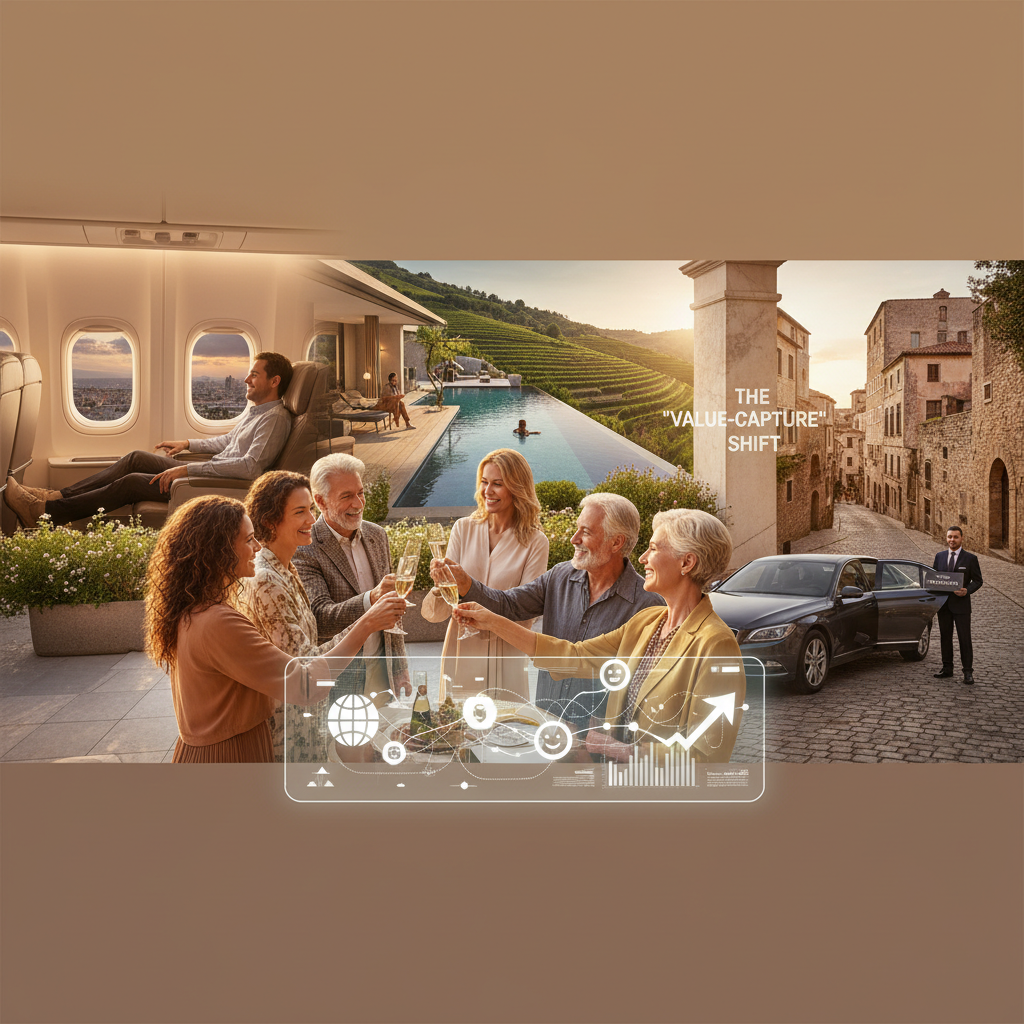
As we head into 2025, the game has changed. We are seeing a massive "Value-Capture" shift. We’re moving away from charging based on what it costs us to run a tour, and instead, pricing based on the subjective psychological benefit to the guest.
If you want to reclaim that 30% margin gap you’ve lost to OTAs and inflation, you have to stop selling tours and start selling access. Let’s dive into how you can rewire your pricing DNA.
The Death of the "Middle-of-the-Road" Tour
Here is a hard truth most operators don't want to hear: The middle market is a financial death trap.
In the old days, you could offer a "solid" tour at a "fair" price and build a business. Not anymore. Today’s market is polarizing. Travelers are either looking for a budget commodity (which Viator will happily provide) or an ultra-curated, "worth-it" experience.
When you sit in the middle, you’re too expensive for the price-sensitive crowd and too "basic" for the high-end spenders. You end up competing on features instead of feelings. "We have a newer van" or "We provide free sandwiches" are not reasons to pay more. They are commodities.
The Premiumization trend isn't just for luxury brands anymore. Even mid-tier travelers are now willing to pay a 40% premium if they feel they are bypassing a "tourist trap" experience. They aren't buying travel; they are buying the feeling of being an insider.
Moving from Demand-Based to Subjective Value
Dynamic pricing asks: "How many people want this today?" Value-capture pricing asks: "How much would this person pay to not feel like a tourist?"
In 2025, your pricing shouldn't fluctuate based on the calendar alone. It should fluctuate based on the Exclusivity Metric.
If you offer a walking tour of Rome at 10:00 AM with 20 people, that’s a commodity. If you offer that same tour at 6:00 AM before the gates open, with a coffee in a private courtyard, you haven't just changed the time—you've changed the value category. The cost to you is almost the same, but the subjective value to the guest triples.
The 3-Tier 'Value-Capture' Model: How to Get Guests to Upsell Themselves
I’ve used this framework to help operators instantly increase their Average Order Value (AOV) without spending an extra dime on marketing. By offering three distinct tiers, you stop being a "take it or leave it" vendor and start being a curator.
1. The Standard (The Anchor)
This is your "Volume" play. It’s the tour that competes on the OTAs. It’s high quality, but it follows the standard path.
- Purpose: To capture the price-sensitive researchers and serve as a price anchor.
- Pricing: Competitive market rate.
2. The Elevated (The "Smart" Choice)
This is where 60% of your bookings should live. The Elevated tier isn't just the Standard tour with a better lunch. It’s about Access.
- The Hook: Smaller groups (max 6 instead of 15), a "skip-the-line" secret entrance, or a "meet the local" element.
- Psychology: Guests look at the Standard and the Elevated. They think, "For only $40 more, I get to avoid the crowds? It’s a no-brainer." You aren't selling the tour; you're selling the avoidance of annoyance.
3. The Elite (The "Dream" Tier)
This is your 10-15% margin booster. It’s often private, fully customizable, and includes something "money-can't-buy."
- The Hook: After-hours access, a private chef, or transportation via a vintage vehicle.
- Psychology: This tier makes the "Elevated" tier look affordable, while simultaneously capturing the high-net-worth traveler who refuses to share a vehicle with strangers.


