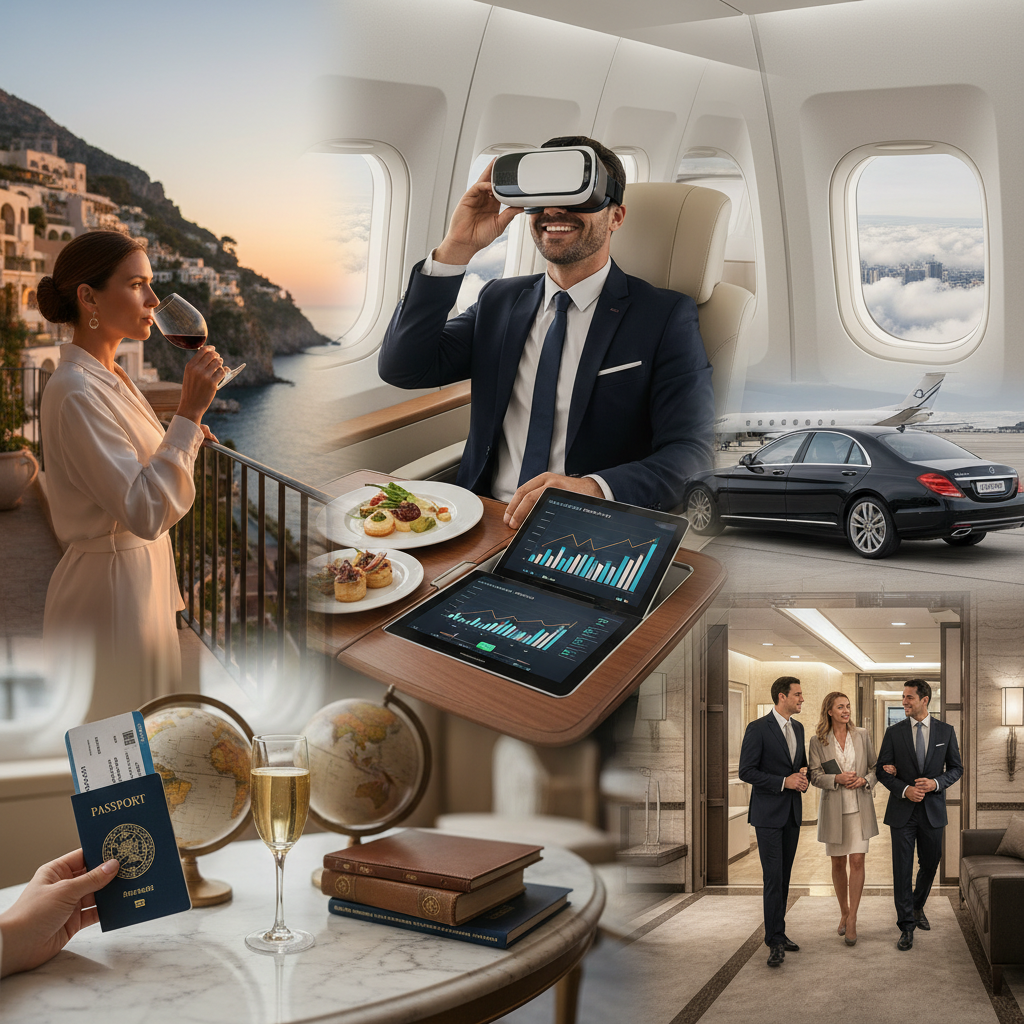
I’ve spent the last decade staring at tour operator spreadsheets, and I’ll tell you exactly where the "leaks" are. Most operators are trapped in the high-volume, low-margin treadmill. They are fighting for the same $100-per-head traveler on TripAdvisor, praying the algorithm doesn’t bury them.
But here is the secret I’ve used to generate $10M+ in revenue: The most profitable tour you can run isn't a new product. It’s a surgically modified version of your existing $100 itinerary, rebranded and re-engineered for the "Ultra-Exclusive" tier.
I’m talking about taking a standard city walk or boat trip and turning it into a $5,000 to $50,000 daily yield. No, you don't need to buy a fleet of gold-plated SUVs. You need to master the pivot.
Here is how you stop competing on price and start engineering exclusivity.
1. The 'Scarcity Filter': Identifying the 10x Value in Your Route
The biggest mistake I see operators make is thinking luxury means "better snacks." Luxury isn't about the brand of champagne in the cooler; it’s about the scarcity of the experience.
To pivot your low-ticket itinerary, you need to run it through what I call the Scarcity Filter. Look at your current route and identify three specific elements that Ultra-High-Net-Worth Individuals (UHNWIs) will pay 10x for:
- Temporal Scarcity (The "Before/After" Factor): If your standard tour visits a museum at 10:00 AM with the crowds, your exclusive tier visits at 8:00 AM before the doors open, or at 6:00 PM after they close. You aren’t selling a museum tour; you are selling the silence of the museum.
- Access Scarcity (The "Behind the Rope" Factor): Every tour goes to the cathedral. Can yours go into the crypt that’s locked to the public? Can you introduce the guest to the restorer working on the frescoes? High-ticket guests want to feel like they have a skeleton key to the city.
- Human Scarcity (The "Expert" Factor): Your standard guide is great. But for the $50k yield, your guide needs to be the former curator, the vineyard owner, or the historian who wrote the book.
When you identify these three levers, you stop selling "a tour" and start selling "privileged entry."
2. The Logistics of Invisibility: Why They Pay for What They Don't See
In the high-ticket world, the greatest luxury is the absence of friction. I call this the Logistics of Invisibility.
A $100 guest expects to wait in a short line. A $5,000 guest expects the line to not exist for them. If your guest has to see you pay a cashier or wait for a ticket to be printed, you’ve already failed.
To engineer a high-margin yield, you must master the "Unseen" logistics:
- Pre-arranged clearance: Every checkpoint, dock, or entrance must be briefed on the guest’s name and arrival time. They should walk through doors that seem to open by magic.
- Crowd Avoidance as a Science: I’ve coached operators to use "spotters." A junior staff member or driver stays 15 minutes ahead of the group, texting the guide: "Bus load of 50 just arrived at the fountain, reroute to the garden first."
- The Seamless Transition: The vehicle should be idling at the exact curb where the walking portion ends, with the AC already at 21 degrees and their preferred sparkling water brand waiting.
These guests aren't paying for the destination; they are paying for the feeling that the world has been curated specifically for their convenience.


