The 'Quiet Competition' of 2026: Why your next big rival isn't another operator, but the 'Self-Guided' Tech Stack
Tour operator expert Gonzalo explains why 'self-guided' tech is the biggest threat to the industry and how to move up-market by offering 'un-googleable' experiences.
I’ve spent most of my career looking at booking charts and revenue heatmaps, and if there’s one thing I’ve learned after moving $10M+ in tour inventory, it’s that the industry is allergic to seeing its real competition.
Most tour operators spend their nights worrying about the guy down the street who just bought a newer van or the big OTA that just hiked their commission to 25%. But if you’re looking toward 2026, you’re looking at the wrong battlefield.
The real threat isn't another human. It’s the "self-guided" tech stack.
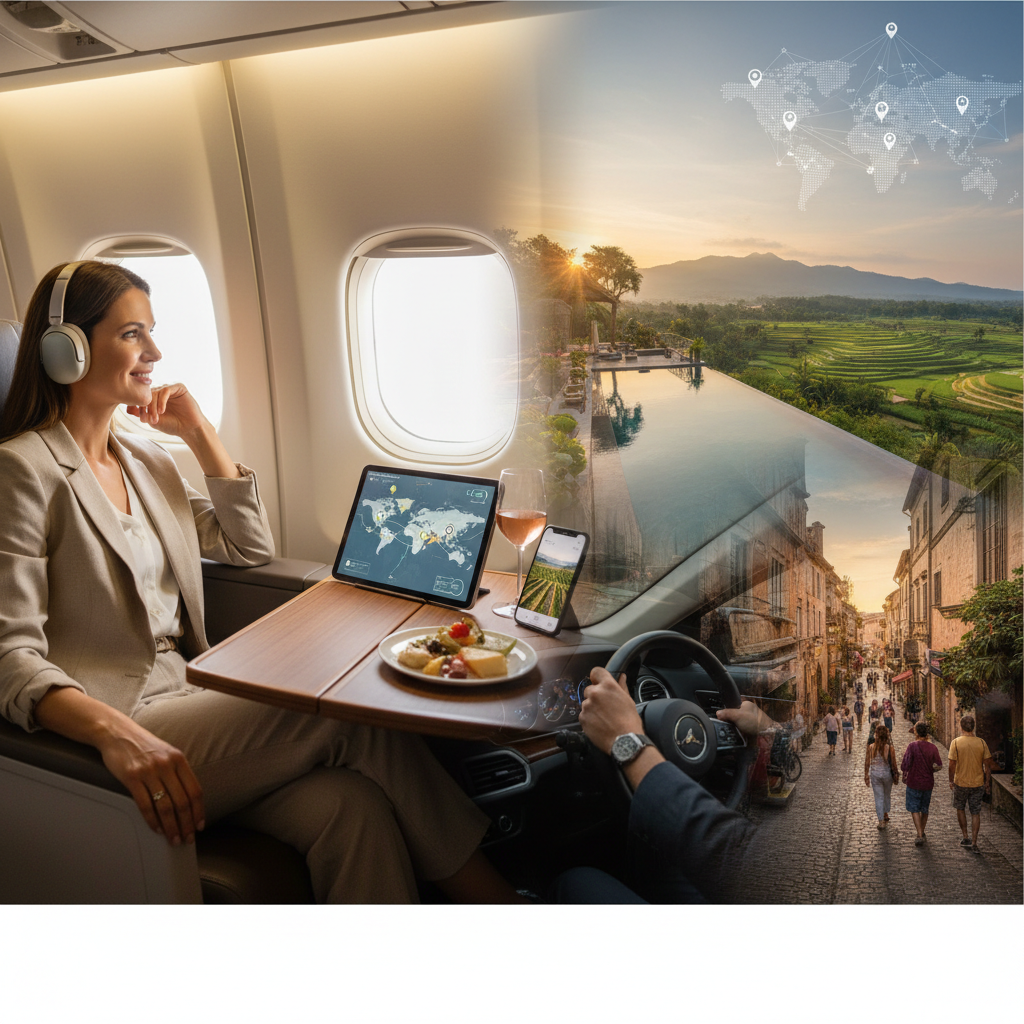
We are entering the era of the autonomous traveler. These aren't just "backpackers on a budget." These are high-net-worth individuals using hyper-local AI apps, real-time spatial audio guides, and integrated transit APIs to bypass the traditional tour bus entirely. They don’t want a "logistical manager"; they want independence.
If your business model is essentially "I have a van and I know the way to the monument," you are being cannibalized as we speak. Here is how we pivot before the tech stack makes your current itinerary obsolete.
1. The Death of the 'Off-the-Shelf' Itinerary
Let’s be honest: about 70% of the tours currently on the market can be replicated by a smart 24-year-old with ChatGPT and a premium Google Maps layer.
In the past, an operator’s value was information and coordination. You knew what time the museum opened, you knew the best route to beat the traffic, and you had the historical dates memorized. Today, an AI-powered app like Geojet or VoiceMap provides that same information via a pleasant voice in the traveler’s earbuds, triggered by GPS, for about $9.99.
Why would a family of four pay you $600 for a city walking tour when they can get the "highlights" for the price of a sandwich?
The shift is clear: Logistics are now a commodity. If your "Value Proposition" is simply getting people from Point A to Point B without them getting lost, you are competing with a smartphone. And the smartphone is winning because it doesn't require a 15% tip.
2. The 'Un-Googleable' Audit: Identifying Your Moat
To survive 2026, you have to audit your tours for "replicability." I tell my consulting clients to sit down with their itineraries and ask: “If I removed the human guide, could a guest still do 90% of this trip using only their phone?”
If the answer is yes, you’re in trouble. To compete, you must become an Exclusive Access Broker.
You need to lean into the "Un-Googleable." These are the elements that digital tools cannot touch:
- The Private Key: A visit to a vineyard that is closed to the public, where the owner pours the wine himself because he’s your cousin's best friend.
- The After-Hours Entry: Getting into the gallery 30 minutes before the doors open.
- The Tactical Knowledge: Not just "this building was built in 1840," but "here is the hidden bullet hole from the revolution that isn't in any guidebook."
3. Beyond Information: Upskilling Guides into 'Cultural Curators'
For a long time, the industry hired "guides." In 2026, we need to hire—and train—Cultural Curators.
An AI can tell a traveler that the cathedral is Gothic. An AI cannot moderate a debate between two guests about the ethics of modern restoration. An AI cannot read the room and realize the kids are getting bored and decide to detour into a local gelato shop where the owner tells jokes in a thick accent.
The "human element" isn't just about being a nice person; it’s about social intelligence.
I’ve seen operators double their referral rates by shifting their guide training away from "facts and dates" and toward "storytelling and hospitality psychology." Your guides should be experts at:
- Social Dynamics: Facilitating connections between guests so they leave as friends.
- Adaptive Itineraries: Changing the vibe of the day based on the weather or the group's energy level.
- The 'Vibe' Check: Knowing when to talk and, more importantly, when to shut up and let the moment breathe.
4. Operational Move: Friction as a Feature
This sounds counter-intuitive, especially in SEO where we talk about "seamless UX," but bear with me. In 2026, the ultimate luxury is being able to put your phone away.
The autonomous traveler is constantly staring at their screen—checking the map, reading the AI prompt, managing the transit app. It’s exhausting.
Top-performing operators are now marketing "Frictionless Freedom." You are telling the client: "You’ve spent your whole year managing data and screens. On this tour, you hand us the mental load. Your phone stays in your pocket. We handle the friction, you handle the presence."
By positioning your tour as a "Digital Detox" or a "Deep Dive," you attract high-net-worth clients who are tired of the "DIY" travel lifestyle. They don't want to be their own travel agent anymore; they want to be taken care of.
5. Moving Up-Market: Social Proof and Human Gatekeeping
If you’re worried about losing the "budget traveler" to a $10 app, let them go. Let the "Quiet Competition" take the low-margin clients who haggle over every dollar.
Your 2026 strategy should be an aggressive move up-market. Focus on Social Proof that emphasizes the exclusivity of your connections.
Don't just show a photo of a landmark on your website. Show a photo of your guide laughing with a local artisan in a workshop that doesn't have a Google Maps listing. Use your marketing to highlight the Human Gatekeeping aspect. Tell the story of how you spent ten years building the relationship that allows your guests to sit at that specific table.
Conclusion: The Choice for 2026
The "Quiet Competition" isn't coming; it’s already here. If you look at the app store, you’ll see dozens of startups trying to "Uber-ize" the tour industry by removing the middleman.
But they are forgetting one thing: people don't travel just to see things. They travel to feel something. An app can give you the coordinates to a hidden beach, but it can’t share a cold beer with you while the sun sets and explain what that beach meant to their grandfather.
Move your business from "Logistics" to "Legacy." Move from "Information" to "Access."
The operators who try to compete with tech on price or convenience will vanish. The operators who double down on the high-touch, exclusive, and deeply human experiences will find that 2026 is their most profitable year yet.
Stop competing with the app in their pocket. Start offering the experience the app can't even find.
*
Need to audit your 2026 itinerary? Look at your last five reviews. If they mention your "punctuality" or "good driving," you're at risk. If they mention "exclusive access" and "the incredible person who led us," you're on the right track. It's time to sharpen your moat.