I’ve spent the last decade staring at spreadsheets for tour operators across six continents, and if there is one thing that keeps small to mid-sized owners awake at night, it’s the "Commodity Trap." Most operators are fighting for 5% margins, terrified that if they raise their prices by $10, their booking volume will fall off a cliff.
But here is the $10M secret I’ve learned: Your guests don’t actually care about your "Total Tour Price." They care about the value of the peak moments.
When you try a blanket price increase, you’re essentially taxing the boring parts of your tour—the parts where the guest is already price-sensitive. That is how you lose bookings. To double your markups, you need to use "Surgical Premium Pricing." You don't raise the price of the whole engine; you charge a premium for the high-octane fuel that makes it roar.
I call this the 'Price Premium' Friction Test. It’s the process of identifying the 10% of your experience that creates so much dopamine that guests would pay double for it without blinking.
Section 1: The ‘Micro-Luxury’ Audit—Where Price Sensitivity Dies
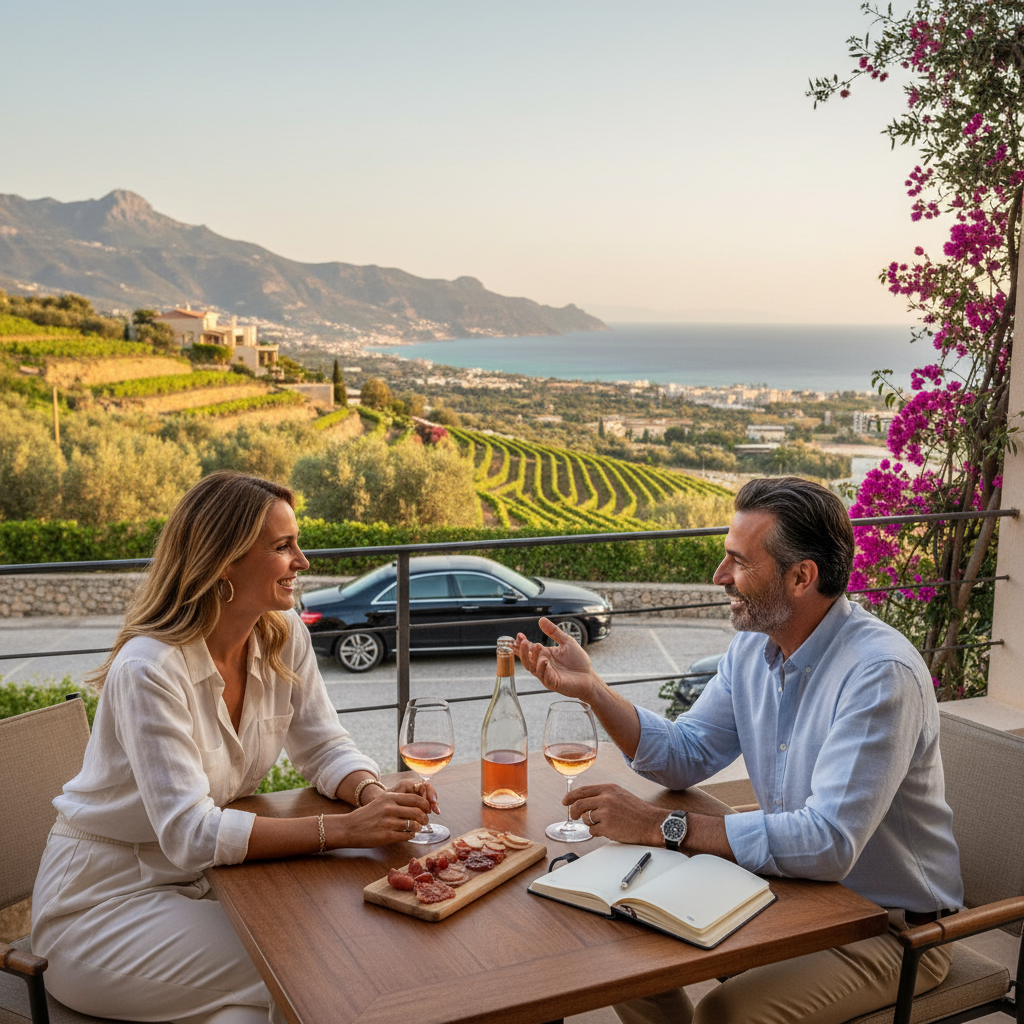
Price sensitivity is not a constant; it’s a variable that fluctuates throughout a trip. When a guest is sitting in a crowded van on a 2-hour transfer, they are highly sensitive to price. When they are standing in a private vineyard at sunset with the owner of the estate, price sensitivity effectively hits zero.
To find your markup goldmine, you need to perform a Micro-Luxury Audit. Look at your itinerary and find the "Friction Points" and the "Fame Points."
The Transport Flip: Stop looking at transport as a cost to be minimized. If your competitors are using standard shuttle buses, and you switch to a premium black car with cold towels and a curated playlist, you aren’t just improving the ride; you are removing the "travel fatigue." People pay a massive premium to not feel exhausted.
The Local Access Card: Can you get people into the Vatican before the doors open? Can you get a grandmother in a remote village in Oaxaca to teach your guests how to make mole? These are "Non-Googleable Experiences." You can markup these specific 60-minute windows by 300% because there is no market reference for what they should cost.
Section 2: The ‘Decoy Offer’—Psychological Steering Toward High Margins
Once you’ve identified your high-value 10%, you have to price it. But if you just slap a high price tag on it, you’ll scare off the conservative buyers. This is where we use the Decoy Offer.
In my experience, 90% of tour operators only offer two choices: "Budget" and "Premium." This creates a "this or that" binary choice based purely on price. Instead, you need a three-tier structure:
- The Standard (The Safety Net): Your basic, high-volume tour.
- The Luxury (The Anchor): An insanely expensive, almost outrageous version of your tour. Think private helicopters or celebrity guides. (You don't expect to sell many of these, but it makes the next one look cheap).
- The Signature (The Real Target): This is your highest-margin product. It’s 20-30% more expensive than the Standard but includes that "10% Micro-Luxury" you found in Section 1.
By placing the "Signature" offer right next to an "Anchor" price that is three times higher, you subconsciously steer 30% of your audience toward your most profitable core product. They feel like they are getting a "deal" on luxury. I’ve seen this single move increase an operator’s Average Order Value (AOV) by 40% in a single quarter.


