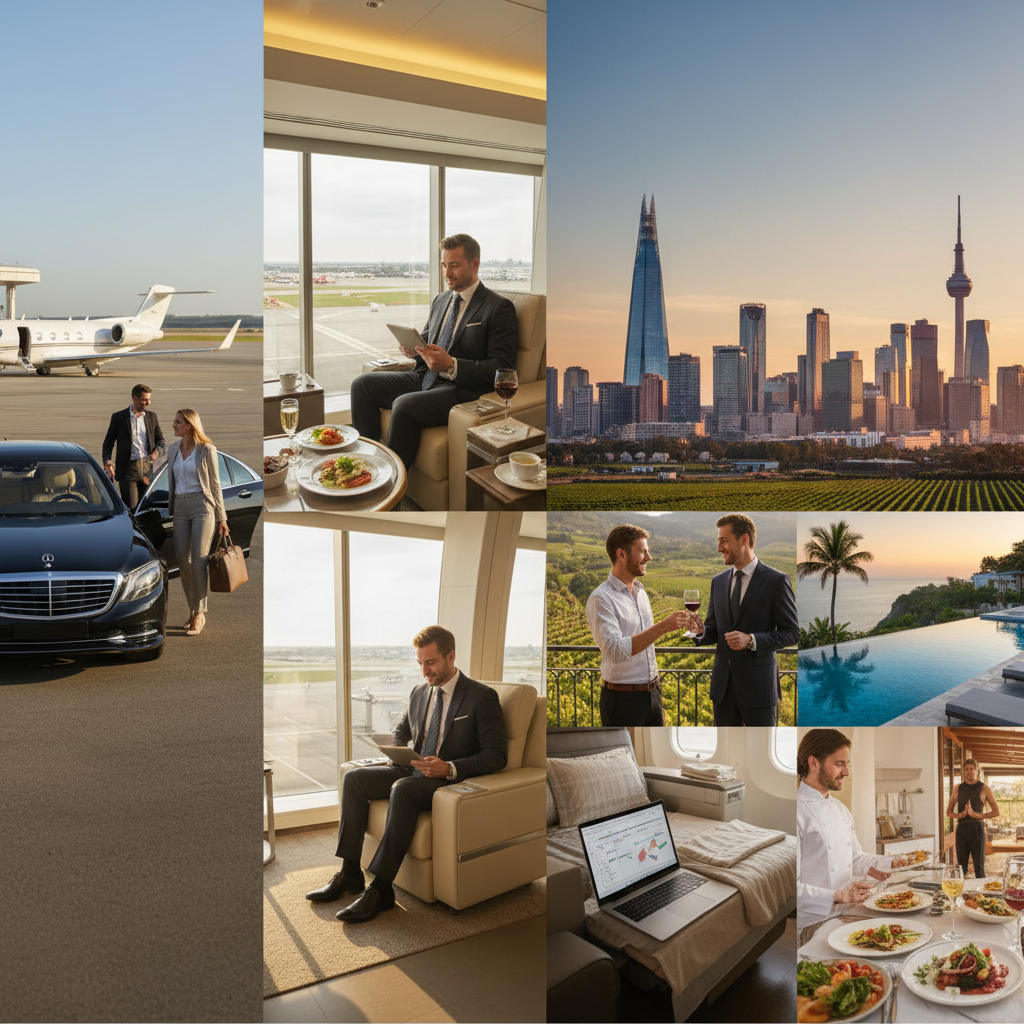
If you want to cross the $10M revenue mark in the tour industry, you have to stop thinking in days and start thinking in minutes.
Most operators I consult with are obsessed with "Daily Margin." They look at the total cost of the bus, the guide, and the lunch, subtract it from the booking price, and call it a day. But that’s a rookie mistake. Behind the scenes, there is a silent killer draining your bank account: Dead Time.
I’ve generated over $10M in revenue by shifting my focus to what I call the "Per-Minute Yield" (PMY). This is the granular measurement of how much revenue every single minute of your itinerary is generating while your overhead clock is ticking.
If your guests are sitting in a van for two hours of "scenic driving" without a monetization touchpoint, you aren't just losing time—you are burning your exit value. Here is how we re-engineer your itineraries to turn dead zones into high-margin wealth.
The Silent Killer: Why Your 8-Hour Tour is Actually Burning Cash
In a $10M operation, your biggest expenses—labor, fuel, insurance, and vehicle depreciation—are fixed per minute. Whether your guests are enjoying a champagne toast or staring at a highway divider, you are paying the same rate for that guide and that vehicle.
I’ve audited hundreds of itineraries where 40% of the day was "Dead Time." This is time where overhead persists, but the guest’s perceived value (and their willingness to spend) stagnates.
When you calculate your yield per operational minute, you realize that long transit times or inefficient "traditional" bathroom stops are massive leaks. If 120 minutes of your 480-minute tour is spent in transit with zero revenue density, you’ve effectively increased your cost of goods sold (COGS) by 25% without a fight.
Step 1: Revenue-Density Mapping (The Hour-by-Hour Audit)
The first thing I do with a new client is a Revenue-Density Map. We break the itinerary down into 15-minute increments and assign each block a "Value Score" from 1 to 10.
- Value Score 1-3: Transitions, waiting for late arrivals, generic stops with no upsell potential.
- Value Score 4-7: Standard sightseeing, included meals, informative storytelling.
- Value Score 8-10: Exclusive access, photo-op heavy moments, high-margin partner experiences, or "surprise and delight" upsells.
Actionable Advice: Look at your "1-3" zones. If your tour starts with a 90-minute drive to the first location, your revenue density is abysmal. You are paying for a guide to be a driver. Can you move the meeting point? Can you offer a "Premium Breakfast Briefing" on the bus for an extra $25? If you can’t monetize the time, you must eliminate it or shorten it.
Step 2: Kill the "Traditional" Low-Margin Stop
We’ve all done it. We stop at the famous "Big Statue" because every other tour company does. The problem? It’s crowded, there’s no way to capture extra margin, and it adds 45 minutes of logistics for a "meh" guest experience.
To scale to $10M+, you must replace these low-margin anchors with Exclusive Partner Experiences.
Instead of stopping at the public viewpoint where 20 other buses are idling, I negotiate private access with a local cellar, an artist’s studio, or a private estate along the route.
- The Shift: You stop being a commodity and start being a gatekeeper.
- The Margin: These partners often provide a kickback or allow you to bundle a "Private Tasting" or "Signed Print" into the ticket price.
By swapping a 45-minute public stop for a 30-minute exclusive one, you’ve increased the perceived value while reducing the time spent, allowing you to fit more "Revenue-Dense" moments into the day.


