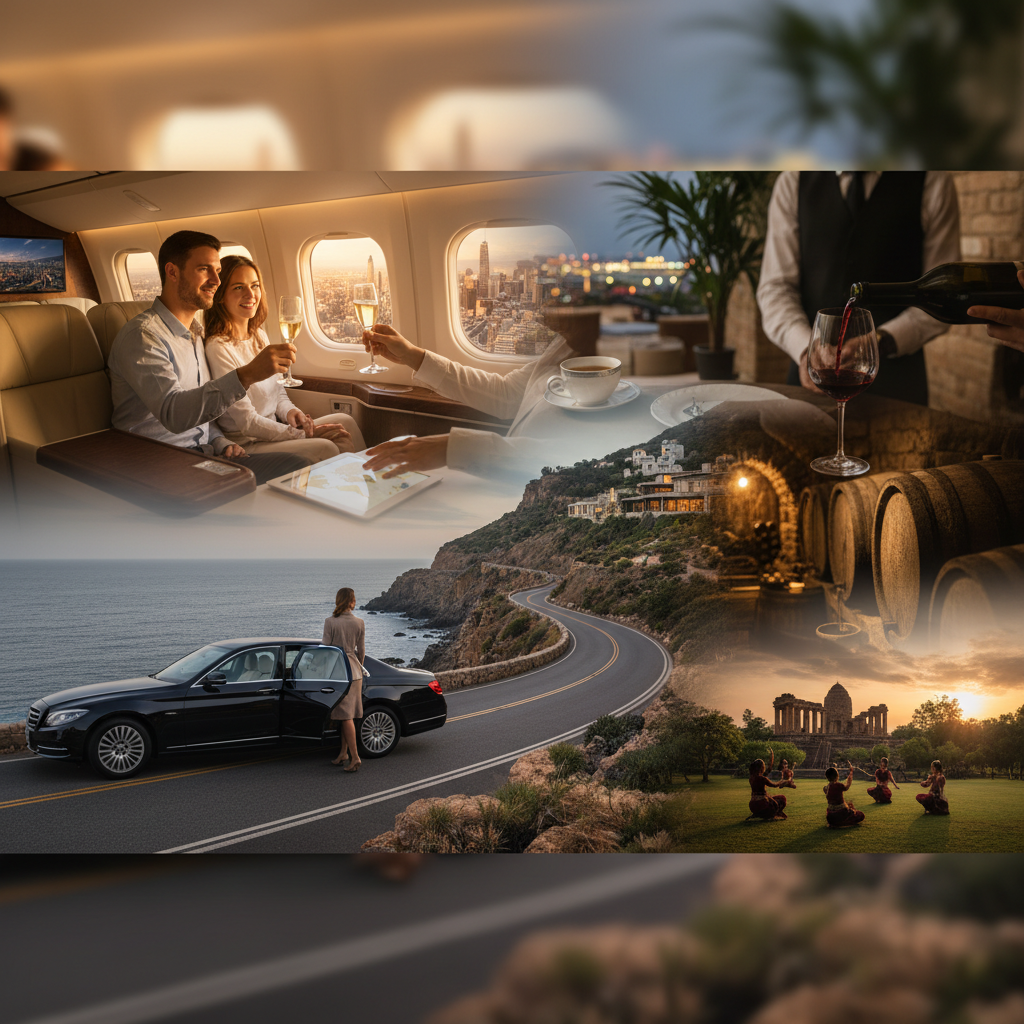
Luxury isn't a price point; it's a lack of friction. Discover how micro-interactions and psychological validation can justify premium direct-booking prices.
I remember the exact moment I realized why some operators struggle to break the $500-a-day ceiling while others effortlessly command $20,000 per booking.
I was sitting in a dusty office in Cusco with a local operator. He had the best fleet, the most knowledgeable guides, and high-quality lunch spreads. But his profit margins were razor-thin. He was competing on price because, in the eyes of his wealthy prospects, he was a commodity. He was selling a "tour."
When I helped my clients cross the $10M revenue mark, we didn't do it by adding more monuments to the itinerary. We did it by perfecting the Micro-Interaction Audit.
In the high-ticket world, luxury isn't a price point; it’s the systematic removal of friction and the deliberate curation of psychological validation. If you want to justify a $15k price tag, you need to stop selling the destination and start auditing the "spaces between."
1. Luxury is the Radical Absence of Friction
Most operators think luxury means gold faucets and 5-star hotels. It doesn’t. In 2024, for the ultra-high-net-worth individual (UHNWI), the ultimate luxury is mental bandwidth.
Friction is anything that forces a guest to think, decide, or worry. If a guest has to ask, "Where is my driver?" or "What time is dinner?", you have failed. You’ve introduced friction, and friction devalues your brand instantly.
To justify premium pricing, your audit must look at the "Micro-Moments." For example, the moment a guest lands. Most operators send a generic "Welcome" email. A high-ticket curator sends a personalized video from the actual guide who will be meeting them, showing exactly where they will be standing at the airport.
Actionable Insight: Look at your guest journey map. Every time a guest has to make a logistical decision or feels a moment of uncertainty, that is a "Leak." To command $20k, your audit must plug every single leak until the journey feels like a slip-and-slide of effortless transitions.
2. Mapping the ‘Dopamine Trail’: From Booking to Departure
There is a dangerous "dead zone" in the travel industry. It’s the period between the moment a guest pays their $5,000 deposit and the day they arrive.
In this gap, "Buyer’s Remorse" lives. If you leave your guest in silence, their dopamine levels drop. They start questioning the investment. To maintain a luxury perception, you must build a Dopamine Trail.
The Physical Touchpoint (The Power of Mailers)
In a world of digital noise, physical mail is the ultimate status signal. About three weeks after booking, my high-growth clients send a high-end, tactile "Pre-Departure Kit."
I'm talking about a linen-bound journal, a custom-scented candle that mimics the smell of the destination (sensory branding), or a hand-drawn map of their specific route. When that box arrives on a client’s doorstep, the $20,000 they spent is no longer an "expense"—it becomes an "anticipation asset."
The Personalized Video Greeting
Stop sending automated CRM emails signed by "The Team." High-ticket guests want to know they are being looked after by a human, not an algorithm. A 30-second Looms or bespoke video from the founder or the lead guide saying, "Hi Sarah, I saw you’re interested in local textiles, so I’ve added a private visit to a hidden weaving co-op," creates a psychological lock. It’s no longer a transaction; it’s a relationship.
3. Transitioning from Service Provider to ‘Lifestyle Curator’
If you are just "the guy who books the hotels," you are replaceable by Expedia or a clever AI bot. To earn the "Direct Booking Premium," you must transition into a Lifestyle Curator.
This happens through Psychological Validation.
Wealthy clients don't just want to see the world; they want to see a version of the world that reflects their status and values. Your communication should reflect this. Instead of a "Transfer from Hotel to Airport," call it "Seamless Transition via Private Chauffeur."
But it goes deeper than semantics. A Lifestyle Curator anticipates needs the guest didn't even know they had.
- The "Surprise & Delight" Logistics: Does your driver know the guest’s favorite sparkling water brand? Is their favorite playlist already cued up?
- The "Unasked" Solution: If it’s raining, don’t just give them an umbrella. Have a backup indoor itinerary ready before they even look out the window.
When you solve a problem before the guest perceives it, you move from "Service" into "Magic." People pay extraordinary premiums for magic.
4. The Micro-Interaction Audit: Practical Steps to Kill the ‘Commodity Trap’
I want you to sit down and walk through your guest’s experience—not as an operator, but as a hyper-critical, tired, and wealthy traveler.
Step 1: The "Digital Handshake" Audit
Look at your first touchpoint. Is your inquiry response a plain-text email? If so, you’re losing money. Use interactive proposals (like Vamoos or Safari Portal) that use high-quality video and immersive storytelling. Your proposal should feel like a trailer for a movie they have to see.
Step 2: The Sensory Audit
What does your brand smell like? What does it feel like? If you meet guests in person, the texture of the cold towels you provide or the weight of the water bottle you hand them matters. Using cheap plastic bottles while charging $10k is a "Commodity Trap." Use engraved thermal flasks they can keep. It’s a $20 investment that justifies a $2,000 price increase.
Step 3: The "Wait Time" Audit
Analyze every moment a guest is "waiting." Waiting for a check-in, waiting for a car, waiting for food. High-ticket journeys eliminate waiting or transform it into an experience. If there’s a 10-minute wait for a boat, that’s when the guide should produce a local tasting flight or a curated story about the surrounding architecture.
The Conclusion: The ROI of the Small Stuff
After generating over $10M in revenue for tour operators, I can tell you this: the big itinerary items—the Colosseum, the Serengeti, the Taj Mahal—are the "table stakes." Everyone has those.
The operators who are scaling to 7 and 8 figures are the ones who obsess over the micro-interactions. They understand that a $20,000 tour is actually a collection of 1,000 tiny, $20 moments.
By auditing the sensory and psychological touchpoints of your journey, you move away from competing on price and move toward a category of one. You stop being a "tour operator" and you become a "gatekeeper to the extraordinary."
If you’re ready to stop being a commodity and start being a curator, start with the spaces between the stops. The fortune is in the friction you remove.
Are you ready to scale your high-ticket bookings? Let's stop looking at your itinerary and start looking at your journey. The Micro-Interaction Audit is the first step toward the revenue you deserve.