The 'Affluence Signal' Audit: Calibrating your tour brand's digital frequency to attract US ultra-high-net-worth individuals
Is your digital presence secretly repelling wealthy clients? Discover the 5-step Affluence Signal audit to recalibrate your brand for the 1%.
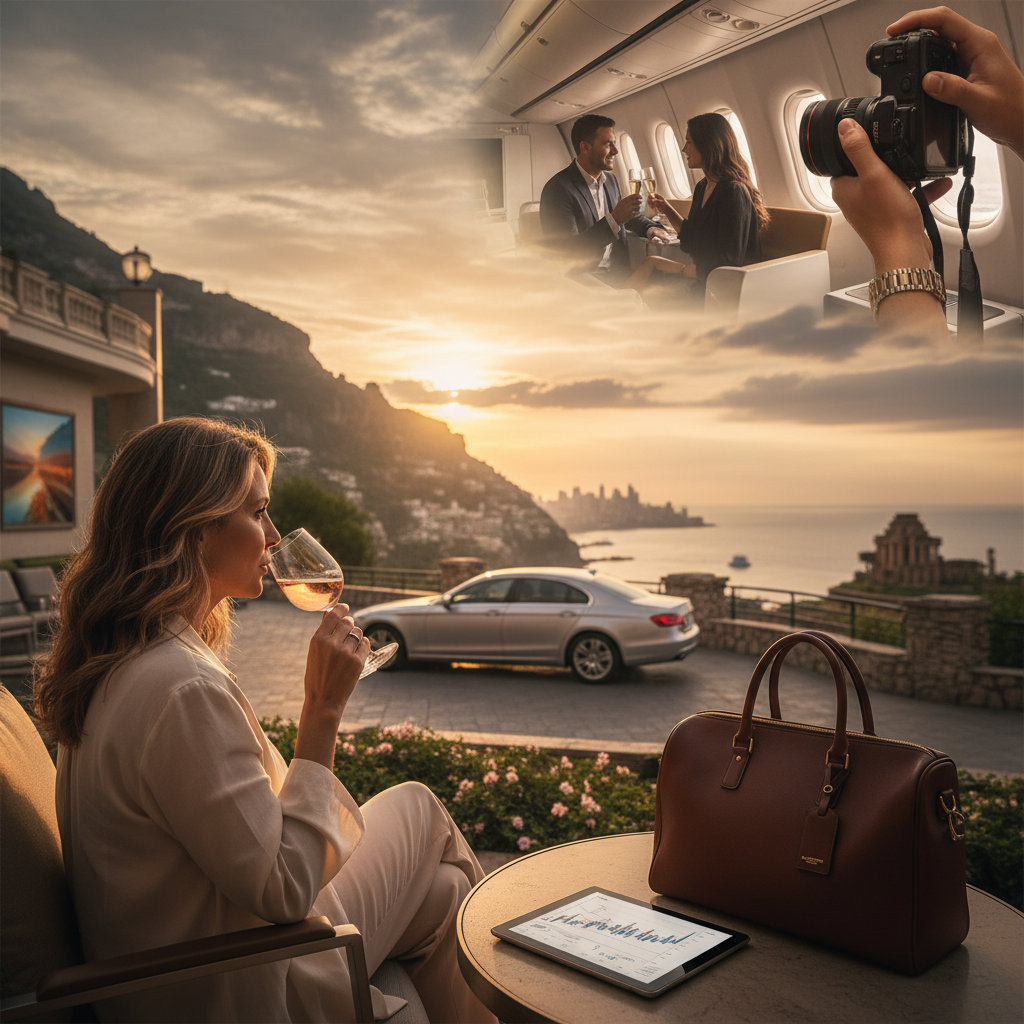
I have spent the last decade in the trenches of the high-end travel market, moving over $10M in bookings for boutique operators. If there is one thing I’ve learned, it’s this: The ultra-high-net-worth individual (UHNWI) doesn't just "buy" a tour; they scan for a frequency.
In the US luxury market, wealth has a specific radar for what I call "Visual Poverty." It’s an unconscious filtering system. Before they even read your price point, they have already decided if you are "for them" based on the subtle signals your brand emits. If your digital presence feels like a crowded bus station, you will never book the client who owns the private jet.
Today, I’m pulling back the curtain on the Affluence Signal Audit. We’re going to diagnose exactly where your brand might be leaking prestige and how to recalibrate your frequency to attract the 1%.
1. The 'Visual Poverty' Trap: Why Your Design is Repelling Wealth
Most tour operators fall into the trap of trying to look "busy" to look "successful." To a US billionaire, clutter is the ultimate sign of the mid-market.When a UHNWI lands on a website, they are looking for white space. In the luxury world, space equals wealth. If your website is crammed with "Best Seller" badges, "Book Now" countdown timers, and bright primary colors, you are radiating a discount frequency.
The Fix: Look at your homepage. Is it a mosaic of tiny photos? Or is it one singular, breathtaking, high-resolution hero image that evokes a feeling? Luxury is minimalist. Move away from rounded "bubbly" buttons and neon oranges. Shift toward muted earth tones, serif typography (which signals heritage and stability), and high-contrast layouts. If your site looks like an OTA (Online Travel Agency), the luxury client will treat you like a commodity.
2. Copywriting for the 1%: From Features to Access
I often see operators listing "Free bottled water" or "WiFi in the van" in their bullet points. Let me be blunt: If you are marketing to someone with a $50M net worth, mentioning free water is an insult. It’s assumed.The wealthy don't buy "features." They buy Time and Exclusivity.
- Mid-Market Copy: "Our tour includes a guided walk through the Vatican and skip-the-line tickets."
- UHNW Copy: "Private, after-hours access to the Sistine Chapel, accompanied by a Renaissance art historian, ensuring your family experiences the silence of history away from the crowds."
3. The Concierge Bridge: Marketing to the Gates, Not the Throne
Here is a reality check that many operators miss: You rarely market directly to the UHNWI. You market to their Financial Advisor, their Executive Assistant, or their luxury Travel Advisor (IC).In the US, the ultra-wealthy outsource their decision-making to "Gatekeepers." Your marketing ecosystem needs a "B2B2C" layer. This means your website shouldn't just be a booking engine; it should be a resource library for DMCs and high-end advisors.
Do you have a "Trade Only" section? Do you provide unbranded (white-label) decks that an advisor can send to their client? If you make the advisor look like a hero, you win the booking. Stop trying to sell the traveler; start empowering the concierge.
4. Proof of Privacy: Is Your Imagery Killing the Deal?
This is the most common mistake I see in my audits. An operator wants to show "social proof," so they post a photo of 15 happy people standing in front of a monument.To a luxury client, that photo is a nightmare. It represents noise, lack of control, and a security risk.
The US luxury segment values Privacy and Discretion above all else. Your marketing photos should rarely show crowds. If you show people, it should be a small, intimate group—perhaps a couple or a family—in a vast, open landscape. You are selling the dream of being the only people there.
If your Instagram is full of "Group Tour" photos, you are shouting to the world that you are a volume-based business. To attract the 1%, your imagery must breathe solitude.
5. The Actionable 'Signal' Checklist: The 48-Hour Recalibration
If you want to shift your frequency immediately, go through this checklist and make these changes tonight. These are small adjustments that have brought my clients 6-figure increases in average booking value.A. The Hero Section (The 3-Second Rule)
Remove any "Special Offer" or "10% Off" banners. High-net-worth individuals don't look for coupons; they look for value. Replace the banner with a single, evocative statement about the transformation your tour provides.B. Typography: The "Font" of Wealth
Check your fonts. San-serif fonts (like Arial or Roboto) feel functional and modern, but often "cheap." Incorporate a sophisticated Serif font for your headings (like Playfair Display or Cormorant Garamond). It mimics the aesthetic of Vogue or The New Yorker.C. Payment Terminology
Stop using the word "Price" or "Cost." Use "Investment" or "Rates Starting From." It sounds subtle, but it frames the experience as something that adds value to their life rather than taking money from their wallet.D. The "Inquire" Button vs. "Book Now"
For experiences over $5,000, a "Book Now" button can actually be a deterrent. High-end clients want a conversation. Change your primary Call to Action (CTA) to "Start a Conversation" or "Request a Bespoke Itinerary." It signals that the experience will be tailored to them, not pulled off a shelf.The Conclusion: The Luxury Market Rewards Precision
Attracting US ultra-high-net-worth individuals isn't about having the most expensive tour; it’s about having the most cohesive signal. From the moment they see your font to the moment they read your "Exclusive Access" copy, every touchpoint must reassure them that you understand their world.They aren't looking for a tour operator; they are looking for a curator who values their time and protects their privacy as much as they do.
If your digital presence currently feels like a loud, crowded marketplace, it’s time to dim the lights and quiet the noise. Calibrate your frequency to the sound of exclusive access, and the right clients will find you.
Ready to see if your brand passes the test? Take a hard look at your homepage today. If you feel like you're trying too hard to sell, you probably are. Pivot to serving, and watch the caliber of your inquiries transform.
---