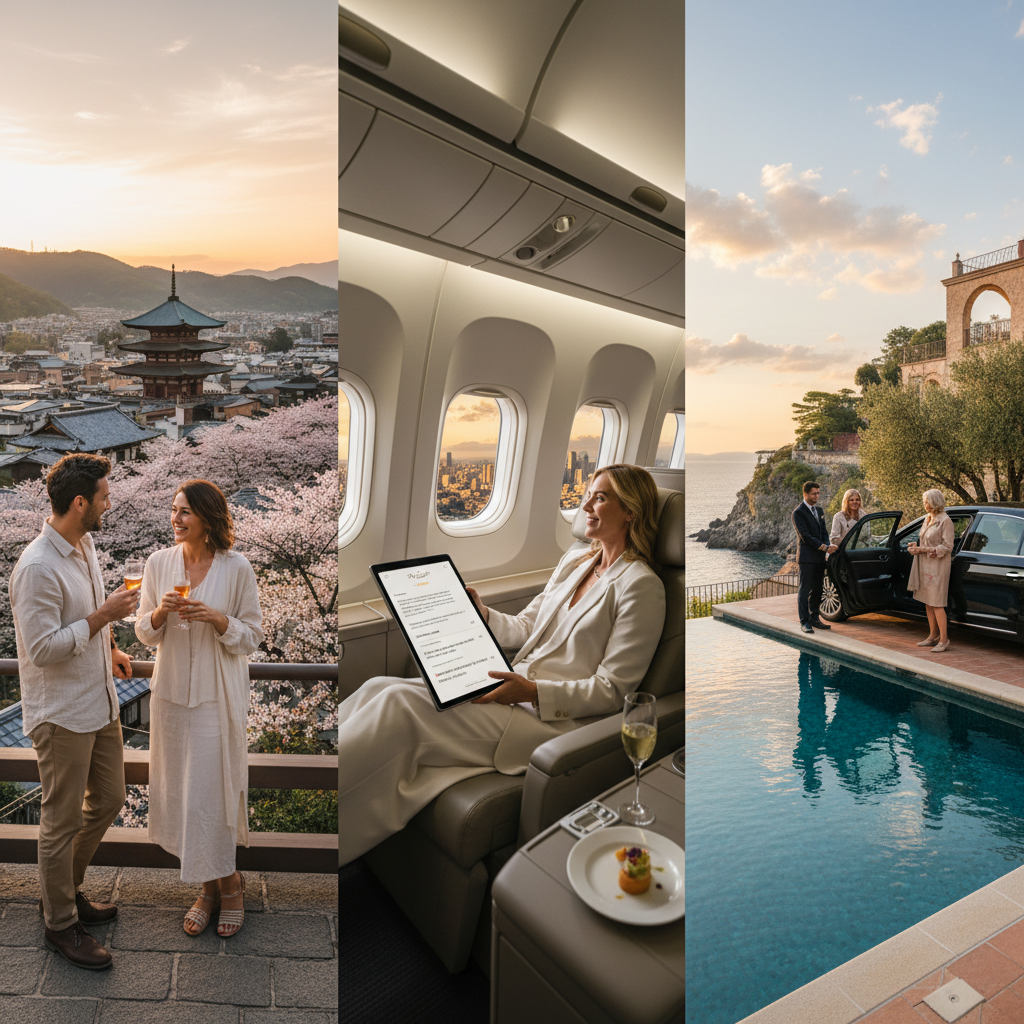
I’ve spent the better part of a decade looking at the backends of hundreds of tour operator dashboards. If I’ve learned one thing while generating $10M+ in revenue for these brands, it’s this: The moment a customer enters their credit card details and sees "Booking Confirmed," they are in their most irrational, dopamine-fueled spending state.
And yet, 99% of tour operators do absolutely nothing with that state.
They send a generic, cold confirmation email with a barcode and a "see you soon" message. They treat the booking as the end of the transaction when, in reality, it is merely the opening of the wallet.
We call this the "Hidden Tier" strategy. It’s the art of engineering a $5,000 upsell inside the dead space between the initial booking and the departure date. Most operators suffer from massive revenue leakage here. They leave thousands on the table because they assume a customer who booked a $200 group tour is only a "$200 customer."
I’m here to tell you that’s a lie. Here is how you identify the "whales" hiding in your bookings and convert them into high-ticket VIPs.
The Most Ignored Revenue Source: The "Post-Purchase" Vacuum
Why do we ignore the confirmed customer? Usually, it’s fear. Operators are afraid of "bothering" the guest or looking too "salesy."
But let’s look at the psychology. When a traveler books a trip, they have already crossed the biggest hurdle: Trust. They’ve researched you, checked reviews, and handed over their sensitive data. The "sunk cost" is already established.
Psychologically, it is much easier for a guest to add $500 to a $1,000 trip than it is to buy a $1,500 trip from scratch. By ignoring the 48-hour window after a booking, you are missing the period where the "vacation high" is at its peak. This is where you move from being a commodity provider to a luxury curator.
Contextual Up-selling: Beyond the "Add-on" Mentality
Most operators think up-selling is offering a GoPro rental or a lunch box. That’s chump change. If you want to move the needle by thousands, you need to think about Contextual Up-selling.
This means offering a "Hidden Tier" that didn't exist on your public website.
The Private Buyout Option
Imagine a family of four books a shared boat tour for $800. Two days later, they receive an automated, personalized email:
"We noticed your group size is perfect for our private vessel upgrade. For an additional $1,200, we can pull the group listing, give you a private captain, and customize the itinerary to include that secret beach we don’t show on the group tour."
You haven't increased your overhead. You’ve simply changed the context of the experience. I have seen this single email trigger conversion rates of 12% on private upgrades, effectively doubling the LTV (Lifetime Value) of the booking without a single cent spent on new customer acquisition.
The "Legendary Guide" Upgrade
People don't pay for tours; they pay for access and stories. Every operator has one "rockstar" guide—the one everyone mentions in 5-star reviews. You can monetize this expertise. Offer an exclusive "Senior Naturalist" or "Lead Historian" upgrade for a flat $300 fee. Again, no extra cost to you, but pure margin on the backend.
The Psychology of the Premium Sunk Cost
The "Sunk Cost" effect is a cognitive bias where people continue an endeavor because they have already invested in it. In tourism, once the flight and the basic tour are paid for, the guest begins to feel that not upgrading is a risk to their overall investment.
They think: "I've already spent $4,000 on flights to get to Japan; why would I skimp on an extra $600 to ensure I have a private driver instead of taking the bus?"
This is where the "Hidden Tier" thrives. You are offering insurance against a "standard" experience. By framing the upsell as a way to "protect" or "maximize" their existing investment, you remove the friction of the price tag.


