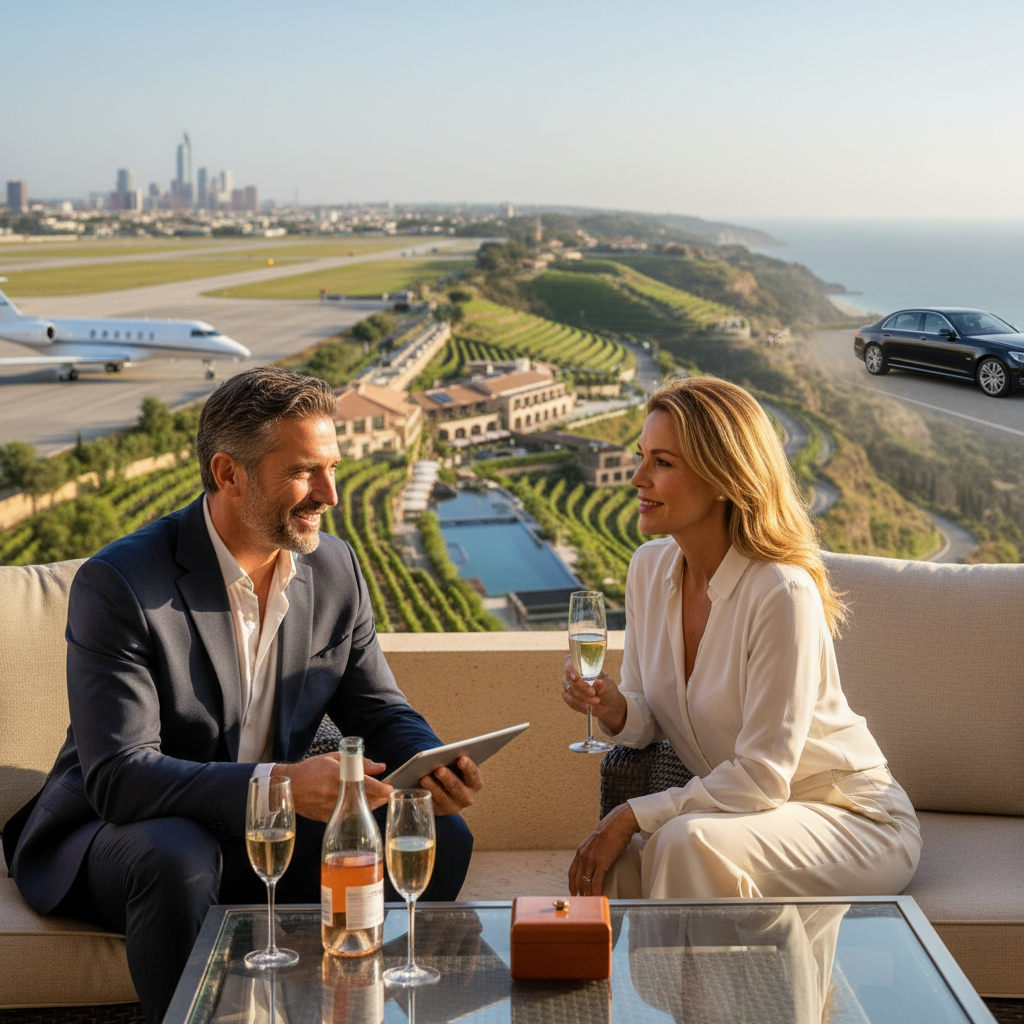
I’ve spent the last decade in the trenches of the high-end travel industry, and if there is one thing I’ve learned after moving $10M+ in luxury inventory, it’s this: The word "luxury" is officially dead.
To a Silicon Valley VC, "luxury" sounds like a generic Marriott ad. To an Upper East Side heiress, it sounds like someone trying too hard to sell her something she already has. If you are still using broad, generic ad copy to target the US high-net-worth (HNW) market, you aren't just wasting your ad spend—you are actively signaling to your best prospects that you don’t speak their language.
In the world of five-figure tour packages ($10k–$20k per person), the sale isn't made through discounts or flashy photos. It’s made through linguistic mirroring.
I call this the 'Affluent Whisperer' Protocol. It’s a framework I’ve developed to use Large Language Models (LLMs) like GPT-4 to move beyond generic SEO and hyper-localize copy for specific US micro-demographics. Here is how you can use AI to stop shouting at the market and start whispering exactly what they want to hear.
The Death of Generic High-End Marketing
Most tour operators make the mistake of treating the American "rich" as a monolith. They target "Luxury Travel USA" and hope for the best.
But a 35-year-old tech founder in Palo Alto and a 65-year-old retired partner at a Greenwich law firm occupy completely different psychological universes. Their trigger words, their fears, and their cultural touchstones are miles apart.
If you want to close $20k packages with minimal manual intervention, your copy must act as a digital "dog whistle"—using specific terms that signal elite status to the right person while remaining invisible (or boring) to everyone else.
Segmenting the US HNW Market: The Three Archetypes
Before we touch the AI, we need to define who we are whispering to. In my experience, the US affluent market primarily splits into three distinct linguistic profiles:
1. The "Performance" Elite (Silicon Valley / Austin Tech)
These clients value "optimization," "frictionless access," and "behind-the-scenes" intellectual depth. They don't want to be pampered; they want to be upgraded.
- Keywords: Bio-hacking, architectural integrity, technical precision, raw access, mental recharge.
2. The "Legacy" Travelers (East Coast Old Money)
They value "provenance," "discretion," and "stewardship." They find "glitz" vulgar. They want to know that you’ve been doing this for 30 years and that you know the family that owns the estate.
- Keywords: Heritage, understated, multi-generational, private collection, timeless.
3. The "Experience" Maxmialists (Southern California / Miami)
These are the trendsetters. They want the "first," the "only," and the "most." It’s about visual storytelling and social currency.
- Keywords: Curated, iconic, high-octane, bespoke, vibrant.
Using AI to Decode Regional Linguistic Nuances
This is where the 'Affluent Whisperer' Protocol gets technical. You can use AI to bridge the gap between your local knowledge and their regional dialect.
The Persona Injection Prompt
Instead of asking AI to "write a luxury travel ad," I use what I call the Context-Layered Prompt. It looks like this:
"Act as a copywriting expert specialized in the US High-Net-Worth market. I am selling a $15,000 private villa experience in Tuscany. Rewrite this sales page specifically for a 45-year-old Fintech executive living in San Francisco. Avoid the words 'luxury,' 'exclusive,' or 'expensive.' Instead, use 'luxury dog whistles' like 'frictionless,' 'high-fidelity,' and 'curated sabbatical.' Emphasize time-optimization and intellectual stimulation over relaxation."
When you run your copy through this lens, the output shifts from "Beautiful views and wine" to "An architecturally significant retreat designed for cognitive recovery and deep-work transitions."
That is how you sell a $15k package on an ad click.


