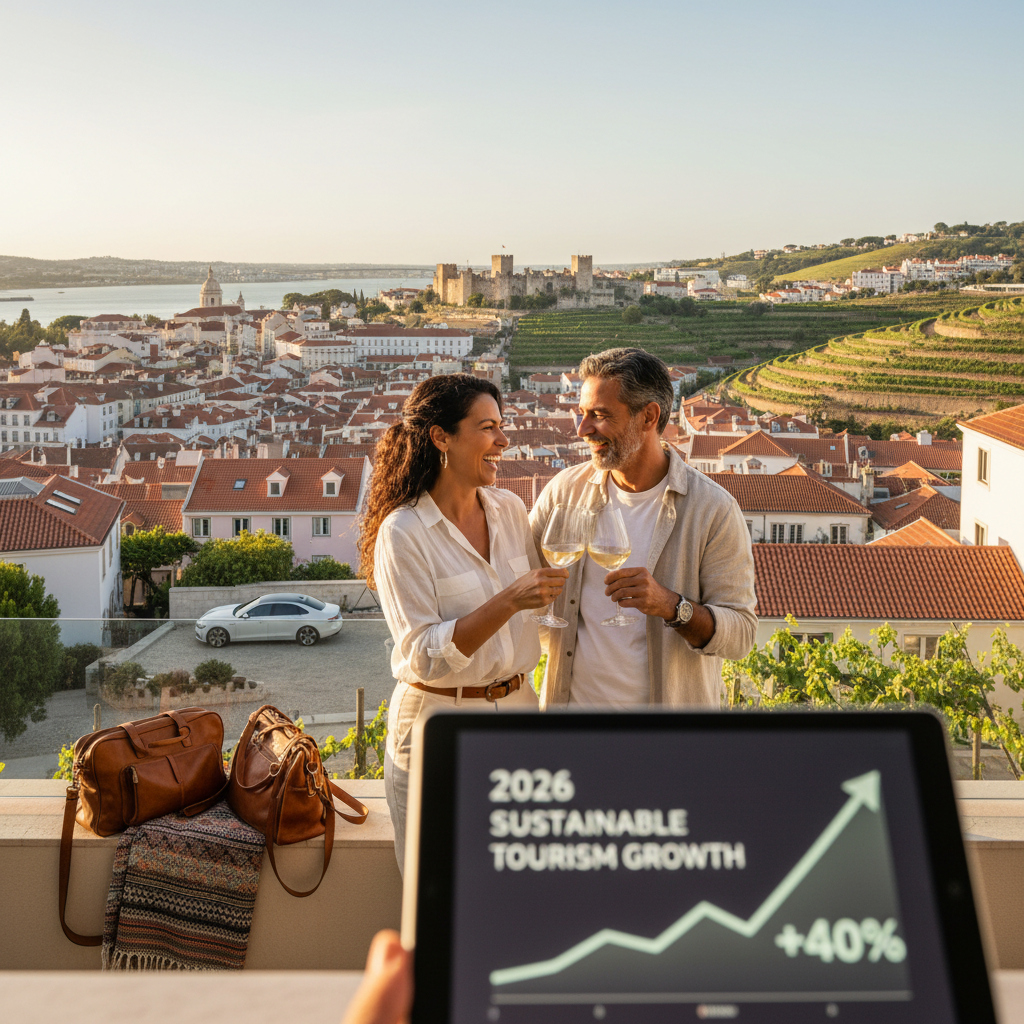
Ultra-wealthy travelers in 2026 are trading chilled champagne for supply-chain ethics. Learn how to pivot your tour operation to lead with radical transparency.
I’ve spent the last decade in the trenches of the travel industry, helping operators scale from "mom and pop" shops to $10M+ powerhouses. In that time, I’ve seen every trend come and go. I’ve seen the rise of the "Instagrammable" swing and the fall of the cookie-cutter bus tour.
But as we look toward 2026, I’m seeing a shift that is more seismic than anything I’ve witnessed before.
If you’re still trying to sell luxury by bragging about high-thread-count sheets, chilled Voss water, and a shiny Mercedes Sprinter, you’re already losing. The ultra-wealthy—the clients who don’t blink at a $15,000-per-head itinerary—don't care about the gold leaf. They are bored with "polished."
What they are craving now is something much harder to fake: Radical Transparency.
The Death of Legacy Luxury
For decades, the luxury travel industry operated on a "don't look behind the curtain" policy. We provided a seamless, sanitized experience where the traveler never had to see the struggle, the poverty, or the operational messiness of a destination.
In 2026, that "sanitized" feel is a red flag.
Affluent travelers are more educated than ever. They know that a private jet journey has a massive carbon footprint. They know that in many developing nations, the person driving their car or guiding their hike might not be making a living wage despite the high price of the tour.
The new status symbol isn't the bottle of champagne waiting in the room; it’s the knowledge that the bottle was sourced from a local vineyard that pays its workers 20% above the industry average. It's the "Value-Alignment Pivot."
Why Purpose is Replacing Polished
I call this the "Value-Alignment" pivot because high-net-worth individuals (HNWIs) are increasingly viewing their travel spend as an extension of their personal brand and investment portfolio. They want their money to do "work."
If a client is a VC who focuses on sustainable tech, or a philanthropist who cares about education, they are fundamentally offended when they realize their $50k vacation contributed to local displacement or environmental degradation.
They are trading legacy luxury markers for supply-chain ethics. They don't want to be "coddled"; they want to be "connected." Connected to the real impact of their stay. If you can’t prove that your operation is ethically sound, you aren't a luxury provider—you’re a liability to their conscience.
The "Radical Transparency" Audit: Are You Actually Ethical?
Most operators tell me, "Gonzalo, we're good people. We treat our staff well."
Empty words won't cut it anymore. By 2026, the $10k+ demographic will expect receipts. I want you to perform a "Behind-the-Scenes" audit on your operations today. If you can’t answer these questions with hard data, you aren't ready for the future of luxury.
1. The Fair-Wage Breakdown
Do you know exactly what your freelance guides take home after your agency takes its cut? In 2026, luxury means being able to state: "Our lead guides earn a base rate that is 30% higher than the national average, ensuring their families have private healthcare."
2. Supply Chain Origin Stories
Where does your food come from? Where does the fuel for your boats come from? If you’re still buying bulk from a multinational corporation because it’s "easier," you’re missing a branding opportunity. Every dollar spent with a local cooperative is a story you can sell.
3. Carbon-Offset Validation (No More Greenwashing)
The era of clicking a "carbon offset" box at checkout is over. High-end travelers know most of those schemes are junk. They want to see local impact. Instead of "planting trees in a country we can't name," show them how you are funding a specific local solar project or waste management initiative in the village they are visiting.
Marketing the "Boring" Stuff as a Premium Selling Point
Now, here is where most operators fail. They think talking about "supply chain ethics" or "fair wages" is boring or makes them sound like an NGO.
Wrong. This is your greatest marketing asset.
When I help my clients frame these operational ethics, we don't put them in a dry PDF buried in the footer of the website. We make them the star of the show. We turn "boring" ethics into "exclusive" access.
Instead of saying: "We use eco-friendly soaps."
Say: "We partnered with a local women's collective to formulate a biodegradable botanical line exclusive to our guests, creating 12 full-time jobs for single mothers in the valley."
See the difference? The first one is a chore. The second one is a narrative. It validates the guest’s status as a conscious, "in-the-know" traveler.
To sell this to the $10k+ demographic, you have to position transparency as the ultimate "insider" experience. You are letting them into the "secret" of how the destination actually works. You are treating them like a sophisticated partner, not just a tourist.
Scaling Your "Impact Narrative"
In my consulting work, I’ve found that the biggest hurdle to hitting that $10M+ revenue mark isn't lead generation—it's trust.
At the high end of the market, people aren't comparing prices. They are evaluating the "risk" of your brand. The risk that you might make them look bad, or that you might give them a superficial, "plastic" experience.
Radical transparency removes that risk. It builds an emotional moat around your business that no competitor can cross just by buying a newer fleet of cars. Use your marketing to show the faces of your suppliers. Show the "ugly" parts of sustainability—the challenges you’ve faced and how you’ve overcome them.
Authenticity is the only currency that isn't inflating.
The Actionable "Impact Statement" Template
To close the deal with a $10k+ per head traveler, you need to reduce "ethical friction" at the point of purchase. I recommend every operator add a "Value-Alignment & Impact Statement" to their custom proposals and checkout pages.
Here is a template you can steal:
Your Impact with [Company Name]:
"Your journey through [Destination] is designed to leave a footprint of progress. For this specific itinerary, $ [Amount] of your booking is directly allocated to:
- Direct Local Wages: Ensuring [Number] families receive a living wage through our ‘Guide-First’ initiative.
- Local Supply Chain: 85% of your meals are sourced from [Specific Region] farms within a 50-mile radius.
- Conservation/Project: A direct contribution to [Project Name] which will [Specific Outcome, e.g., protect 10 acres of rainforest] during your stay.
We don't just show you the world; we make sure the world is better because you saw it."
The Bottom Line
The 2026 traveler is looking for a reflection of their values, not just a reflection of their bank account.
If you want to dominate the luxury market over the next five years, stop looking for more "stuff" to give your guests. Start looking at your supply chain. Start looking at your people. Start being radically honest about what it takes to run a world-class operation.
Because in the future of travel, the most luxurious thing you can offer is the truth.
If you’re ready to pivot your operations and start capturing the conscious luxury market, let’s get to work. The "old way" is dying—don't go down with the ship.
Ready to scale your tour operation with a purpose-driven strategy? Let's talk about how to audit your supply chain and turn your ethics into your biggest revenue driver. [Book a strategy session with Gonzalo here.]