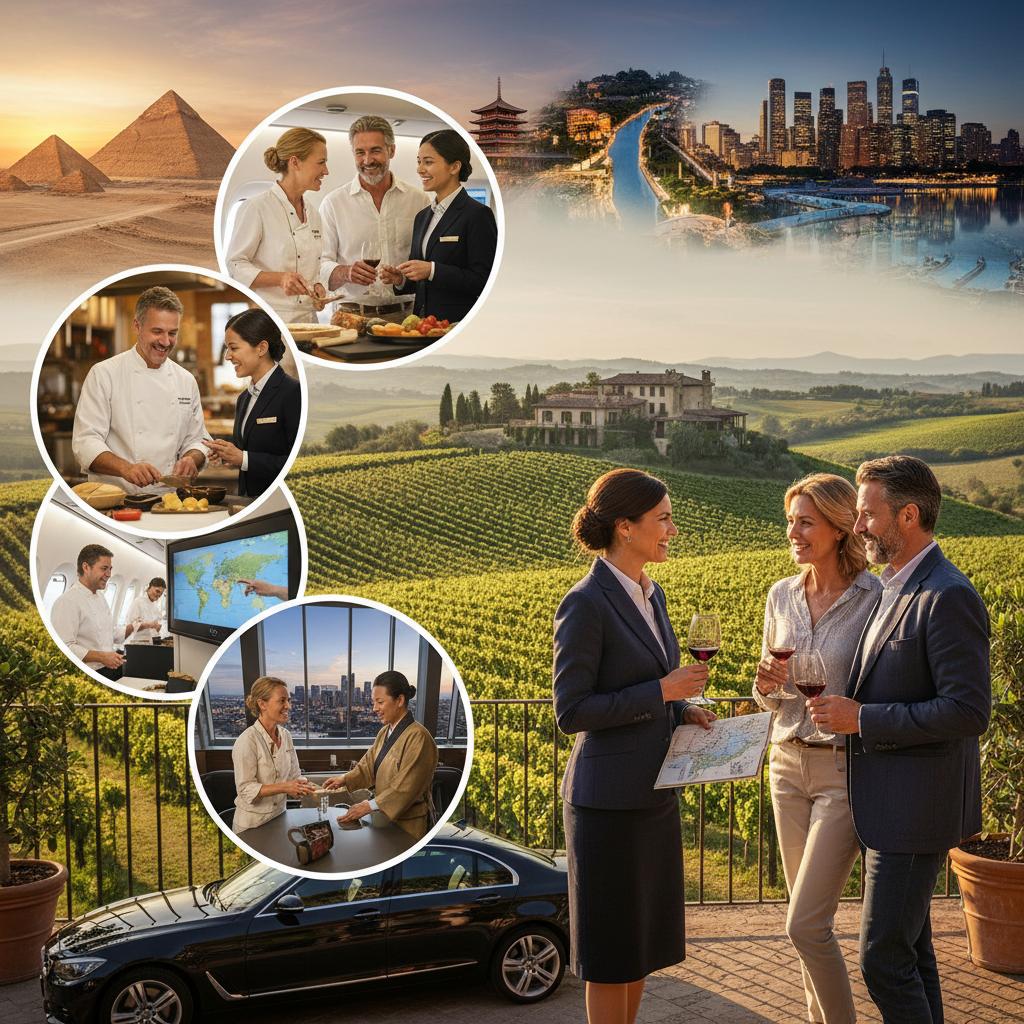
I’ve spent the last decade in the trenches of the travel industry, helping operators scale from "mom-and-pop" setups to $10M+ powerhouses. If there is one thing I’ve learned, it’s that the wealthy are bored.
They’ve seen the gold-plated faucets. They’ve slept on the 1,000-thread-count sheets in Dubai, Paris, and Tokyo. By 2026, the traditional "Luxury" label—defined by marble lobbies and pillow menus—will be officially commoditized. When everyone can book a 5-star suite on Expedia in two clicks, the "5-star" badge loses its power to impress.
The real money is moving toward something I call the Value-Access Pivot.
High-net-worth individuals (HNWIs) are no longer paying for the where. They are paying for the who, the how, and the only me. They are swapping static luxury for exclusive human expertise. If you want to justify a $15,000+ price point for a one-week itinerary, you have to stop being a logistics coordinator and start being a gatekeeper.
The Death of "Luxury" and the Rise of De-Commoditization
Let’s be honest: most luxury travel is just expensive logistics. You book a nice car, a nice hotel, and a guide who speaks good English. But in the eyes of a sophisticated traveler, that’s a commodity. They can price-compare your hotel on Booking.com and your transport on Uber Black.
De-commoditized luxury is different. It’s the realization that true value lies in things that cannot be found on an OTA (Online Travel Agency).
In 2026, affluent travelers are looking for "Insider Friction." This is the idea that the experience requires a specific human relationship to unlock. It’s not about how much it costs; it’s about who you have to know to get in the door. When you sell access to a person or a moment rather than a room, price objections vanish. You can’t price-compare a private dinner with a lead marine biologist on a restricted island because that experience doesn't exist on a dropdown menu.
Auditing Your Itineraries: Finding the "Locked" Experiences
To make this pivot, you need to audit your current offerings. Look at your best-selling itinerary. Is it a sequence of public-facing sites? If so, you’re at risk.
To justify elite price points, you must identify "Locked" experiences. These are moments that require your unique operational "key." Ask yourself:
- The Conservationist Angle: Instead of a safari drive, can your guests join a rhino-tagging operation with the head vet?
- The Heritage Angle: Instead of a tour of a Tuscan villa, can they have wine with the Count whose family has owned the land since 1400?
- The After-Hours Angle: Can you get them into the Louvre or the Egyptian Museum after the lights go out and the crowds are gone?
When I work with operators, I tell them to look at their Rolodex. Your profit isn't in your fleet of vans; it’s in your friendships. Those "locked" doors are where your $20k margins live.
Transitioning from Logistics Coordinator to Gatekeeper
Most tour operators spend their day playing "Email Tag" with hotels and transport providers. That’s low-value work. To win in 2026, you must transition into the role of a Gatekeeper of Access.
A logistics coordinator says: "I will book you a private tour of the ruins." A gatekeeper says: "I’ve arranged for the lead archeologist to take a break from the current excavation to show you a sector that hasn't been opened to the public yet."
The Gatekeeper Framework:
- Identify the Authority: Who is the local expert, the scientist, the artist, or the historian?
- Create the 'Why Now': Why is this person talking to your guest? (e.g., "They rarely take guests, but they are a personal friend of the firm.")
- The Human Element: Focus the itinerary around the conversation, not the monument. The monument is just the backdrop for the human expertise.


