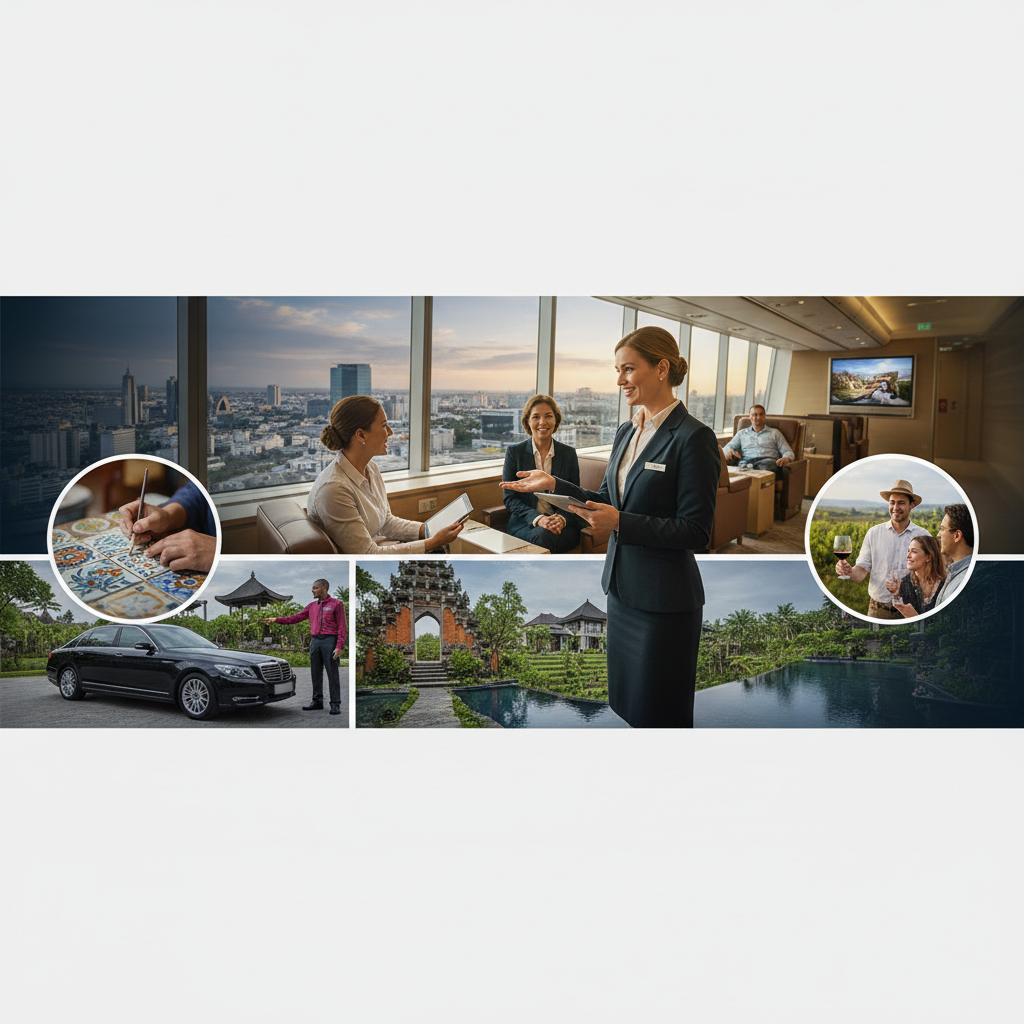
Move beyond basic logistics. Discover how to use behavioral psychology and 'Consultative Hosting' to turn your tour guides into high-revenue sales engines.
Listen, I’ve spent the better part of a decade inside the engine rooms of tour companies that move the needle. I’ve seen operators hit that frustrating $1M ceiling and wonder why their Facebook ads aren't scaling.
Here is the cold, hard truth: Most tour operators focus 90% of their energy on getting people onto the bus, and only 10% on what happens when they get off it.
We treat operations as a logistical puzzle—did the van arrive on time? Is the lunch gluten-free? These are "Phase One" optimizations. They are the bare minimum. If you want to scale to $10M+ without doubling your ad spend, you need to master Second-Tier Optimization.
This isn't about better spreadsheets. It’s about operationalizing behavioral psychology through your greatest asset: your guides.
The 'Experience Gap': Why Your Checklist is Killing Your Reviews
Most operators give their guides a checklist:
- Pick up guests.
- Say the history facts.
- Don't crash the boat.
- Drop them off.
That is a commodity service. The "Experience Gap" is the distance between a guide who provides information and a guide who facilitates an emotional transformation. When a guest feels like they are just another "unit" on a tour, they check out.
To bridge this gap, we have to stop hiring "narrators" and start training "behavioral hosts." We need to move away from a transactional mindset and toward a framework where every movement on a tour is designed to trigger a specific psychological response.
Actionable Step 1: Using the 'Peak-End Rule' to Automate 5-Star Reviews
If you’ve followed my work, you know I’m obsessed with the Peak-End Rule. This is a psychological heuristic that says people judge an experience largely based on how they felt at its peak (the most intense point) and at its end.
Most tour operators let the "end" of the tour fizzle out. The guide is tired, the guests are checking their phones, and the drop-off is an awkward "search for the tip" moment.
To scale through operations, you must script the Peak and the End:
- Manufacturing the Peak: Don't leave the "wow" moment to chance. If you’re doing a wine tour, the peak shouldn't just be the wine; it should be the surprising private cellar access you’ve negotiated, or a blind tasting challenge that gets the group laughing.
- The Intentional End: The last 15 minutes of your tour are the most expensive minutes you own. Instead of a standard goodbye, implement a "Reflective Recap." Have the guide summarize the three most meaningful moments they shared with the group. This anchors the positive memories right before the guest reaches for their phone to leave a review.
When you optimize for the Peak-End, you aren't just giving a good tour; you are hacking the guest’s memory to ensure that 5-star review is a foregone conclusion.
Actionable Step 2: Training Guides in 'Consultative Hosting'
This is where the real money is made. I call this Consultative Hosting.
Your guides are your eyes and ears on the ground. They spend six hours with your clients; your marketing team spends zero. Yet, most guides have no idea how to spot a high-net-worth (HNW) traveler or how to upsell them without sounding like a used car salesman.
Here’s the move: Train your guides to identify "Life Events" or "Pain Points" during the icebreaker.
- The HNW Signal: Is the guest complaining about their crowded hotel pool?
- The Move: The guide shouldn't just nod. They should mention: "You know, a lot of my guests who stay there actually prefer our private sunset sail for their second day because it’s the only way to get true peace and quiet. I can see if we have an opening for you tomorrow?"
This isn't an upsell; it’s a solution. When a guide suggests a private add-on or a future booking based on a conversation, the conversion rate is 4x higher than any email sequence I’ve ever built.
Actionable Step 3: Standardizing the 'Hidden Moments'
Wealthy clients don't care about gold-plated toilets. They care about anticipation.
Second-tier optimization involves standardizing "Hidden Moments"—small, low-cost operational details that signal high value. These are the things that make a guest say, "How did they know I wanted that?"
In my previous roles, we implemented what I call the "Third-Degree Touchpoints":
- The Temperature Prep: If it’s a hot day, the guide greets the guests with cold, eucalyptus-scented towels. Total cost? $0.50 per guest. Perceived value? $50.
- The Local Customization: If a guest mentions they love a specific local fruit, the guide makes a "surprise" stop at a roadside stand to buy it for the group later in the day.
- The 'Photographer' Protocol: Train your guides on basic iPhone portrait mode settings. When a guide takes a professional-grade photo of a couple without being asked, they aren't just a guide anymore—they are a personal concierge.
These moments feel spontaneous to the guest, but they are 100% operationalized. They are in the manual. They are tracked.
Turning Narrators into Brand Representatives
Scaling a tour business is not about outspending the competition on Google Ads. That’s a race to the bottom.
Real growth—the kind that leads to $10M+ in revenue—comes from turning your field operations into a marketing machine. When your guides move from being "people who talk about history" to "behavioral experts who facilitate luxury," your business undergoes a shift.
Your customer acquisition cost (CAC) drops because your referral rate skyrockets. Your lifetime value (LTV) increases because guests book their next three tours while they are still on the first one.
Stop looking at your operations as a cost center. It is your most powerful sales channel. Shift the focus from "what we do" to "how they feel," and the revenue will follow.
Ready to stop being a logistics manager and start being a growth-focused operator? Let’s look at your guide training. If it's more than two years old, you’re leaving money on the table.
See you at the top,
Gonzalo