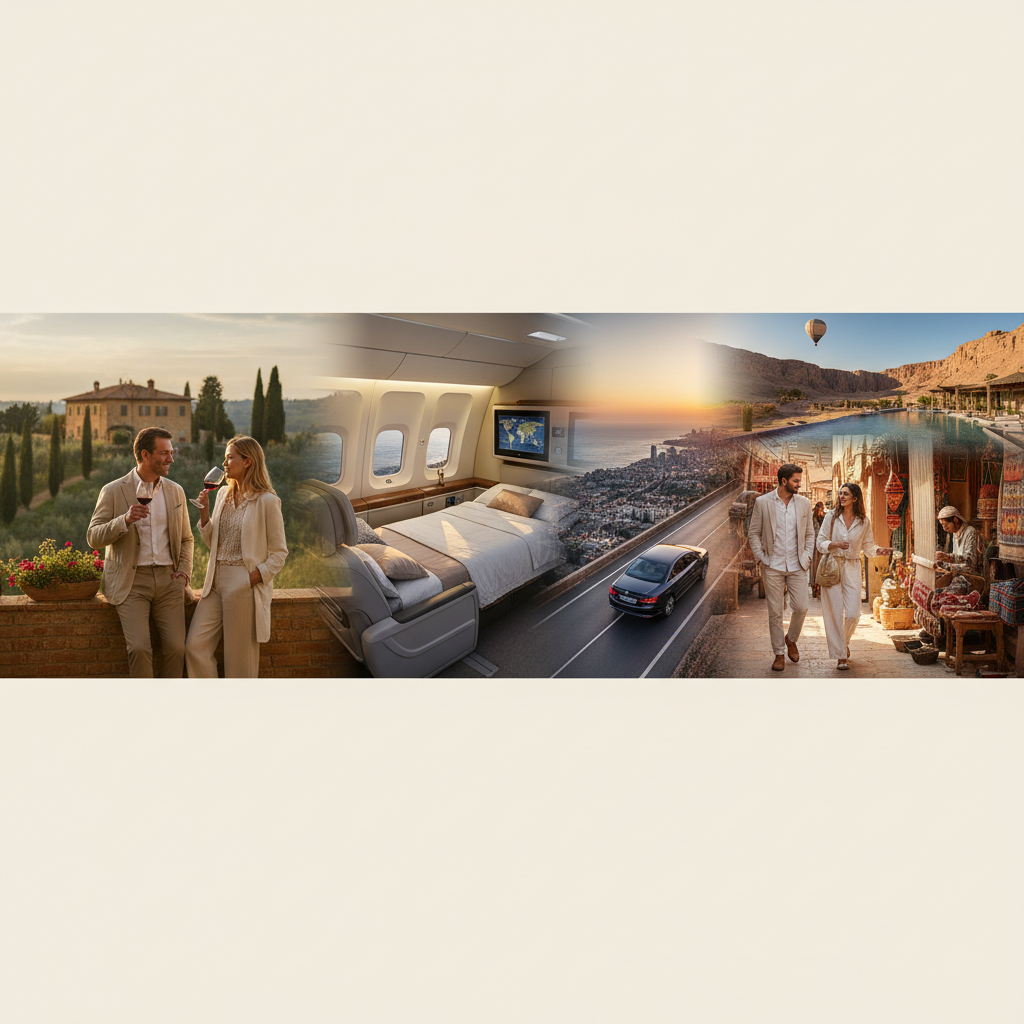
I remember sitting in the back of a luxury SUV in Napa Valley about seven years ago. The client was a hedge fund manager from Greenwich, Connecticut. He’d paid $12,000 for a three-day private experience. Everything on paper was "perfect." The itinerary was exclusive. The wine was vintage. The vehicle was a brand-new Escalade.
But about twenty minutes in, I noticed him fidgeting. He wasn’t looking at the rolling vineyards; he was staring at a small, cheap plastic air freshener clipped to the vent that smelled like synthetic "New Car." Then, the guide started speaking—not in a conversation, but in a booming, rehearsed "theatre voice" that bounced off the leather seats.
The client didn’t book again. Not because the tour was bad, but because the Sensory Signature was fractured.
In my decade of scaling tour operations to over $10M in revenue, I’ve learned one cold, hard truth: Affluent US travelers don’t buy luxury. They buy equilibrium. They are rewriting the definition of premium fulfillment, moving away from "how much it costs" toward "how it feels to be there."
If you want to capture the high-net-worth (HNW) American market, you need to stop selling tours and start engineering a Sensory Signature.
Why 'Luxury' is a Dead Word in the US Market
For the modern affluent traveler—the Silicon Valley tech lead, the Manhattan partner, the Austin entrepreneur—the word "luxury" has lost its teeth. It’s been diluted by every four-star hotel and overpriced airport lounge.
To these clients, premium fulfillment is no longer about the price point. It’s about sensory consistency.
When a client spends $10k+ on a private journey, they are paying for a temporary escape from the "noise" of their high-pressure lives. If there is a "sensory gap"—a mismatch between what they see and what they hear or smell—the brain registers it as a flaw. The illusion of the high-end experience breaks, and suddenly, they are just tourists in an expensive car.
The New Luxury is the absence of friction. It is a journey where every sense is being whispered to in the same language.
The 'Three-Senses Rule': Aligning with the $10k+ Expectation
I coach my partners on the Three-Senses Rule. If you can align the Smell, Sound, and Visual "beat" of your tour, you don't just provide a service; you create a core memory. For an American HNW client, these three must be in perfect harmony.
1. The Olfactory Anchor (Smell)
The sense of smell is the only one directly linked to the amygdala—the brain's emotional center. If your tour vehicle smells like cleaning chemicals or, heaven forbid, the guide’s lunch, you have already lost the referral.
- The Action: Choose a signature scent. It should be localized but subtle. Think sandalwood, cedar, or local citrus. It needs to be consistent from the moment they are picked up to the moment they enter the private villa.
2. The Auditory Rhythm (Sound)
Affluent Americans live in a world of high-quality audio. They recognize the "theatre voice" of a generic guide and they hate it.
- The Action: Your guides must master the "Consultative Tone." It’s a low-frequency, steady, and conversational pitch. It should sound like a knowledgeable friend, not a megaphone. Furthermore, pay attention to the "beat" of the tour. Is there a moment of intentional silence near a Cathedral or a canyon? Silence is a premium sound.
3. The Visual Harmony (Sight)
Visuals aren't just about the scenery; they are about the "clutter-free" environment.
- The Action: Look at the "visual noise" in your operation. Is the guide wearing a branded polo with too many logos? Are there plastic water bottles visible in the seat pockets? High-end visual harmony means "essentialism." Every object the client sees should look like it belongs in a curated gallery, not a mid-sized office.


