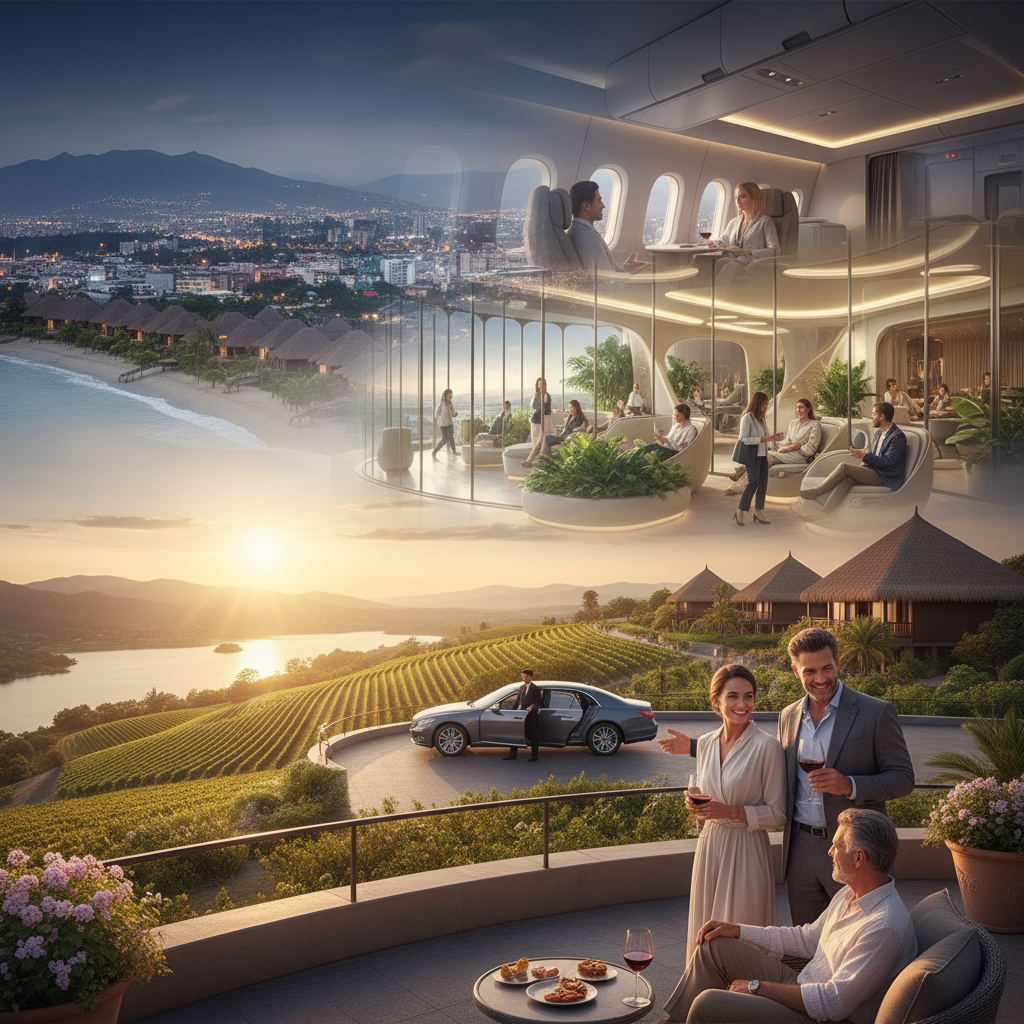
I’ve spent the last decade deep in the trenches of the tourism industry, helping operators scale from "doing okay" to generating over $10M in revenue. If there is one thing I’ve learned, it’s this: people don’t remember your itinerary. They remember how your itinerary made them feel.
As we look toward 2026, the luxury travel market is shifting. We are moving away from "conspicuous consumption" toward "emotional resonance." High-net-worth travelers are no longer impressed by a private van or a skip-the-line ticket—those are now the baseline. To win today, and to command the premiums that drive massive growth, you must master the Sensory Signature.
I’m talking about the subconscious loyalty triggers that tell a guest, within seconds, that they are in the hands of a master. Let’s dive into how you can audit your guest journey to target these triggers and make your brand the only choice for the elite traveler.
The Science of Subconscious Loyalty: Why Logic Fails in High-Ticket Travel
Most tour operators build their businesses on logic. They focus on "The Three Ps": Price, Program, and Place. They think, “If I offer the best price for the most sites in the best location, I’ll win.”
In 2026, that logic is a death trap.
Loyalty isn't logical; it’s visceral. Neurobiology tells us that the olfactory system (smell) and the auditory system are hardwired directly into the amygdala—the brain’s emotional center. When you trigger a positive sensory response, you bypass the "rational" part of the brain that compares prices.
This is how you reduce price sensitivity. When a guest feels a specific sense of calm the moment they step into your vehicle, or a sense of "belonging" through the tactile weight of your welcome kit, they stop wondering if they could have found the tour $200 cheaper. They simply trust you.
The 'Five-Sense' Audit: Reimagining the Guest Journey
To implement a Sensory Signature, you need to conduct a forensic audit of every micro-moment in your itinerary. I want you to walk through your experience not as an owner, but as a guest who has just spent twelve hours in business class and wants to feel truly cared for.
1. The Olfactory Anchor: Your Scent Identity
Scent is the fastest way to build a memory. In my experience, the interior scent of a luxury transport vehicle is the most overlooked asset in tourism.
- The Action: Stop using generic "new car" air fresheners or, worse, heavy chemical cleaners. Partner with a local perfumery to create a bespoke scent that reflects your destination. If you are in the Mediterranean, think sea salt and wild rosemary. If you are in the Highlands, think damp cedar and peat.
- The Trigger: Use this scent in your vehicles, your welcome lounge, and even lightly misted on the warm towels handed out after a hike. By the third day, that scent becomes the "comfort trigger" for your guests.
2. Tactile Comfort: The Weight of Luxury
Luxury is heavy. Think about the last time you held a high-end watch or a menu at a Michelin-star restaurant. It has physical weight.
- The Action: Look at your pre-trip materials and physical touchpoints. Are you sending PDFs, or are you sending a physical, embossed leather travel wallet? Are your vehicle seats covered in standard leather, or a brushed, soft-grain texture?
- The Trigger: When a guest touches something that feels high-quality—a heavy linen napkin during a picnic or a premium-weight welcome card—their brain registers "Safety" and "Value." It justifies the high-ticket price before the tour even begins.
3. Acoustic Quality: The Sound of Silence (and Culture)
The "acoustic signature" of your tour can make or break the experience. Think about the jarring sound of a low-quality microphone on a tour bus. It’s a literal headache.
- The Action: Audit the noise levels in your vehicles. Invest in sound-dampening tech. More importantly, think about your "Soundtrack." 2026 travelers crave curation. Instead of the radio, have a curated playlist of local, authentic music that transitions throughout the day (uplifting in the morning, ambient during sunset).
- The Trigger: Controlled acoustics reduce cognitive load. A guest who isn't straining to hear or being bombarded by traffic noise is a guest who is relaxed enough to enjoy your storytelling.


