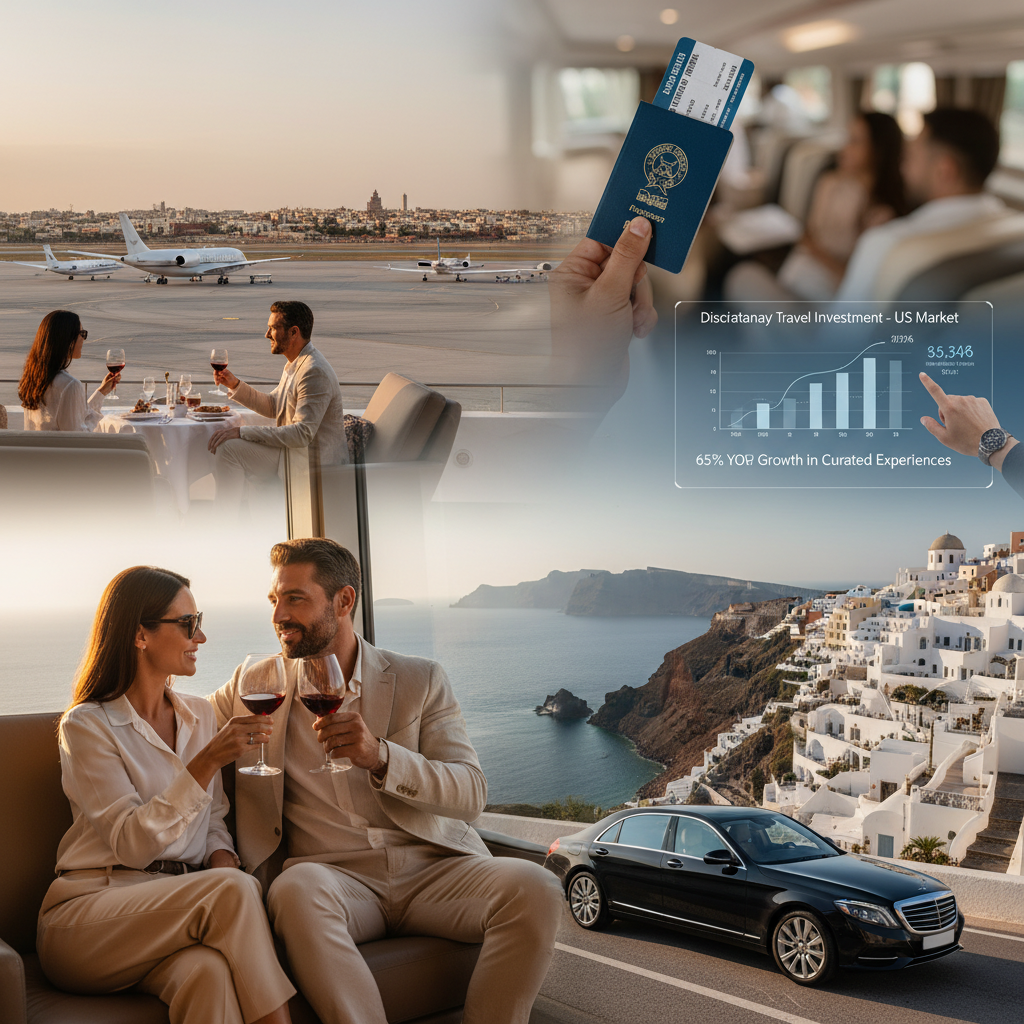
After scaling tour operations to over $10M in revenue, I’ve realized that most founders are working way too hard for margins that are way too thin. They chase volume across forty different nationalities, trying to be everything to everyone.
But if you want to scale without losing your mind—or your profit—you need to understand one fundamental truth: The high-net-worth American traveler is the single most powerful growth hack in the tourism industry.
I call this the 'Selective Scarcity' Playbook. It’s not about being "expensive"; it's about being exclusively valuable. In my experience, Americans don't just buy tours; they invest in narratives, time-optimization, and status.
If you are a "High-IQ" founder—someone who views their tour business as a sophisticated high-margin machine rather than a logistics company—this is for you.
Why the 'American Dream' Traveler is Your Path to $10M
When I first started, I thought a booking was a booking. I didn't care if the guest was from London, Berlin, or New York. I was wrong.
European travelers often prioritize the "deal." They are culturally wired to hunt for value and are comfortable with DIY logistics. The high-net-worth US traveler, however, views money as a tool to "buy back" time and eliminate friction. To them, the "American Dream" is no longer about owning a home; it’s about the freedom to inhabit a world where everything works perfectly, just for them.
By focusing on the US market, you aren't just getting higher spenders; you’re getting people who are culturally programmed to reward excellence with loyalty and high-margin upsells. If you can solve their "decision fatigue," they will hand you the keys to your first $10M.
The Psychology of the High-Performance US Traveler
To master the Selective Scarcity Playbook, you have to understand the three psychological triggers that drive US spending habits.
1. Convenience Over Cost (The "Frictionless" Mandate)
For a founder or an executive from California or New York, the most expensive thing they own is an hour of their time. If your booking process takes three emails, or if they have to arrange their own transport from the hotel, you’ve already lost them. They will pay a 40% premium just to know that "Gonzalo has it handled."
2. Prestige and Social Capital
Americans are the world leaders in the "Experience Economy." They aren't just looking for a nice day out; they are looking for a story to tell at their next dinner party. If your tour is "the one the locals don't show anyone else," you’ve tapped into their need for exclusivity.
3. Perceived Scarcity
This is where the "Selective Scarcity" name comes from. In the US, if something is available to everyone at any time, it is seen as a commodity. If it is only available to a "select few" or during a "specific window," it becomes a luxury.
Re-Engineering Your Tiers: Messaging for High-Net-Worth Pockets
Most operators have a "Standard" and a "Private" option. That is too basic. To capture the US market, you need to re-engineer your tiers to align with their spending habits.
I recommend a three-tier structure designed to guide the American psyche toward the highest margin:
- The Baseline Experience: Your standard high-quality tour (This establishes your authority).
- The 'Founder’s Edition' (The Sweet Spot): This is the private tour, but rebranded with "exclusive-access" messaging. Use phrases like “Behind the velvet rope,” or “Privately curated for those who value total immersion.” This shouldn't just be a private version of the group tour; it should include a element that money usually can’t buy, like a meeting with a local artisan or access to a closed-door site.
- The 'Legacy Series' (The Anchor): A price point so high it makes the Founder’s Edition look like a bargain. This is for the 1% of the 1%—helicopter transfers, five-star catering in the field, the works. Even if you never sell it, it frames the middle tier as the "smart" choice.
Actionable Advice: Audit your website right now. If your most expensive option is listed as "Private Tour - $600," change it to "The Executive Heritage Discovery." The language must shift from what they do to who they become by doing it.


