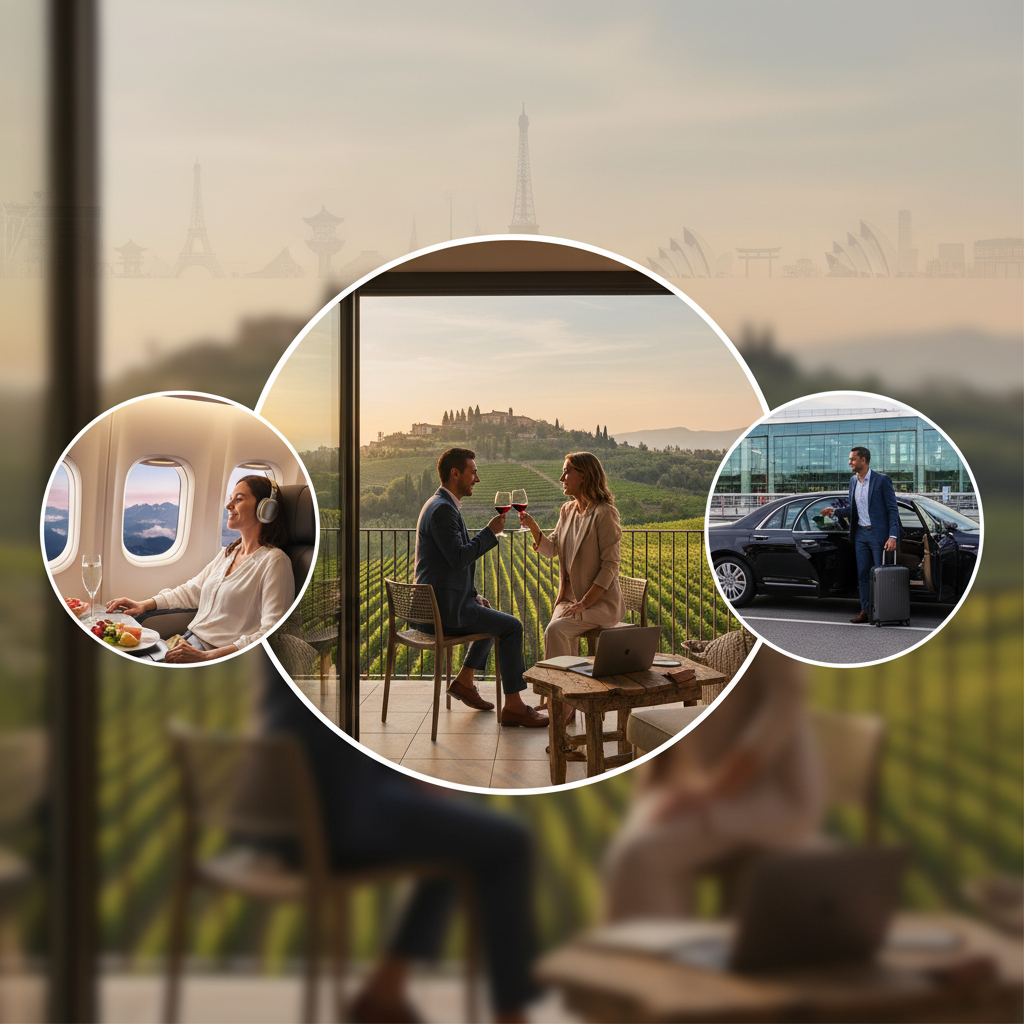
The line between tourist and resident is blurring. Learn why high-net-worth Americans are seeking semi-permanent immersion and how to overhaul your itineraries.
Let’s be honest: the era of the "bucket list" traveler is dying.
I’ve spent the better part of a decade helping tour operators scale to seven and eight figures, and if there’s one thing I’ve learned, it’s that the "see-it-all-in-three-days" itinerary is a race to the bottom. It’s high-stress, low-margin, and quite frankly, it’s exhausting for everyone involved.
But something shifted recently. As we look toward 2026, I’m seeing a massive surge in what I call the "Second-Home Effect." High-net-worth travelers—particularly Americans—aren't just looking for a vacation anymore. They are looking for a trial run at a new life. They want to be "semi-permanent" residents.
If you are still selling 45-minute guided walks through a cathedral, you are missing the boat. To hit that $10M+ revenue mark in the next two years, you need to stop acting like a tour guide and start acting like a lifestyle curator.
The Death of the 'Tourist' and the Rise of the 'Temporary Resident'
In my experience, the biggest mistake operators make is treating every guest like they just landed from Mars.
Today’s luxury traveler has already seen the Eiffel Tower or the Colosseum. They aren't interested in the "highlights" anymore. They are looking for deeper local integration. They want to know where the best sourdough is, which neighborhood gym has the best community, and who the most trusted tailor in town is.
This "Semi-Permanent Tourism" trend is driven by a desire for belonging. With the rise of remote work and the "work-from-anywhere" executive class, your clients aren't staying for a weekend; they are staying for 14 to 30 days. They want to feel like they own a piece of your city.
Moving from 3-Day 'Highlights' to 14-Day 'Neighborhood Immersion'
I recently worked with an operator in Florence who was struggling with burnout. They were doing back-to-back 3-day tours. We overhauled their entire model to focus on a 14-day "Neighborhood Immersion" experience.
The results? Their revenue per guest tripled, and their operational headaches plummeted.
Instead of rushing from Museum A to Monument B, a 14-day itinerary focuses on the rhythm of local life.
- Week 1: The Setup. Helping them find "their" spots—the coffee shop where the barista knows their name, the park for their morning run.
- Week 2: The Integration. Introduction to local artisans, private dinners in residential homes, and neighborhood networking events.
This isn't about filling every hour with an activity. It’s about providing the infrastructure for a life well-lived in a foreign place.
Borrowing the Playbook from Members-Only Clubs
If you want to dominate in 2026, stop looking at what other tour companies are doing. Start looking at Soho House or luxury co-living spaces.
The most successful operators I coach are borrowing "community building" tactics from these industries. Why? Because the semi-permanent tourist is often lonely. They have the money, they have the time, but they don't have the social "in."
Try this: Instead of a standard group dinner, host a "Salon" at a local’s private terrace. Invite a local architect, a winemaker, and your guests. Don't make it a "tour." Make it a dinner party. You are selling access to a social circle, not just a meal. This shift from "service provider" to "community gatekeeper" is where the real money is made.
Actionable Pivot: How to Restructure for 2026
If you want to capitalize on this, you can’t just stretch out your current tours. You need a total itinerary overhaul. Here is how I’m advising my clients to pivot:
1. The 'Lifestyle-First' Experience
Stop selling landmarks. Start selling habits. Include "activities" that focus on daily life:
- The Grocery Masterclass: Don't just go to a market; spend two hours with a local chef learning how to navigate the seasonal stalls like a resident.
- The Wellness VIP: Provide pre-arranged access to the most exclusive (and hard to get into) Pilates studios or private social clubs.
- The Commute: Rent them a local-style e-bike or a vintage Vespa for the duration of the stay, rather than providing one-off transfers.
2. The 'Retainer' Pricing Model
Longer stays require a different financial structure. Instead of a per-person/per-day price, move toward a "Concierge-plus-Experience" model.
Charge a high-ticket "Setup Fee" (curating the stay, booking the high-end apartment, stocking the fridge, setting up the gym membership) plus a recurring weekly service fee. This guarantees your margins regardless of how many "tours" they actually book.
3. Hyper-Local Networking
For your high-net-worth clients, business doesn't stop. Can you facilitate a meeting with a local startup founder? Or a private tour of a local factory? Helping them build their professional network while abroad creates a level of stickiness that no "Classic Tour" can match.
Scaling to $10M: The Power of High-Retention and Low CAC
The reason I love the Semi-Permanent Tourism model is simple math.
In the traditional tour world, your Customer Acquisition Cost (CAC) is a nightmare. You are constantly fighting for new eyeballs on Google or TripAdvisor. You get the booking, you run the tour, and the customer is gone forever. You’re on a treadmill.
When you shift to the "Second-Home Effect" model, your CAC drops significantly over time because your Lifetime Value (LTV) skyrockets.
- Predictable Revenue: A 21-day guest is worth more than ten 2-day guests.
- Referral Engine: High-net-worth individuals live in small circles. If you successfully "onboard" them into a city, they will tell every friend at the country club.
- Repeat Business: These aren't one-and-done travelers. They often come back to the same "second home" city every year.
By building a predictable, high-margin revenue stream from a smaller pool of high-value clients, you stop fighting for volume and start focusing on scaling the value of each relationship. That is exactly how you build a $10M+ business without losing your mind.
Final Thought: The Window is Closing
The 2026 traveler is already planning. They are tired of being "tourists." They want to belong.
You have a choice: you can keep selling the same tired landmarks, or you can become the gateway to a new life for your clients. One of these paths leads to price wars and razor-thin margins. The other leads to being a dominant, high-revenue player in the next era of luxury travel.
If you’re ready to start building that "Second-Home" infrastructure, now is the time to audit your itineraries. Ask yourself: "If my guest stayed for a month, would they be bored by day four, or would they feel like they finally found home?"
Let’s get to work.
Want to scale your tour business to the next level? My name is Gonzalo, and I help operators build high-margin, high-growth businesses. Send me a message, and let's talk about how to turn your current tours into a lifestyle-first brand.