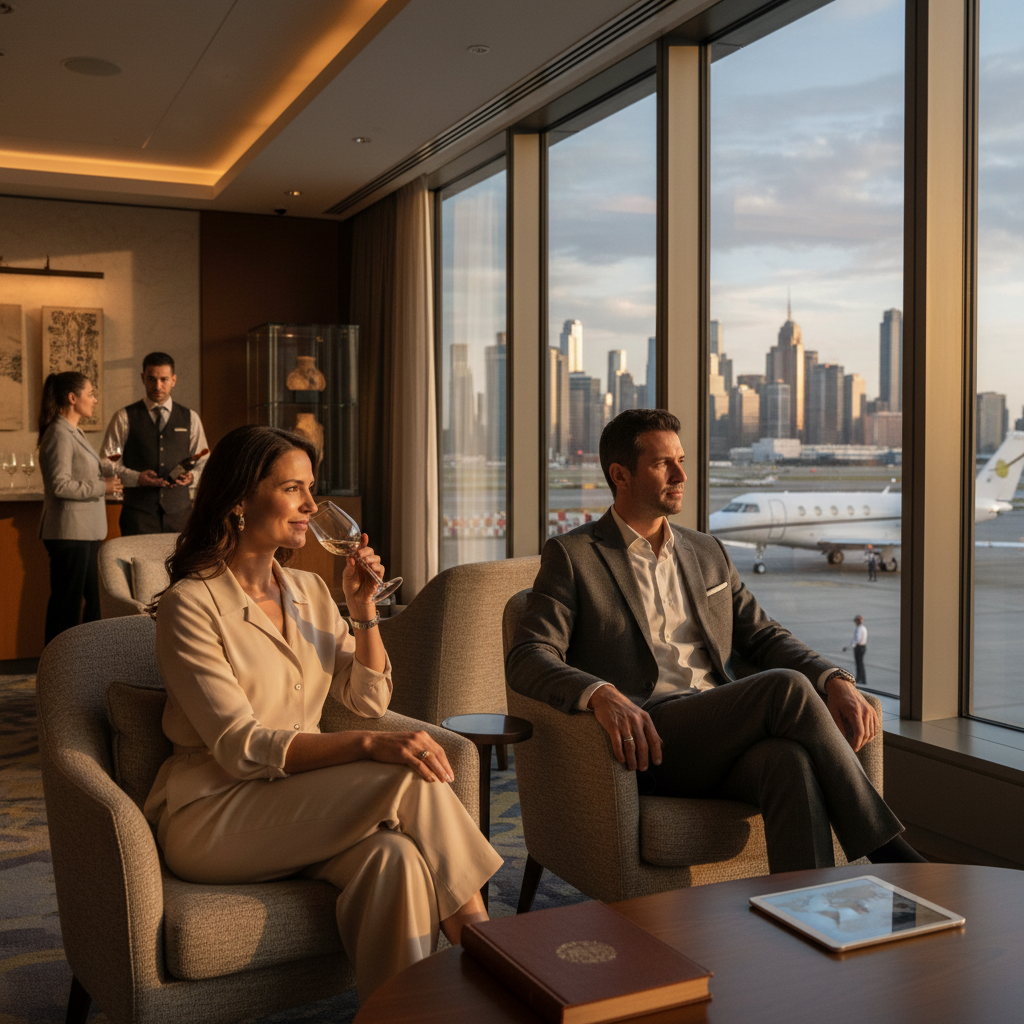
Traditional discounting kills luxury brand equity. Discover how to use 'Value-Stacking' and 'Quiet Luxury' markers to attract HNWIs.
Let’s have a heart-to-heart about the race to the bottom.
If you’ve been in the tour operator game for a while, you know the panic that sets in when your lead pipeline starts looking a little thin. Your first instinct? Drop the price. Run a "15% off Early Bird" special. Throw out a discount code like it’s confetti at a parade.
But here’s the reality I’ve learned after moving $10M+ in high-end travel: In the $10,000+ price bracket, a discount is actually a red flag.
We are heading into 2026, and the landscape of wealth has shifted. We are entering the era of "Quiet Luxury." These travelers don’t want a bargain; they want an edge. They want friction removed from their lives. If you offer a $1,000 discount on a $15,000 itinerary, you aren't "closing" them—you are telling them that your service wasn't worth the original price, and you’re signaling that you’re desperate.
In this world, Value is the only currency that matters. If you want to capture the 2026 HNWI (High Net Worth Individual) segment, you have to stop cutting your margins and start stacking your value.
Why Discounting is Toxic to the Modern Luxury Brand
Let’s look at this through the eyes of a billionaire or a C-suite executive. To them, time is more valuable than money. When you offer a discount, you are communicating one of two things:
- Your margins were artificially inflated to begin with.
- You are struggling to find clients, which implies your service might be subpar.
For the Quiet Luxury segment—people who prefer Loro Piana over Gucci logos—exclusivity and trust are everything. A discount cheapens the "product." It makes your once-in-a-lifetime expedition feel like a commodity.
If you want to protect your brand equity and your sanity, you need to pivot. Stop talking about "deals" and start talking about "access."
The Framework: Replacing Price Cuts with 'Value-Stacking'
I’ve used a strategy I call "Value-Stacking" to close six-figure bookings without ever blinking on the price. Instead of lowering the ceiling, you raise the floor. You pack the itinerary with high-perceived-value inclusions that cost you very little (or simply require better logistics) but mean everything to the traveler.
Here is the 2026 Value-Stacking framework for the Quiet Luxury segment:
1. The 'Frictionless Entry' (Airport Bypasses)
For an affluent traveler, the worst part of any trip is the first hour at the destination. Standing in a humid immigration line in Cabo or waiting for baggage in Rome is a vibe-killer.
Instead of a discount, include a "VIP Tarmac Meet & Greet." Have a fixer meet them at the plane door, whisk them through a private diplomatic line, and have the SUV waiting curbside. To you, this might cost $300-$500. To the client, it’s a priceless "power move" that starts the trip on a high.
2. 'Unmarketed' Local Access
The Quiet Luxury crowd hates "tourist traps." They want the experience that isn't on the website. I call this the Key to the Back Door.
Don't just give them a tour of the Uffizi; give them after-hours access to a private restoration lab where they can chat with the artisans. Don’t just book a wine tasting; have the count who owns the estate pour the wine himself. This "unmarketable" access justifies a premium margin because they literally cannot buy it anywhere else.
3. Pre-Arrival Concierge Credits
Instead of shaving $500 off the price, give them a $500 "Experience Credit" to be used for in-country upgrades like spa treatments, premium spirits, or a private photography session. This keeps the money within your ecosystem while giving the client the feeling of "found money."
How to Neutralize Price Objections Without Dropping Your Pants
When a HNWI says, "This is a bit more than we expected," they aren't usually saying they can't afford it. They are saying they haven't seen the justification for the delta between you and a cheaper operator.
In my experience, you don't win this by defending the price. You win it by shifting the conversation to opportunity cost.
The Script:
“I understand this is a significant investment. We could certainly bring the price down by $2,000, but to do that, we’d have to remove the private airport bypass and the after-hours access to the museum. Most of our clients find that the seamlessness of having no lines and total privacy is the most valuable part of their week. Which do you prefer: the lower price or the frictionless experience?”
9 times out of 10, they will choose the experience. You have successfully reframed the "discount" as a "loss of quality."
Auditing Your Brand: Kill the 'Discount Language'
To capture the 2026 segment, you need to scrub your marketing of "poverty consciousness" language. If your website has a popup that says "Sign up for 10% off," you are hemorrhaging luxury leads before they even see your itinerary.
Step 1: Remove the "Sales" Sections
Quiet Luxury brands don't have "Clearance" or "Last Minute Deals." If you have unsold inventory, reach out to your past high-value guests privately with an "Exclusive Invitation" for an unlisted departure. Never broadcast a price drop to the public.
Step 2: Swap Your Adjectives
Look at your current packages. Replace words like:
- "Budget-friendly" → "Streamlined"
- "Included" → "Complimentary for our guests"
- "Discount" → "Preferred Rate" or "Enhanced Value"
- "Tour" → "Private Access" or "Curated Encounter"
Step 3: Implement 'Exclusive Access' Markers
In your proposals, use visual markers to show exactly where the "Value-Stack" is. Highlight the VIP Fast Track, the private chef upgrade, and the pre-trip styling consultation. When the client sees a list of 5-6 "Exclusive Access" markers that they can't find on Expedia, the price becomes secondary to the fear of missing out on that level of service.
The Bottom Line: Be the Hermès of Travel
Think about Hermès. They don’t have sales. They don’t have Black Friday. If you want a Birkin, you wait, and you pay the premium because the value of the brand is undeniable.
As a tour operator, you are selling the most precious thing your clients own: their memories and their time. Treat those assets with the respect they deserve. Move beyond the "Pivot to Price" and start the "Pivot to Privacy and Access."
The 2026 traveler is ready to spend. They just want to make sure they aren't buying the same thing as everyone else. Show them the "unmarketed" world, remove every ounce of friction, and watch your margins—and your brand reputation—thrive.
Want to audit your high-end itineraries? Look at your last three bookings. If "Price" was the main reason they booked, you're a commodity. If "Access" was the reason, you're a brand. Let's aim for the latter.
Conclusion
Capturing the Quiet Luxury segment isn't about being the most expensive; it’s about being the most valuable. By replacing toxic discounting with strategic value-stacking, you position yourself as a partner rather than a vendor. It’s a shift from "How much can I save you?" to "How much can I unlock for you?"
If you’re ready to scale your revenue to that $10M mark, start valuing your expertise enough to charge for it.
Need help refining your high-net-worth sales process? Let's connect and turn your itineraries into high-margin masterpieces.