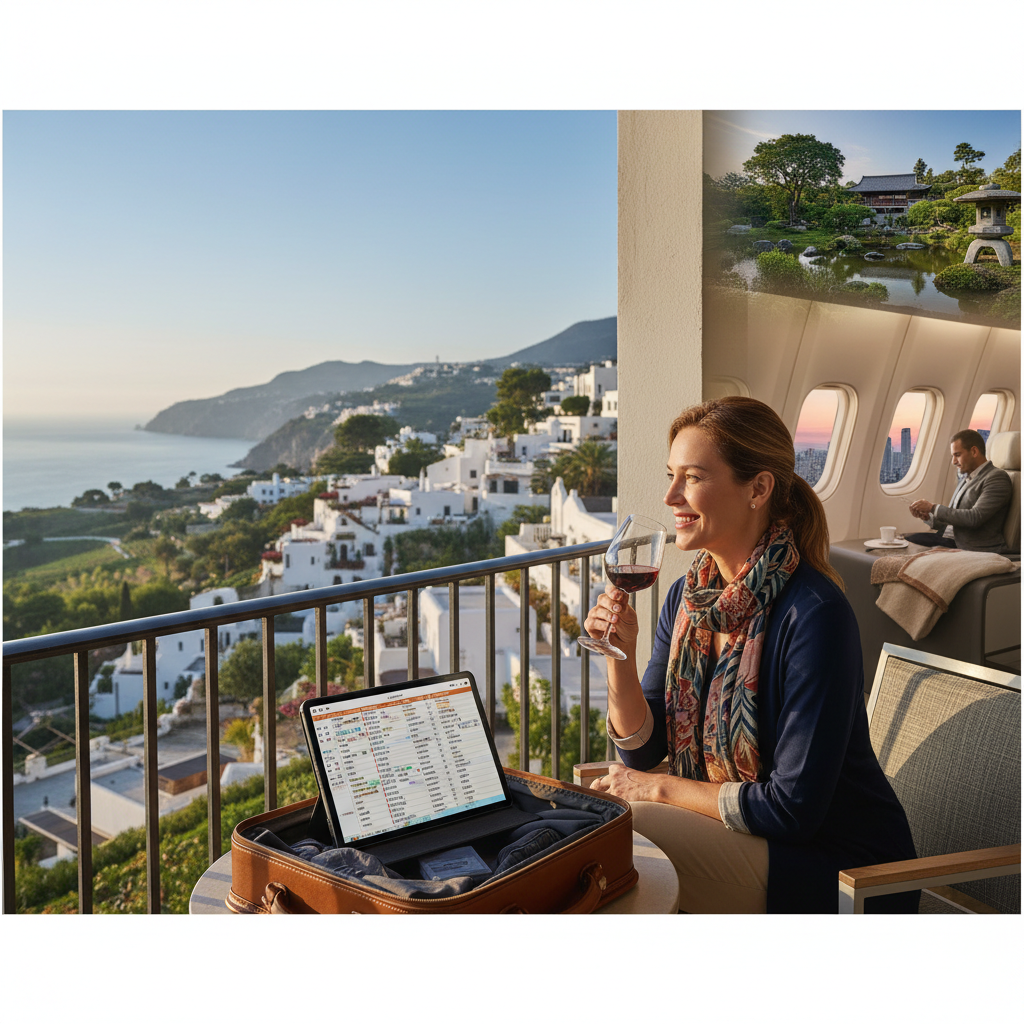
More information isn't always better. Learn why 'information dumping' is ruining your guest experience and how to use curated anticipation to scale your tour business.
I remember sitting in a beachfront café in Tulum back in 2014, watching a guest named Sarah arrive for a high-end jungle expedition. She should have been ecstatic. Instead, she looked like she was showing up for a divorce hearing.
She was clutching a 14-page printed PDF “Orientation Guide” that my team had painstakingly put together. It was full of packing lists, historical facts, local customs, and safety protocols. We thought we were being thorough. We thought we were being "luxury."
Instead, we had accidentally handed her a part-time job.
After generating over $10M in revenue for tour operators globally, I’ve identified a silent killer that eats your 5-star reviews before the guest even checks in. I call it the Pre-Arrival Paradox. It’s the counterintuitive reality that the more information you give a traveler to "help" them prepare, the more anxiety you create, and the lower their eventual satisfaction score will be.
If you want to move from being a "standard operator" to a $10M brand, you need to stop delivering information and start managing emotions. Here is how we fix the paradox.
The Cognitive Load: Why Your 14-Page PDF is a Liability
We live in an age of over-stimulation. By the time a guest books your tour, they’ve already navigated dozens of flight options, hotel reviews, and TripAdvisor forums. Their "decision bucket" is empty.
When you send a massive pre-trip email—what I call the "Information Dump"—you trigger Cognitive Load. You are forcing the guest to filter what is important and what isn't. In their mind, they start thinking: “Did I buy the right shoes? Do I need to memorize these names? Wait, is the water safe or not? This feels complicated.”
Anxiety is the enemy of premium experiences. When a guest is anxious, they become hyper-critical. They look for flaws. They arrive tired. To solve this, we have to transition from Information Delivery to Curated Anticipation.
The High-Value/Low-Effort Communication Framework
To scale to seven and eight figures, you need systems that serve the guest’s lizard brain. My framework focuses on giving the guest exactly what they need to feel safe, without the baggage of "homework."
1. Audit Your Clutter
Go into your automated email sequences right now. Look at every sentence. If it doesn't solve a physical need (where to be) or an emotional fear (will I be safe/fed?), delete it.
2. The Rule of Three
Never give a guest more than three tasks to complete in a single message. If they need to sign a waiver, choose a meal preference, and confirm a pickup time, that is one email. Do not add “fun facts about the Mayans” to that email. It dilutes the mission-critical actions.
Death to the PDF: Transitioning to Interactive Micro-Checklists
If you are still sending PDFs, you are invisible. PDFs are hard to read on mobile devices, they aren't interactive, and they feel like a contract.
Top-tier operators are replacing these with Micro-Checklists. Using tools like Typeform, Notion, or even a simple mobile-optimized landing page, you give the guest a "Gamified" experience.
Instead of a packing list that says “Bring a hat, sunscreen, and boots,” use a checklist where they can physically tap the screen to check things off. This creates a dopamine hit. It moves the guest from a state of "I have a lot to do" to "Look at how much I’ve already prepared." It turns preparation into a win rather than a chore.
The Psychology of 'Curated Anticipation'
The gap between booking and the actual tour is a danger zone. It’s where "Buyer's Remorse" lives. Most operators fill this gap with more "stuff" to read.
Instead, use Curated Anticipation. This is the art of leaking one—and only one—exciting detail every few days.
- Day 1: A 15-second video of the exact waterfall they will see. No instructions, just the sound of the water.
- Day 4: A photo of the local guide who will be leading them. "This is Jorge. He's been exploring these caves for 20 years. He can't wait to meet you."
This prevents decision fatigue because you aren’t asking them to do anything. You are simply feeding their excitement.
The $10M Secret: The Automated WhatsApp Voice Note
If you want to neutralize a complaint before it ever happens, you must build a human connection. People don't leave 1-star reviews for "friends," they leave them for "service providers."
I’ve seen a 40% increase in NPS (Net Promoter Scores) simply by implementing Automated WhatsApp Voice Notes.
About 48 hours before the tour, have your lead guide (or a concierge) send a personalized-sounding voice note. It doesn't have to be long:
"Hey Sarah, it’s Gonzalo here from the expedition team. I was just looking at our route for Tuesday and the weather looks incredible. I've got your dietary notes here and the chef is prepping something special. Can't wait to see you at the trailhead!"
By sending a voice note, you are humanizing the brand. The guest hears the warmth in the voice. If the van is 5 minutes late two days later, they won’t be angry. They’ll think, "Oh, Jorge is probably just caught in traffic, he's such a great guy." You’ve moved from being a transaction to being a human relationship.
Emotional Management vs. Information Delivery
The difference between a $50 tour and a $5,000 experience is how the guest feels before they even arrive.
- Standard operators think: "Did I tell them everything?" (Focus on self-protection)
- Luxury operators think: "Is the guest feeling confident and excited?" (Focus on guest psychology)
When you overwhelm a guest with info, you are actually protecting yourself—trying to ensure they can't say "you didn't tell me." You are prioritizing your liability over their experience.
To win, you must be brave enough to cut the noise. Trust your process. If a piece of information isn't vital for their safety or arrival, save it for the "Briefing" when they are actually standing in front of you, ice-cold drink in hand.
Conclusion: Less Is More (Revenue)
The Pre-Arrival Paradox is real. Excess information creates "Traveler’s Homework," and nobody goes on vacation to do homework.
By auditing your communication, replacing clunky PDFs with interactive checklists, and using voice notes to build a human bridge, you create a frictionless path to the 5-star review. You aren't just a tour operator; you are a guardian of their peace of mind.
Stop teaching your guests and start welcoming them. The revenue follows the feeling.
Ready to audit your guest journey? Take a look at your last "Welcome Email." If you were a tired traveler reading it on a phone in a crowded airport, would you feel relieved or overwhelmed?
The answer to that question is the difference between a good season and a record-breaking year. Let’s get to work.