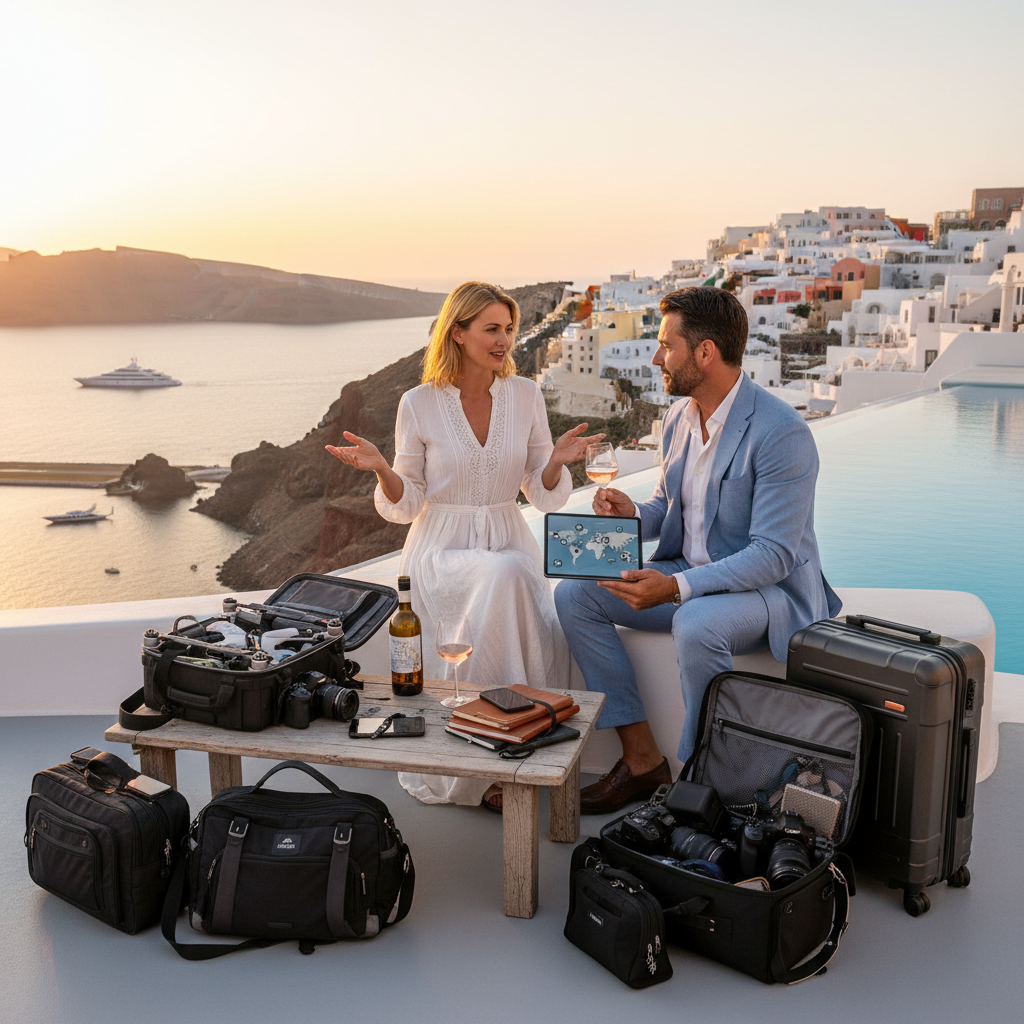
I’ve sat across the table from hundreds of tour operators, from the guys running solo kayak trips in Florida to massive $15M outfits in the Swiss Alps. There is one specific "profit-killer" mindset that holds the $500k operator back from hitting the $5M mark: Lean Obsession.
In the startup world, "lean" is a badge of honor. But in high-end luxury tourism? Lean is a liability.
If you are chasing high-net-worth (HNW) Americans—the kind of clients who drop $20,000 on a week-long private expedition without blinking—they aren’t just buying a view. They are buying the absence of anxiety. They are paying you to ensure that nothing, absolutely nothing, goes wrong.
I’ve generated over $10M in revenue by teaching a counter-intuitive philosophy: The Strategic Surplus. To sell at a premium, you need to be "over-equipped." You need to own 20% more high-end gear than you actually need.
Here is why operational redundancy is your most powerful sales tool, and how to turn your gear locker into a profit center.
1. The Psychology of the "Spare-Everything" Protocol
Think about your last $10k+ client. They likely have a high-stress job, a tight schedule, and very little patience. Their biggest fear isn’t the price; it’s the "wasted day."
If a radiator blows on a Land Rover in the middle of the Andes, or a specialized camera drone glitches during a sunset safari, a "lean" operator apologizes. They offer a partial refund or try to fix it on the fly while the client checks their watch.
An over-equipped operator? They have a second, identical vehicle following twenty minutes behind, or a "hot spare" drone already synced and ready to fly.
Eliminating the "Glitch Anxiety"
When I work with operators, we implement the Spare-Everything Protocol. This means for every five units of gear (mountain bikes, luxury SUVs, satellite comms), you carry one "Redundancy Unit."
When you mention this in the sales process—not as a technical spec, but as a promise—the client’s shoulders drop. You’ve just removed the risk of their vacation failing. That peace of mind is what allows you to charge $2,500 per person, per day, while your "lean" competitor is stuck at $800.
2. Framing Redundancy as Your "Unique Selling Proposition" (USP)
Stop talking about "high-quality gear." Everyone says that. The guy with the rusted-out bus says he has high-quality gear.
Instead, frame your surplus as a luxury insurance policy. In my sales scripts, we don’t say "We use new Land Cruisers." We say:
"We maintain a 1.2x fleet ratio. This means for your private group of four, we have a primary luxury vehicle and a fully-prepped backup idling at the base. If a stray nail causes a flat or a sensor acts up, we don't fix it on your time. We swap the fleet and keep moving. Your itinerary is non-negotiable."
The "Backup" Close
When a prospect asks, "Why are you $5,000 more expensive than the other guy?", your answer should be about operational integrity.
"The other guy is optimized for his own profit margins. We are optimized for your success. We invest $150k a year in redundant equipment specifically so that an equipment failure—which happens to everyone—never becomes your problem."
This shifts the conversation from price to reliability. For a CEO taking her family on a once-in-a-lifetime trip, reliability wins every single time.


