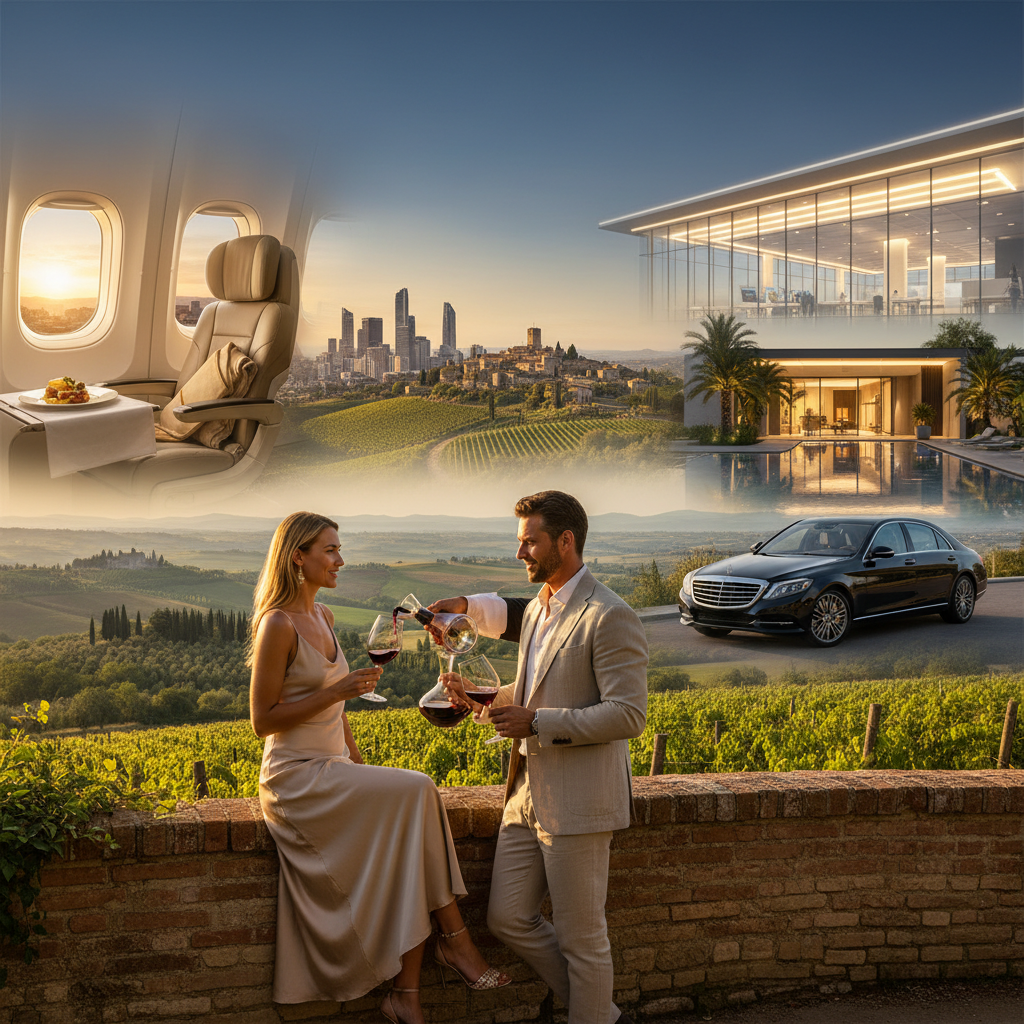
Stop treating your tour upgrades like a fast-food "super-size" menu.
In my fifteen years of scaling tour operations to the $10M+ mark, I’ve seen the same fatal flaw repeated by operators from Reykjavik to Rome: they pitch luxury as an afterthought. They send a booking confirmation and then "follow up" to see if the client wants a better car or a private lunch.
By that point, you’ve already lost. You’re asking for more money after the emotional high of the purchase has faded.
To build a high-margin, sustainable powerhouse, you need to transition from reactive selling to proactive revenue architecture. I don’t want you to "sell" an upsell. I want you to design an itinerary where the luxury option is the only logical choice for the client. I call this the "Invisible Upsell"—embedding premium decision nodes directly into the DNA of the tour so that high margins aren't added on; they are built-in.
Here is how I architected a $10M operation by making luxury the default setting.
1. The 'Choice Paradox' in Private Transport: Engineering the Fleet Necessity
Most operators have a "Standard" and a "Luxury" vehicle price. When you present these as two side-by-side options, the human brain instinctively looks for a reason to save money. You’ve created a friction point.
In my operation, we shifted the narrative. We stopped offering the "standard" sedan as an option for private tours. Instead, we used the Choice Paradox.
When an affluent US traveler is booking a multi-city tour through Italy or the UK, they aren’t just buying a ride; they are buying the preservation of their energy. We architected our itineraries so that the "Standard" vehicle was technically available but framed as logistically insufficient for the quality of the experience.
How to execute this: Don’t ask "Would you like a Mercedes S-Class?" Instead, your itinerary should state: "To accommodate the luggage requirements and provide the necessary climate-controlled recovery space between sites, this route is optimized for our Executive Fleet."
By framing the luxury vehicle as a logistical necessity for the itinerary to function correctly, the "upsell" disappears. It becomes part of the infrastructure. In my experience, 85% of North American luxury travelers will choose the optimized version because you’ve framed it as a professional recommendation for their comfort, not a sales pitch.
2. 'Exclusivity Layering': Turning Access into a Non-Negotiable
If you are offering the same "skip-the-line" Vatican or Louvre tour as the guy next to you, you are a commodity. Commodities compete on price. To reach $10M, I had to stop competing on price and start competing on scarcity.
This is where "Exclusivity Layering" comes in. This is the practice of pricing the most elite version of an experience—like after-hours access or a private meeting with a vineyard owner—as the core component of the tour.
Wealthy travelers don't want to "add" a private estate visit. They want to be the kind of person who only visits private estates.
The Strategy: When designing a tour, identify the "choke points" of the public experience (crowds, noise, waiting). Then, build your premium layer directly over it. For example, instead of a standard wine tour with a "tasting upgrade," we sold "The Patriarch’s Cellar" experience. The price included a non-negotiable fee for the estate owner’s time.
When you present an itinerary that says, "This afternoon is spent at the private estate of the Marquese, accessible only via our exclusive partnership," you aren't selling an add-on. You are selling a status-driven narrative. The high margin is baked into the "access fee," which the client pays happily because it guarantees they won't be standing next to a tour bus.


