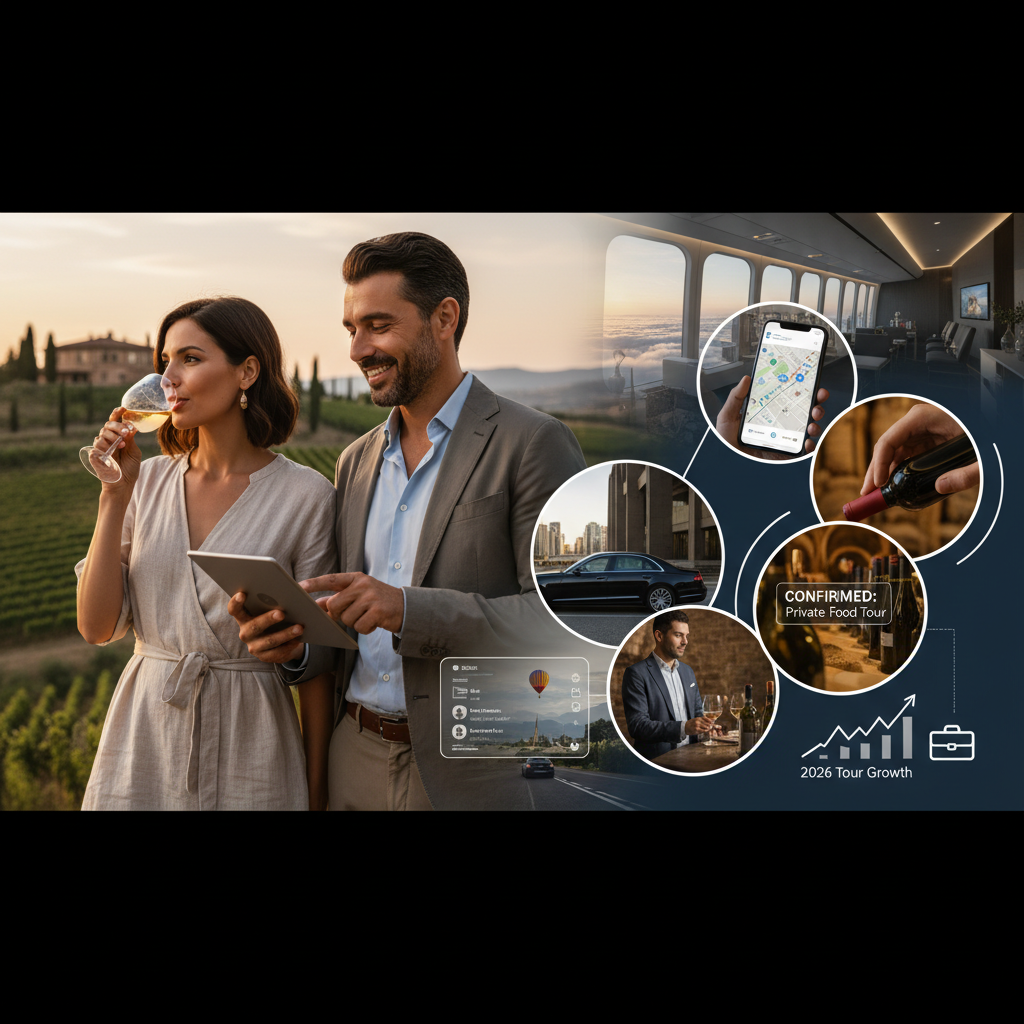
Let’s be honest: most tour operators are addicted to the "First Click."
We spend thousands of dollars on Google Ads, fight like gladiators for the top spot on TripAdvisor, and obsess over our conversion rates. We treat a confirmed booking like the finish line. But after generating over $10M in revenue for niche travel brands, I’m here to tell you that in 2026, the booking isn’t the end. It’s barely the starting gun.
The biggest shift hitting our industry right now isn’t a new social media platform or an AI chatbot. It’s the rise of the "Invisible Concierge."
Affluent travelers are tired of being "sold" to, but they are hungrier than ever to be cared for. The operators winning the next decade aren't the ones finding more leads; they are the ones mastering Post-Sale Upsell Friction. They are moving from "Journey Planning" to "Journey Monetization."
Here is how you stop being a simple tour operator and start becoming a regional curator.
1. The Death of the 'One-Off' Booking
In the old world, you sold a $200 walking tour, sent a confirmation email, and hoped they showed up on time. That model is dying because Customer Acquisition Cost (CAC) is skyrocketing. If you’re paying $40 to acquire a customer for a $200 ticket, and your margins are 20%, you’re barely breaking even.
But the 2026 traveler—specifically the high-net-worth individual—expects a 24/7 digital concierge. Data shows that travelers are now making 60% of their "add-on" decisions (transport, dining, gear, private upgrades) after the initial flight and hotel are booked, but before they arrive.
They want an Invisible Concierge. They don’t want to call a front desk or search Google Maps. They want a frictionless, digital tether to their host that anticipates their needs before they even land.
2. Borrowing from SaaS: The 'Expansion Revenue' Mindset
In the software world (SaaS), companies don't just care about the initial sign-up. They obsess over "Expansion Revenue"—upselling existing users on more features.
As a tour operator, you need to view your guests through this lens. Once they’ve booked a seat on your boat or a spot on your food tour, they have already crossed the "Trust Barrier." They’ve given you their credit card. They are now 5x easier to sell to than a stranger on the internet.
The Shift: Stop thinking about "tours" and start thinking about "lifestyle-aligned bundles."
- The SaaS Model: Instead of just a tour, offer "Performance Upgrades."
- The Tour Reality: Don't just sell a hiking trip. Offer a "Premium Gear Kit" delivered to their hotel, or a "Post-Hike Recovery Pack" featuring local wines and artisanal snacks waiting in their car.
By pitching premium add-ons like private chauffeur transfers, pre-stocked rental fridges, or exclusive after-hours access to sites, you aren't "selling." You are solving the logistical friction of travel.
3. The Framework: Moving from Operator to Regional Curator
To hit that $10M+ trajectory, you have to stop acting like a service provider and start acting like a curator. A curator owns the entire guest experience within a 20-mile radius of their activity.
Here is the three-step framework I use to transition my clients:
Step A: Identify the "Shadow Needs"
Every tour has "shadow needs." If you do sunset cruises, the shadow need is a romantic dinner afterward. If you do mountain biking, the shadow need is a high-protein breakfast and professional photography. List every friction point your guest faces three hours before and three hours after your tour.
Step B: The Multi-Tier Upsell Path
Don't just offer one "VIP" option. Create a ladder:
- The Convenience Tier: Private round-trip transport ($80-$150).
- The Luxury Tier: Professional storyteller/photographer accompanying the group ($300).
- The "Keys to the Kingdom" Tier: After-hours access or a private meeting with a local artisan ($1,000+).
Step C: The "Direct-Margin" Play
You don't need to own the cars or the restaurants to monetize them. Partner with local providers where you move the inventory and take a 15-20% curation fee. Your guest gets a seamless experience; you get "Expansion Revenue" with zero overhead.


