The 'Eco-Luxury' Efficiency Gap: Why Modular Itinerary Design is the 2026 Growth Standard
Scaling a luxury tour operator to $10M+ requires a shift from bespoke chaos to Modular Itinerary Design. Learn how to reclaim 20 hours a week while boosting margins.
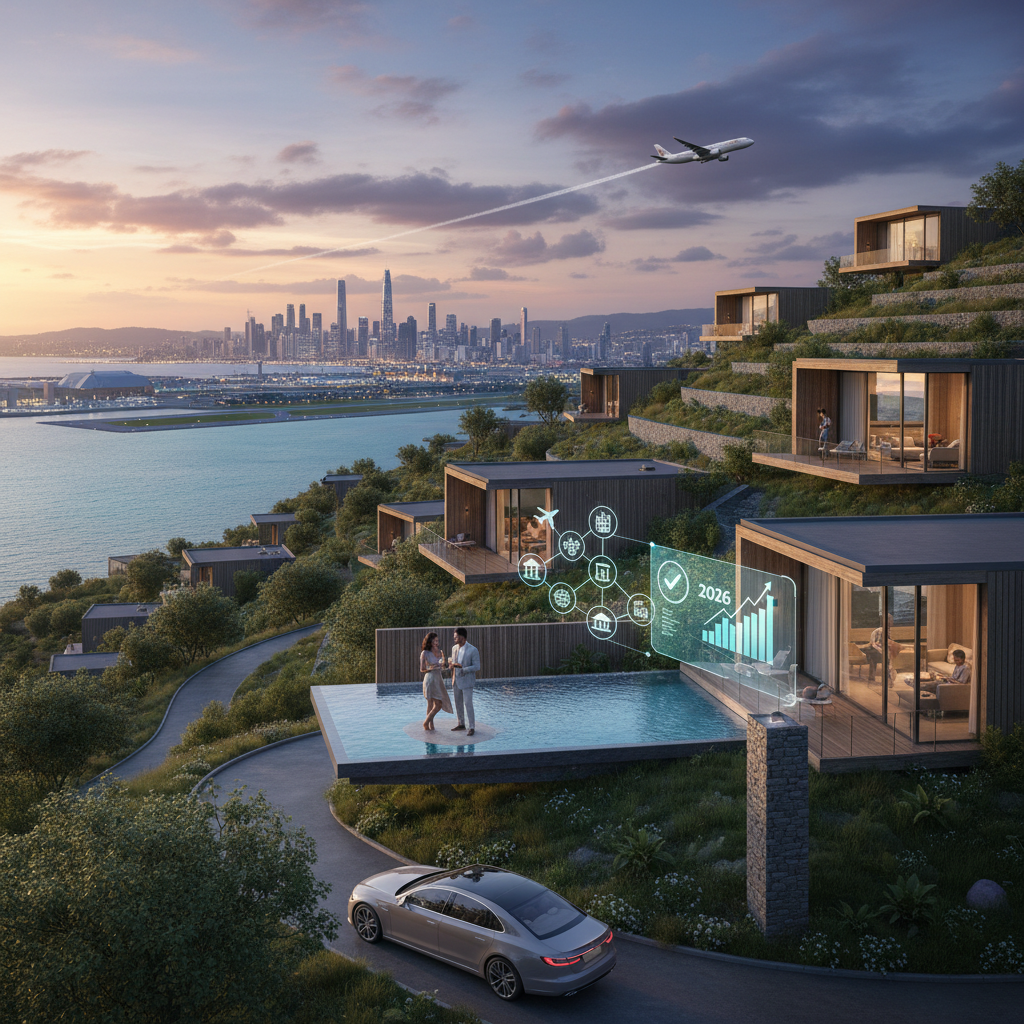
In my fifteen years of scaling tour companies—leading to over $10 million in direct revenue—I’ve seen one monster destroy more businesses than a global recession ever could: The Efficiency Gap.
You know that feeling. Your phone rings with a high-net-worth lead. They want "Eco-Luxury." They want a private chef in the Atacama, carbon-neutral logistics, and a fully bespoke itinerary that feels like it was written by a local poet. To close that sale, your operations team spends twelve hours on back-and-forth emails, frantic Google Sheets updates, and custom PDF designs.
You land the $20,000 booking. Your margin? It’s being eaten alive by the sheer administrative weight of "being special."
As we look toward 2026, the industry is hitting a breaking point. Travelers are demanding deeper personalization and stricter sustainability, but operators are drowning in the manual labor of bespoke design.
The secret to winning the next decade isn't hiring more staff. It’s Modular Itinerary Design (MID). Here’s how you bridge the gap and reclaim your time.
What is the "Eco-Luxury" Efficiency Gap?
The Efficiency Gap is the tension between the traveler’s demand for a "one-of-a-kind" sustainable experience and your need for a repeatable, scalable business model.
In the old days, you had two choices: 1. The Cookie Cutter: Low cost, high volume, zero soul. (The death of luxury). 2. The Pure Bespoke: High cost, low volume, massive overhead. (The death of your sanity).
By 2026, high-end travelers will see through "greenwashing." They want hyper-local, regenerative experiences. If you try to build every one of these from scratch, your operational costs will scale linearly with your revenue. If you want to grow from $2M to $10M, you can’t simply quintuple your office staff. You need a system that mimics software engineering.
Enter Modular Itinerary Design (MID): The Software Approach to Travel
In software, developers don’t rewrite the entire codebase for every new user. They use "modules"—pre-built blocks of code that can be snapped together to create an infinitely customizable interface.
Modular Itinerary Design (MID) is the same concept applied to luxury travel. Instead of selling a "10-Day Costa Rica Trip," you curate a library of "Experience Blocks" that are pre-vetted for sustainability, logistics, and margin.
Why "Modules" beat "Tours"
When you sell a fixed 10-day tour, you are a commodity. When you sell a modular experience, you are an architect.- Speed: From lead to proposal in 15 minutes, not 15 hours.
- Consistency: Every "block" has been stress-tested for quality.
- Sustainability: Carbon offsets and local impact are baked into the module, not added as an afterthought.
Scaling with "Experience Blocks": The Strategy
So, how do you actually build this? You need to stop thinking about the "Whole Trip" and start thinking about the "Lego Set."
1. The Core Infrastructure (The Baseplate)
These are your non-negotiables. Your choice of sustainable transport partners, your preferred eco-lodges, and your emergency response protocols. This doesn’t change, regardless of the guest.2. The Plug-and-Play Modules
Divide your offerings into specific themes or "activity clusters." For example:- Module A (The Culinary Deep Dive): 4 hours with a regenerative farm-to-table chef, including transport.
- Module B (The Conservation Trek): A guided hike with a biologist including a $50 donation to a local reforestation project.
- Module C (The Wellness Recharge): A private sound bath at a local heritage site.
3. The Connective Tissue
This is where the luxury happens. These are the "transitional" services—the private transfers and the greeting services—that weave the modules together into a seamless narrative.By 2026, the most successful $10M+ operators will have a library of 20-30 high-margin modules that can be rearranged into 1,000+ different "custom" journeys.
Actionable Strategy: Auditing for Friction
To implement MID, you have to find where your current system is "leaking" money and time. I call this the Friction Audit.
Look at your last five bespoke bookings. Ask yourself: 1. Where did the delay happen? Was it waiting for a hotel to confirm? A specific guide’s availability? 2. Which components were unique? If you’re scouting a new restaurant for every single guest, you’re losing money. 3. What is the "Sustainability Coefficient"? Are you using a different driver every time, or a single electric-fleet partner who understands your brand?
The Goal: Identify the 80% of activities that your luxury guests enjoy, and "modularize" them. Create standardized pricing, pre-written marketing copy, and pre-vetted logistics for these blocks.
When a guest says, "I want something different," you don't start from a blank page. You pull out your "Rare & Remote" module block and snap it into their base itinerary.
Implementation: The "Local-First" Logistics Framework
In an eco-luxury world, your logistics must be a marketing asset, not just a line item.
To make your modules work, you need to decentralize. Instead of managing every detail from your head office, empower Local Anchors. These are specialized local fixers or boutique hotels that own the "on-the-ground" delivery of a specific module.
- Standardize the API: Just like software, give your local partners a clear set of "Inputs" (Guest preferences, dietary needs) and "Outputs" (The specific luxury standard you expect).
- Automate the Boring Stuff: Use a modern CRM or itinerary builder (like Safari Portal or Travefy) to house these modules. If a staff member has to copy-paste a description of a hotel more than once, you’ve already lost the efficiency game.
The 2026 Standard: Reclaiming 20 Hours a Week
When I coach operators reaching for that $10M mark, they are usually exhausted. They think "more growth" means "more work."
It’s actually the opposite.
By mastering Modular Itinerary Design, you shift your role from Taskmaster to Curator.
- Staff Training becomes 10x easier: You aren't training them to "know everything"; you're training them to "build with the blocks."
- Sales Conversion Skyrockets: You can send a stunning, highly personalized proposal while the guest is still excited from the initial phone call.
- Margins Stabilize: You know the exact cost and impact of every module. No more "guessing" at prices for custom requests.
Conclusion: Adapt or Overheat
The "Eco-Luxury" trend isn't a fad; it’s the new baseline. But the operators who survive and thrive are those who recognize that customization without a system is just an expensive hobby.
Stop building every trip from a blank canvas. Start building your library of experience blocks. Focus on the local, the sustainable, and the repeatable. That is how you bridge the efficiency gap, protect your margins, and scale to $10M and beyond without burning out.
If you’re ready to stop the manual grind and start building a scalable luxury engine, start by auditing your next three "bespoke" requests. How many of those elements can you turn into a permanent module today?
Ready to scale? Let’s get to work.