In 2019, I was standing on a salt flat in Bolivia with a group of high-net-worth travelers who had paid $1,500 a day for a private expedition. Instead of looking at the surreal horizon, four out of the six guests were frantically waving their iPhones in the air, trying to catch a single bar of LTE to upload an Instagram story.
They weren't enjoying the scenery. They were stressed. They were paying for a "bucket list" experience only to experience it through a 6-inch glass screen.
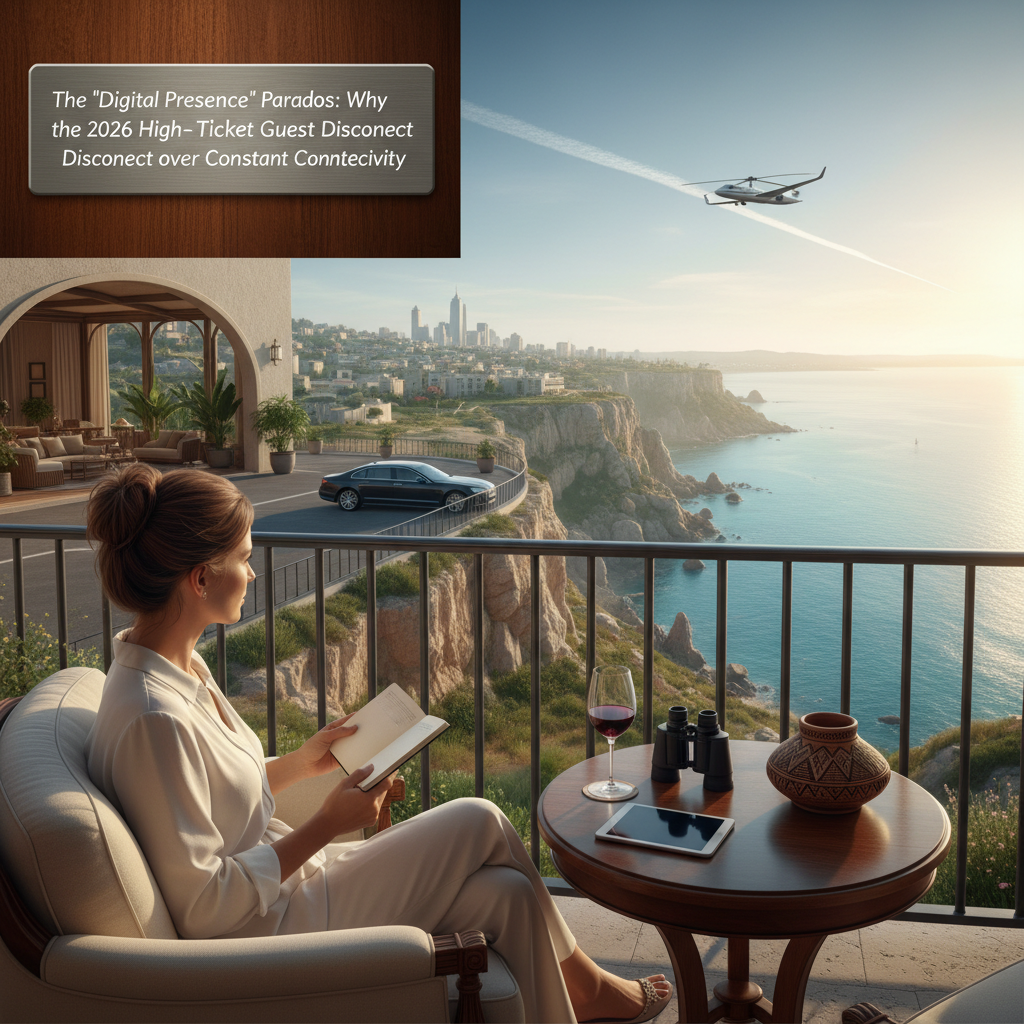
Fast forward to today, and the trend has flipped on its head. As we look toward 2026, the wealthiest guests aren't looking for better Wi-Fi in the jungle; they are looking for a reason to turn the damn phone off. We are entering the era of the Digital Presence Paradox.
The paradox is simple: The more connected our world becomes, the more the ultra-wealthy will pay to be unavailable. In this article, I’m going to show you how to stop apologizing for your "patchy reception" and start selling it as your most expensive premium upgrade.
The Luxury of "Forced Presence"
For years, we as tour operators have been obsessed with "seamless connectivity." We’ve spent thousands on Starlink terminals and portable power banks because we were terrified of a 1-star review mentioning bad Wi-Fi.
But here’s what I’ve learned after scaling brands to eight figures: True luxury is the removal of friction, and today, notifications are the ultimate friction.
By 2026, high-ticket guests will value "Forced Presence." This isn't just about being in a dead zone; it’s about creating a structured environment where the guest is relieved of the responsibility of their digital life.
How to Market "The Lock"
Stop saying, "There is no cell service." Start saying, "We provide a curated digital sanctuary."
I’ve seen operators successfully implement "Yondr" bags (magnetic pouches used at comedy shows) or literal hand-crafted wooden lockers at the start of a trek. When you frame the locking away of the phone as a ritual—a "checkpoint into presence"—it stops being a service lack and starts being an exclusive feature. You aren't taking their phone; you are giving them their brain back.
Sensory Storytelling: Experiences That Can’t Be Googled
If your tour relies on facts that a guest can find on Wikipedia while they’re standing in front of you, you’re in trouble. To justify high-ticket prices in a "zero-tech" environment, your storytelling must be visceral and sensory.
When I train guides, I tell them to focus on the "Un-recordables." These are the elements that a smartphone camera simply cannot capture:
- The specific scent of crushed eucalyptus after a rainstorm.
- The vibration of a boat engine against the soles of your feet.
- The temperature drop when you enter a limestone cave.
In your marketing, emphasize that these tours are designed for the senses, not the feed. Use copy like: "Some things are meant to be felt, not filmed." This positions your brand as an authority on "deep travel," attracting the guest who is tired of the performative nature of modern tourism.
The "Delayed Gratification" Media Strategy
The biggest hurdle to a phone-free experience is "FOMO"—the fear of missing out on the memory. Guests want to be present, but they also want the photo for the mantlepiece (or, let's be honest, the group chat).
The solution? The 24-Hour Digital Delay.
Instead of guests fumbling with their cameras, your guides (or a dedicated "media concierge") take high-end, professional-grade photos and videos throughout the day.
Here is the strategic framework:
- The Handover: Guests surrender their phones at the start of the day.
- The Capture: Your guide uses a high-quality mirrorless camera to capture candid, authentic moments.
- The Delivery: 24 hours after the experience, the guest receives a curated digital gallery.
This is a massive value-add. You are giving them:
- Professional photography (no more awkward selfies).
- Permission to stay in the moment.
- A "second high" when the photos arrive the next day, extending the emotional lifespan of the trip.
From a business perspective, this also gives you incredible user-generated content (with permission) and ensures your brand is represented by high-quality imagery rather than grainy iPhone shots.


