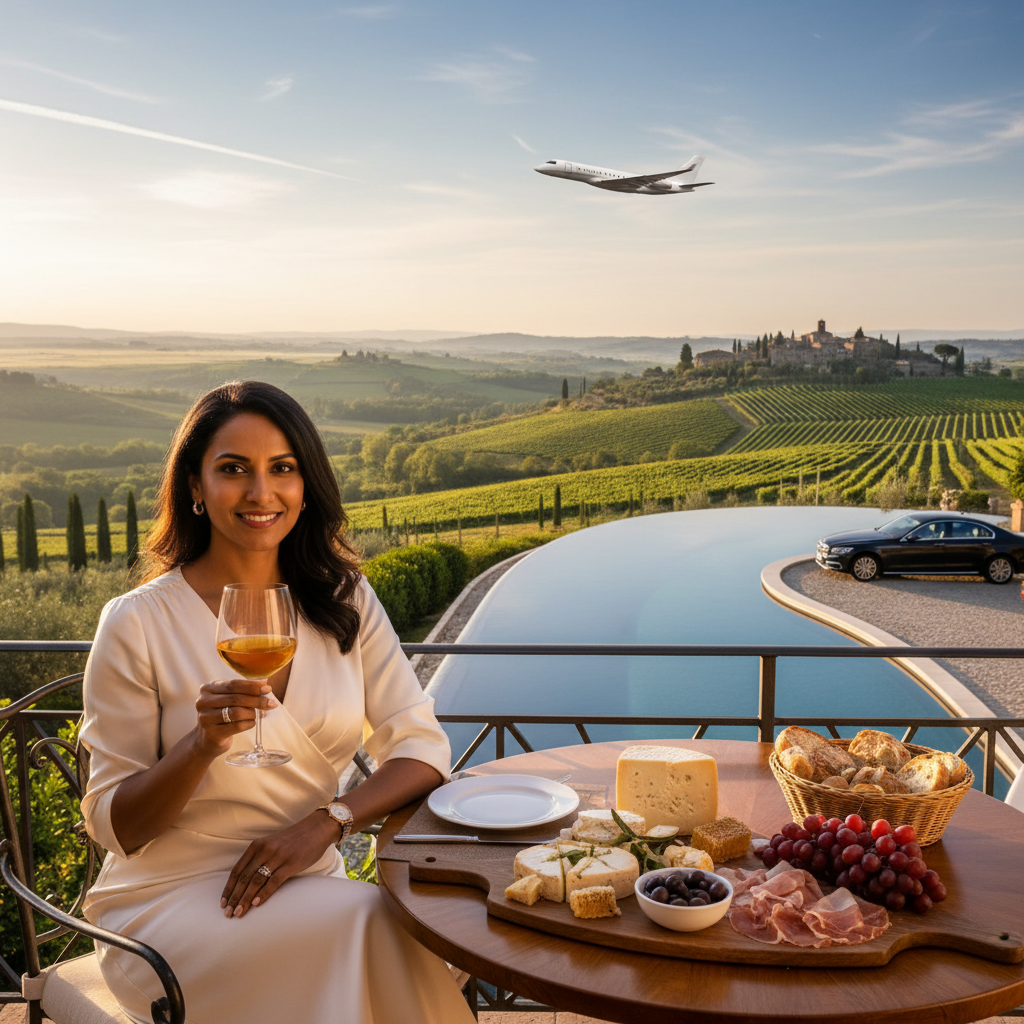
I’ve spent the last decade in the trenches of the high-end travel world, moving over $10M in bookings for some of the most demanding humans on earth. If there is one thing I’ve learned, it’s this: Your guests will forget the name of the museum you took them to. They might even forget the model of the private jet that flew them there.
But they will never, ever forget the way they felt when they sat down at a table in the middle of a Patagonian vineyard and ate a meal that felt like it was designed specifically for their DNA.
In the ultra-luxury space, food isn't "catering." It isn't a line item to be minimized. If you are treating food as an expense rather than a high-yield marketing asset, you are leaving millions on the table. I call this the 'Dietary ROI' Framework. By shifting our focus from standard logistics to premium culinary sourcing, I've seen operators drive a consistent 40% increase in referral revenue.
Here is how you turn your itinerary into an edible engine for growth.
1. The Psychology of the 'Palate Premium'
Why does a guest associate a $20,000 tour’s value almost entirely with the quality of the salt on their steak or the temperature of their wine? It’s because food is the most intimate touchpoint of a journey. It literally becomes part of the traveler.
Luxury travelers today suffer from "choice overload" in their daily lives. When they travel with you, they are looking for sensory validation of their status. If the meal is "good," the tour is "good." If the meal is "transcendent," the entire $50k spend was "the best investment I've made this year."
The Palate Premium is the psychological phenomenon where the perceived value of an entire trip is anchored to the most recent culinary experience. When you elevate the food, you aren't just feeding them; you are providing a dopamine hit that cements your brand in their memory as a high-tier provider.
2. Designing 'Edible Itineraries' as Social Media Engines
We live in a world where if a meal wasn't photographed, it practically didn't happen. In the ultra-luxury segment, however, your guests aren't looking for "food porn" in the traditional sense. They are looking for exclusivity and provenance.
An 'Edible Itinerary' focuses on high-impact culinary moments that function as organic marketing:
- The "Ungettable" Table: Access to a chef’s private home or a closed-door kitchen.
- The Hyper-Local Narrative: Serving a type of honey that is only produced in one specific valley within walking distance of their villa.
- The Visual Reveal: A table set in an "impossible" location—think a glacial plateau or a private library.
When a guest shares a photo of a curated, farm-to-table lunch in a remote setting, they aren't just showing off a meal. They are marketing your ability to provide total exclusivity. That is how you get your next booking before the current guest has even checked out.
3. The Logistical Math: Private Chefs vs. Standard Restaurants
Many operators play it safe by booking the "Top 10" TripAdvisor restaurants. This is a mistake.
From a margin perspective, standard high-end restaurants are a black hole. You pay retail prices, you have zero control over the pace of the meal, and your brand gets lost in the restaurant’s brand.
When you invest in a Private Chef Logistics Model, everything changes:
- Control over Margin: While the upfront cost of a top-tier chef seems high, your per-head food cost (COGS) is significantly lower when sourcing directly from producers.
- Brand Ownership: The chef is an extension of your brand, not the restaurant's.
- Time Efficiency: You can cut 90 minutes of "sitting and waiting" out of an itinerary by having the meal ready exactly when the guest arrives. That time reclaimed is part of the luxury experience.
In my experience, switching from a restaurant-heavy itinerary to a private-chef-led model increased the net margin per head by 15-20% while simultaneously increasing guest satisfaction scores.


