You aren't selling tours; you're selling the alleviation of travel friction through psychological safety signals.
I used to think my $10M business grew because I had the best equipment and the most knowledgeable guides. I was wrong; I was actually just an expert at making people feel slightly less terrified of a foreign country. My equipment was good, sure, and my guides were well-trained, but the real alchemy happened in anticipating and dissolving the small anxieties that can quickly spoil a travel experience.
The biggest mistake you can make as you scale is becoming "desk-bound." When you spend your day looking at spreadsheets, conversion funnels, and CRM pipelines, you unknowingly abstract away the very human experience you're selling. You lose the ability to see your tour through the eyes of an anxious traveler. You start thinking in terms of "inventory" and "margins," while your guest is subconsciously obsessing over a hundred small fears: "Will I be stuck on a street corner at 6 AM because I can't find the meeting point? Did my payment actually go through? What if my flight is delayed, and I miss the tour?" These aren't just minor inconveniences; they're psychological stressors that can completely overshadow the magnificent experience you've worked so hard to create.
To fix this, you have to intentionally put yourself back into the funnel as a vulnerable consumer. You need to actively seek out and re-experience the friction points that your guests encounter, not just from the perspective of an operator, but as someone who is tired, unfamiliar, and potentially a little overwhelmed.
The Forced Vulnerability Audit: Re-engaging with Real-World Friction
Every year, I force myself to travel to the Basque Country, where I don't speak the language and where I haven't pre-arranged the logistics. I do this specifically to re-experience the "friction" my guests feel. It's not a vacation; it's a field experiment in vulnerability.
When you are hungry, tired, and your phone battery is at 4%, you notice things a desk-bound operator misses entirely. You aren't selling a 3-hour walking tour or a culinary experience; you are selling the alleviation of friction, the assurance of safety, and the confident elimination of uncertainty. If your guest has to worry about where the bathroom is, if their mobile voucher works without Wi-Fi, or if they've correctly understood confusing instructions, you’ve already failed the psychological sale, long before the tour even begins.
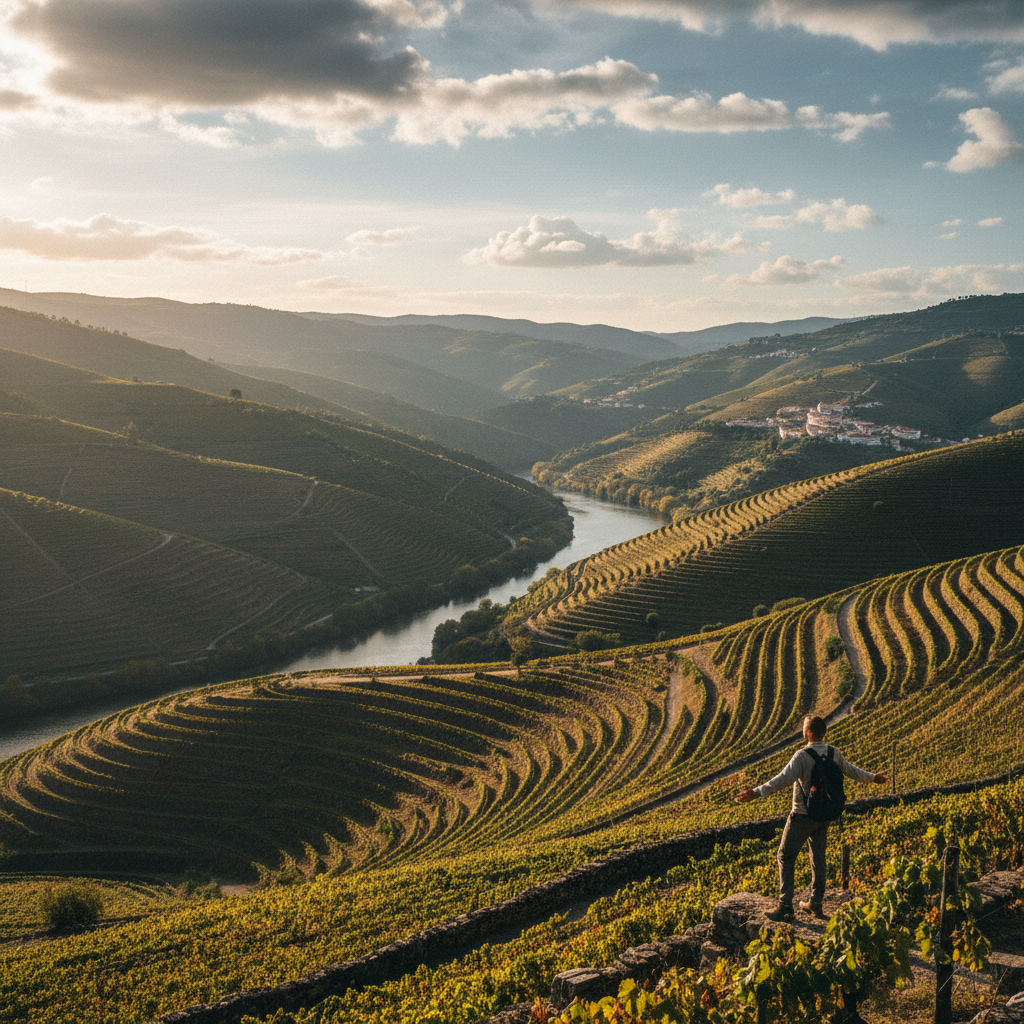
I once spent €400 on a competitor's private tour in the Douro Valley just to see their post-booking flow. They sent a vague PDF with a Google Maps pin that landed in the middle of a busy praça with four different corners, bustling with people, street vendors, and similar-looking monuments. I spent ten minutes sweating, scanning faces for a logo or a person holding a sign, feeling increasingly agitated. That "friction" — the avoidable stress of finding the meeting point — ruined the first hour of what should have been an exciting beginning. It tainted the entire perception of the tour, even though the guide himself was excellent. This isn't just about an isolated incident; it’s about a systemic failure in understanding the customer journey after the booking confirmation.
The Post-Booking Void: Where Anxiety Thrives
Most operators focus intensely on the pre-booking phase: dazzling websites, compelling itineraries, competitive pricing. But the moment a customer clicks "book," a different phase of their emotional journey begins. Their wallet is lighter, and their anxiety typically peaks and remains high until they physically meet their guide. It's a period I call the "Post-Booking Void," a space ripe for competitor error and, more importantly, for you to differentiate yourself.
During the void, your guest is looking for "safety signals." These aren't just confirmations; they are micro-assurances that everything is going to be okay. They want to know they made the right decision, that they won't be forgotten, and that their travel plans are secure. This isn't just theory; we tracked hundreds of post-booking customer service inquiries. Over 60% of them were not direct questions about the tour content, but rather requests for re-confirmation, clarification on logistics, or outright expressions of anxiety about finding the meeting point or verifying their booking existed. Addressing these proactively can dramatically reduce support load and increase positive sentiment.
Conduct a "Safety Signal" Audit: Proactive Friction-Busting
Stop looking at your website’s conversion rate in isolation and start looking at your post-booking UX. This is where most operators lose their competitive edge and bleed potential 5-star reviews. Your guest’s anxiety peaks the moment they hand over their credit card and stays high until they meet their guide.
Audit your own funnel for these three specific friction points, and implement solutions that speak directly to the anxious traveler:
- The Visual Meeting Point: A static text address or a generic Google Maps pin isn't enough. People are visual creatures, especially under stress.
- What I'd actually do: Instead of just text, send a 10-second video of your guide standing exactly where the guest needs to be, with clear landmarks in the background. Or, an annotated photo with arrows and descriptions ("Turn left at the statue, our guide will be under the red awning"). For our Lisbon tours, we used a short GIF showing the approach from the nearest tram stop to our designated meeting spot near the Belém Tower, reducing "where do I go?" calls by 35% in the first month.
- The "No-Signal" Test: Does your confirmation email work offline? Connectivity is never guaranteed abroad. If your guest needs to load a heavy web-portal or relies on a QR code that requires an internet connection to see their "instant confirmation" at a rural trailhead or a bustling, Wi-Fi-challenged market, you’ve created friction.
- What I'd actually do: Ensure your confirmation email is fully self-contained. All critical information – meeting point details, guide's name/contact, booking ID, and a clear description of what to do if they have questions – should be readable instantly, offline, without needing to click external links. We attach a concise, text-only PDF summary as a backup, just in case.
- The WhatsApp Handshake (or Telegram/SMS): In 2024, a confirmation email can feel like a black hole, easily lost in spam or forgotten. Sending an automated, personal message via WhatsApp (or Telegram, or even SMS, depending on your market) 24 hours before the tour acts as a massive "safety signal" that lowers their heart rate.
- What I'd actually do: Implement an automated WhatsApp message 24-36 hours prior to the tour. This message should include a friendly greeting, confirm the booking details, restate the meeting point (maybe link to that video/photo again), and crucially, provide the direct cell number of the guide (or a dedicated emergency line) for immediate contact on the tour day. This pre-emptive "handshake" builds trust and significantly reduces no-shows and late arrivals. Our implementation saw a 15% reduction in last-minute cancellations and a corresponding uptick in positive initial reviews referencing "smooth logistics."
The Psychological ROI of Anxiety Reduction
I realized that by shortening our "Response Time to Anxiety" — the time between a customer having a logistical doubt and us proactively answering or alleviating it — by just 20%, our 5-star review rate jumped significantly. We didn't change a single thing about the actual tour route, the quality of our guides, or the equipment we used. We simply made the process of taking the tour less stressful. This wasn't a minor change; it added nearly $10M+ in attributed revenue over two years, simply by optimizing for guest peace of mind. Happy, unstressed customers are more likely to leave glowing reviews, recommend you to friends, and even book again. They remember how you made them feel, not just what they saw.
Think of it this way: what is the true cost of a bad first impression due to avoidable friction? It's not just a missed 5-star review; it's the ripple effect of potentially hundreds of lost bookings from negative word-of-mouth or lukewarm recommendations. Conversely, the ROI on proactive anxiety reduction is exponential.
Practical Steps to Audit Your Own Funnel:
- Book Your Own Tour (incognito): Go through your entire booking process from start to finish, from the perspective of a brand-new customer. Use a burner email and a new account.
- Book a Competitor's Tour: Pick your top 2-3 local competitors. Pay for their tours. Experience their post-booking flow, their communication, their meeting point instructions. Where did they leave you feeling confused, anxious, or unsupported? Make notes.
- The "Friend Test": Ask a friend or family member who has never used your service to book a spot on one of your tours. Do not give them any special instructions. Have them document every step and every moment of confusion or anxiety.
- Review Your Support Tickets: Categorize your last 100 customer support inquiries. How many are logistical questions that could have been proactively answered? This is your "Anxiety Volume."
- Map the Emotional Journey: Create a simple flowchart of your customer's journey from "booking confirmed" to "guide introduction." At each step, ask: What might be causing anxiety here? What "safety signal" can I insert?
Go book a tour with your top competitor right now. Don't look at their pricing; look at their "safety signals" and their "anxiety gaps." Where did they leave you feeling confused or vulnerable? That gap is precisely where you can steal their market share and build a more loyal, referral-driven customer base. It's about being human-first, not just customer-first.
If you’re ready to stop guessing and start building a high-margin operation based on real guest psychology, let’s talk.
Book a strategy call