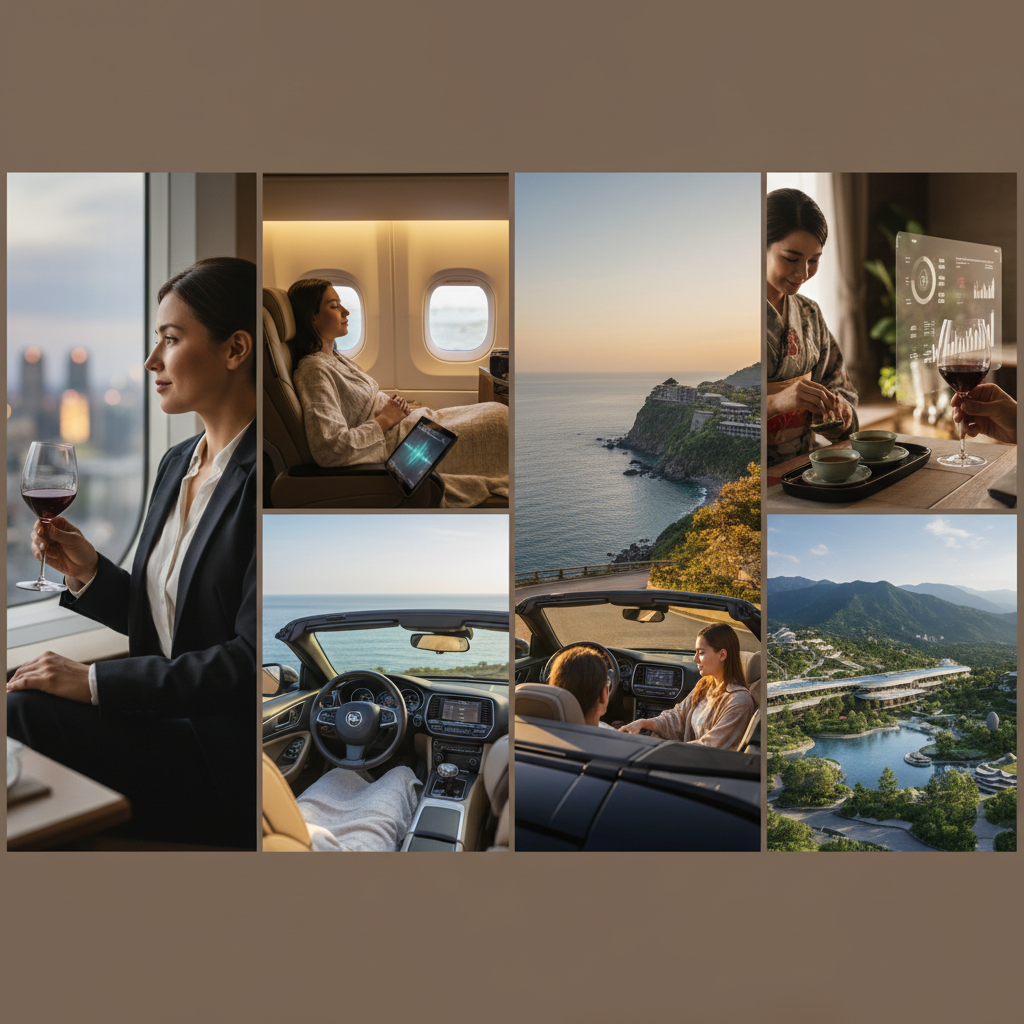
Let’s get real for a second. If you’ve been in the tourism game for more than five minutes, you know the feeling of the "Everlasting Season." It’s that 2 AM blur where you’re answering a WhatsApp inquiry from a nervous traveler in London while simultaneously trying to fix a booking glitch for a group arriving in three hours.
For the last decade, we were told that "hustle" was the secret sauce. If you out-worked, out-responded, and out-grinded the guy next door, you won. But here’s the cold, hard truth as we look toward 2026: Hustle is now a commodity.
Why? Because AI can "hustle" better than you. It can write generic itineraries in three seconds, answer FAQs 24/7, and optimize ad spend while you sleep. If your only competitive advantage is being a "busy" human, you’ve already lost.
In my journey helping operators scale to $10M+ in revenue, I’ve noticed a seismic shift. The top 1% aren’t working more hours; they are protecting their Cognitive Endurance. They are treating their brains like high-performance athletes treat their bodies. If you want to outpace AI-driven competitors, you don’t need a faster laptop—you need a neurological recovery strategy.
The Death of the Generalist: Why AI Can’t Mimic High-Level Pattern Recognition
We’ve entered an era where "good enough" content and standard 7-day itineraries are worth zero. AI has flooded the market with average. To win in 2026, you need to provide what I call High-Level Pattern Recognition.
This is the ability to look at a shifting market—say, a sudden surge in interest for "slow travel" in the Balkans—and intuitively connect it to a specific local storyteller you know, a hidden vineyard, and a transportation logistics puzzle that hasn't been solved yet.
AI mimics patterns; humans invent them. But here’s the catch: your brain cannot invent anything if it’s currently in "survival mode." When your prefrontal cortex is fried from 14 hours of Slack notifications, your creative cognitive function effectively shuts down. You become a biological version of a basic chatbot.
Prioritizing neurological recovery isn't "self-care"—it’s a cold-blooded business strategy to ensure you can see the moves your competitors (and the algorithms) can’t.
The Secret Ingredient of $10M Itineraries: ‘Founder Flow State’
I’ve looked at the books of dozens of tour companies. The ones stuck at the $500k mark usually have "me-too" products. The ones hitting $5M, $10M, and beyond have products that feel distinct.
These high-margin, unique itineraries are almost always birthed in what psychologists call the Flow State. This is that deep, immersive work where time disappears and your best ideas surface.
When you prioritize your cognitive endurance—meaning you aren't mentally fatigued—you can enter Flow more easily. In this state, you aren’t just "making a tour." You are architecting an experience. You’re thinking about the lighting at the summit, the specific scent of the mountain air, and the emotional arc of the guest.
High-margin travelers in 2026 aren't buying logistics; they are buying your vision. And you can’t have a vision if you’re staring at a "low battery" notification in your own brain.
Digital Detox as an SEO Strategy (Seriously)
This sounds counterintuitive. "Gonzalo, how does putting my phone away help my SEO?"
Most operators approach SEO by trying to out-volume the internet. They churn out 500-word blog posts that read like a Wikipedia entry for "Best things to do in Rome." Google’s latest updates are already nuking this "helpful content" that isn't actually helpful.
In 2026, SEO is about Authentic Storytelling and Information Gain. Google wants to see things that haven't been said a million times before.
When you integrate deep work and digital detoxing, you give your brain the boredom required to produce original thought. Instead of writing "10 Places to Visit in Kyoto," you’ll have the mental clarity to write "Why the Sound of the Wind in Arashiyama Changed My Perspective on Luxury."
That second article? It gets backlinks. It gets social shares. It builds brand. Mental clarity fosters the creative storytelling that AI simply cannot fake. Better brain health equals better content, which equals better rankings.


