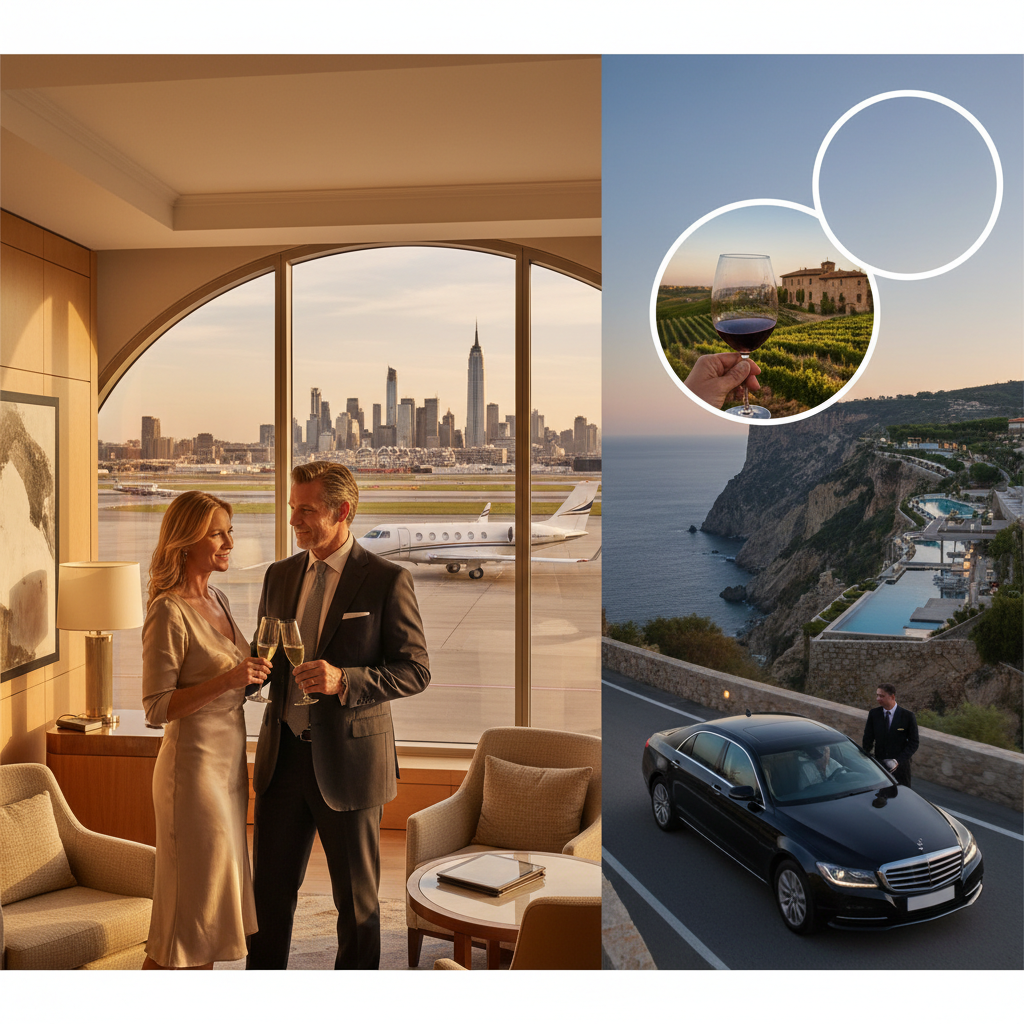
I’ll never forget the moment I realized why many talented operators fail to scale in the US market. I was sitting in a $1,200-a-night lodge in Peru with a client who had just built a nine-figure tech company. He wasn't looking at the view. He was looking at his watch.
"Gonzalo," he said, "The mountains are stunning. But why did I spend forty minutes today waiting for a driver who was 'just around the corner'?"
That was the $10 million lesson. For the affluent American traveler, luxury isn't about gold-plated faucets or white-glove service. It’s about time as a currency.
If you want to charge $20,000+ for a week-long itinerary, you aren't selling tours. You are selling the reclamation of time and the elimination of mental friction. This is what I call the 'Americana' Service Standard. It is an efficiency-driven hospitality model that most local operators overlook, and mastering it is the fastest way to dominate the high-ticket US market.
The Psychology of the $20k+ Traveler: Efficiency is the New Elegance
To win over the high-net-worth (HNW) American client, you have to understand their daily life. These individuals spend their waking hours making high-stakes decisions. When they go on vacation, they don't want "freedom"—they want intelligent curation.
Traditional luxury often focuses on "more": more food, more options, more amenities. But the affluent US client is drowning in "more." They are suffering from decision fatigue. The 'Americana' standard flips the script: it’s about less friction and zero dead time.
Why "Pura Vida" or "Island Time" Kills Your Margins
In many cultures, a 15-minute delay is a social nuance. For an American CEO paying $2,000 a day, a 15-minute delay is a breach of contract. They view logistics as the foundation of the experience. If the foundation shakes, they can't relax. To justify premium pricing, your logistics must be "invisible"—so seamless that the client forgets they are even being transported.
The 'Zero-Wait' Logistics Framework: Eliminating Dead Time
I’ve audited hundreds of itineraries, and the #1 profit killer is "Dead Time." This is the awkward gap between checking out of a hotel and a flight, or the 20 minutes spent standing in a lobby while a guide "checks on the tickets."
The 'Zero-Wait' Framework requires a radical shift in how you schedule:
- The Pre-Check Protocol: Your guide should be at the entrance five minutes before the client, with tickets already in hand and the vehicle running with the AC at the optimal temperature.
- The "Lobby-Skip" Strategy: High-ticket clients should never stand in a check-in line. Your operations team should handle all paperwork and key collection in advance. The client’s transition from vehicle to room should be fluid and immediate.
- Buffer Optimization: Instead of vague "free time" (which often triggers anxiety in high-achievers), offer "Curated Spontaneity." This means having 2-3 pre-vetted, ready-to-go options if a client wants to pivot, rather than asking them to search Yelp.
The 'Decision Fatigue' Audit: Curation over Choice
One of the biggest mistakes I see operators make is sending a 40-page PDF with fifty different lunch options. You think you’re being helpful; you’re actually giving them another job to do.
To implement the 'Americana' Standard, you must perform a Decision Fatigue Audit on your sales process:
- Don't ask: "Where would you like to eat tonight?"
- Do say: "Based on your love for seafood and quiet environments, I’ve reserved the corner table at [Restaurant X] for 8:00 PM. If you’d prefer something livelier, I have [Restaurant Y] on standby."
By providing a default "best" option, you remove the burden of choice while maintaining their sense of control. This is how you build the trust necessary for repeat $50k bookings.


