I used to be obsessed with headcount. In the early days of building my tour operations, I’d walk through the terminal or the lobby, count the rows of guests, and feel like a king. More buses, more guides, more bookings—it felt like winning.
But then I looked at my bank account at the end of a record-breaking July. We were drowning in volume, but starving for cash.
I call this the "Volume Trap." It’s the dangerous delusion that "busy" equals "profitable." In reality, most tour operators are one vehicle breakdown or one bad OTA commission hike away from insolvency because they are operating on razor-thin margins.
If you want to survive 2025, you need to flip the script. I’m talking about a 30% reduction in guest volume to achieve a 100% increase in net profit. This is the "Affluent-First" Yield Strategy. It’s not just a pivot; it’s a total reimagining of your business model. Here is how I’ve helped operators move from the mass-market grind to high-yield luxury.
1. The Math of High-Yield Tours: 100 Budget Guests vs. 20 Luxury Guests
Let’s get cold and heartless with the numbers. I once audited a boat tour operator who was running 100 guests a day at $95 a head. Revenue was $9,500. Sounds great, right?
But look at the overhead:
- Labor: 4 deckhands, 2 captains, 3 check-in staff.
- Wear and Tear: 100 sets of gear, 100 toilets flushed, 100 people scuffing the deck.
- Guest Relations: 100 potential complaints, 100 emails, 100 liability waivers.
- Marketing: High CPA (Cost Per Acquisition) because they were fighting in the bloody waters of TripAdvisor price wars.
After fuel, staff, commissions, and overhead, their net margin was about 12%.
We shifted them to a private-only model. They cut their volume by 70%. They now run two high-end vessels for private groups restricted to 10 people max. Price? $2,500 per charter. Revenue: $5,000. Net Margin: 45%.
They are making more actual money with 80% fewer people. The math of the affluent market is superior because your fixed costs don't scale linearly with the price point. A high-net-worth (HNW) traveler doesn’t use five times more fuel than a budget traveler, but they will happily pay five times the price for the privilege of being alone.
2. Service-as-Revenue: Beyond the Ticket Price
The biggest mistake I see operators make when "going luxury" is thinking they just need to add a bottle of sparkling wine. That’s amateur hour.
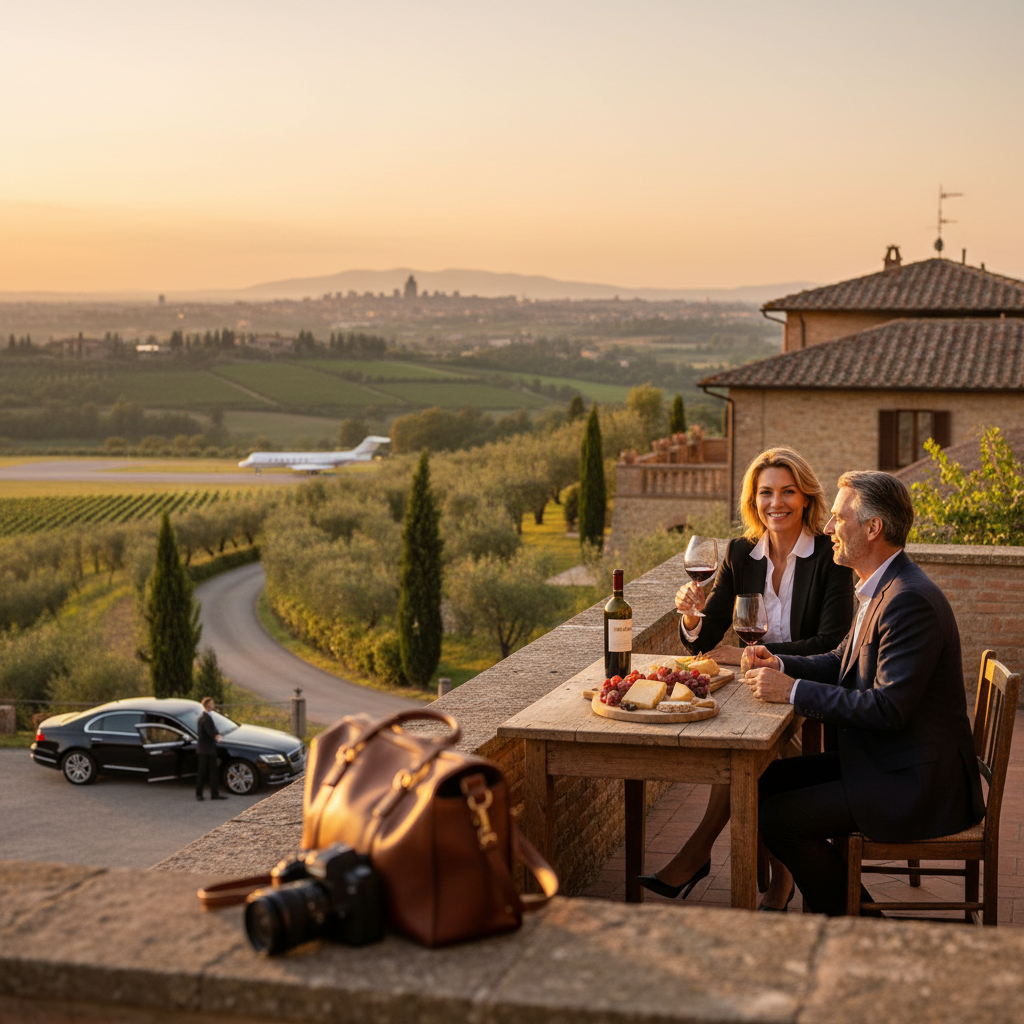
Affluent clients aren't buying a tour; they are buying time and frictionless access.
You need to monetize the "concierge" layer. This means offering:
- Door-to-Door Logistics: Don’t ask them to meet at a landmark. Charge a $200 premium for a private Mercedes pickup.
- After-Hours Access: Can you get them into the gallery after the doors close? That’s not a $50 add-on; that’s a $1,000 "exclusive access" fee.
- Modification Flexibility: The wealthy hate rigid schedules. We started selling "Flex-Start" upgrades—for an extra 20%, the guest can move the start time by up to 3 hours on the day of the tour.
In this model, the "tour" is just the foundation. The real profit sits in the services you wrap around it.
3. The Psychological Shift: Mastering the 'Exclusivity Surcharge'
Most tour operators suffer from "price guilt." They worry that if they raise prices, they’ll lose their customers.
I hope you do.
You want to lose the price-sensitive customer who leaves a 3-star review because the sandwich was "sufficient but not amazing." The affluent client doesn't look for the "best deal." They look for the "best experience." In their world, a low price is a red flag—it signals "crowded," "cheap," and "standard."
Stop using the word "Inclusive." Start using "Exclusive." Inclusive means "everyone gets this." Exclusive means "most people are kept out."
I’ve found that by simply adding an "Exclusivity Surcharge" for guaranteed private departures—pricing it at 2.5x the group rate—you don't just increase yield; you increase the perceived value of your brand. You aren't just a tour operator anymore; you’re an elite service provider.


